The gear
Every amp, cab and pedal
Eight amps, 41 pedals, five cabs and a microphone in front of each one. Every piece is its own DSP voicing rather than a preset on a shared effect, and every control on screen drives the thing it says it does.
All of it is free. The tone engine is not the part we charge for, and it never will be — a crippled engine would make the free tier a demo rather than a trial.
Eight amps
Each one was fitted against a measured reference, and fitted so that noon on the gain knob is the sound it was measured against. That is why the factory rigs keep the gain near the middle and find their character in the pedals and the tone stack, rather than by pushing an amp somewhere it was never fitted.
- The clean amp is our own model of a blackface-style valve combo into a 12-inch open-back cabinet
- Presence sits before the nonlinearity, so hard playing drives the top end into compression harder than the mids
- Power-amp sag: the rail droops under sustained load, so a hard-strummed chord compresses rather than just getting louder
- Costs 0.10% of one core — roughly 30× cheaper than running a neural capture
- A bass voicing the octave pedal switches into automatically, flat from 41 Hz to 1 kHz
-
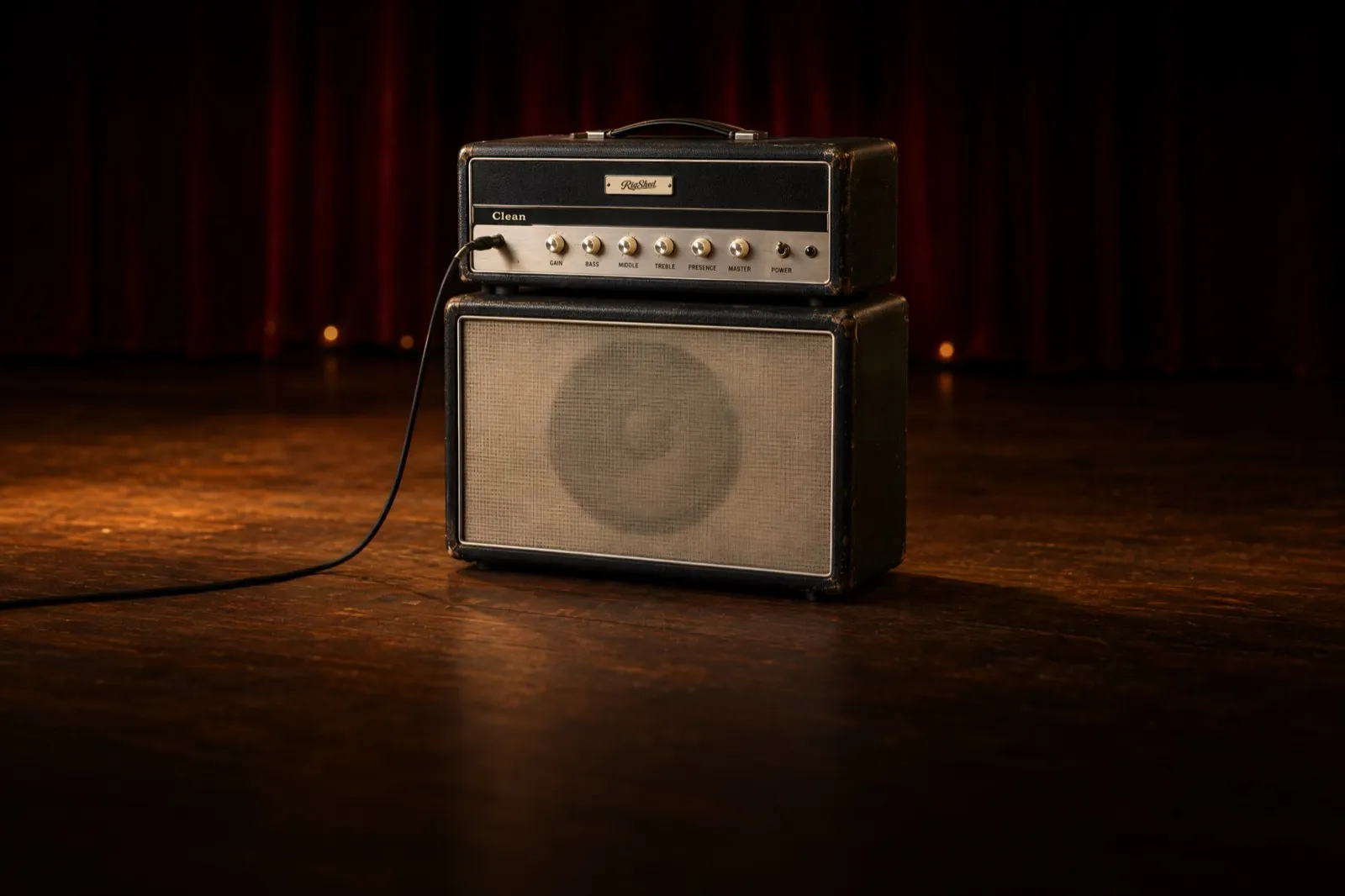
Clean
Into the open-back 1×12
Our own valve combo into a 12-inch open-back cab. Sparkling clean, breaking up as you dig in.
-
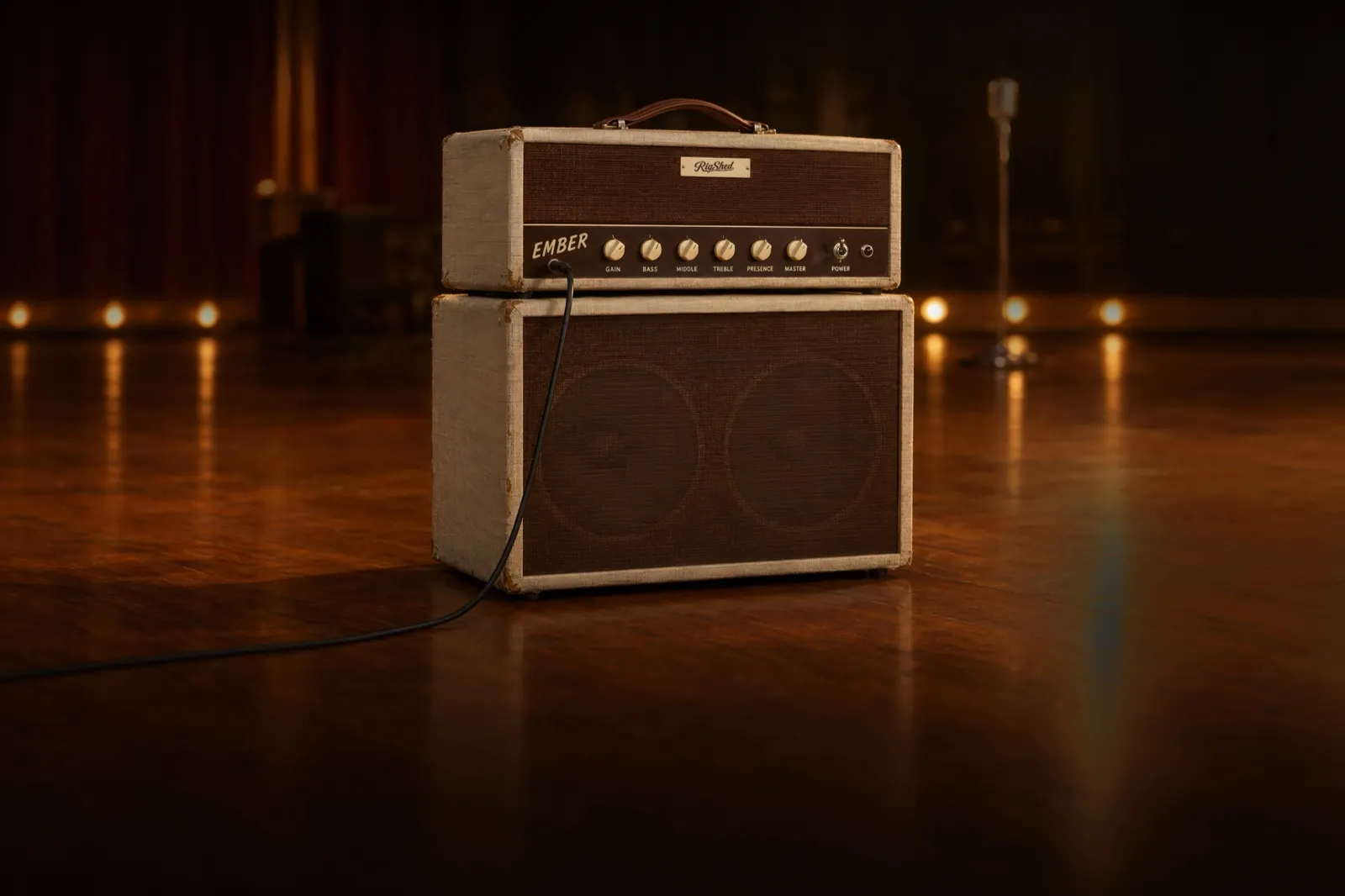
Ember
Into the open-back 2×12
A small, early American combo that breaks up the moment you lean on it. Raw, warm and loose.
-
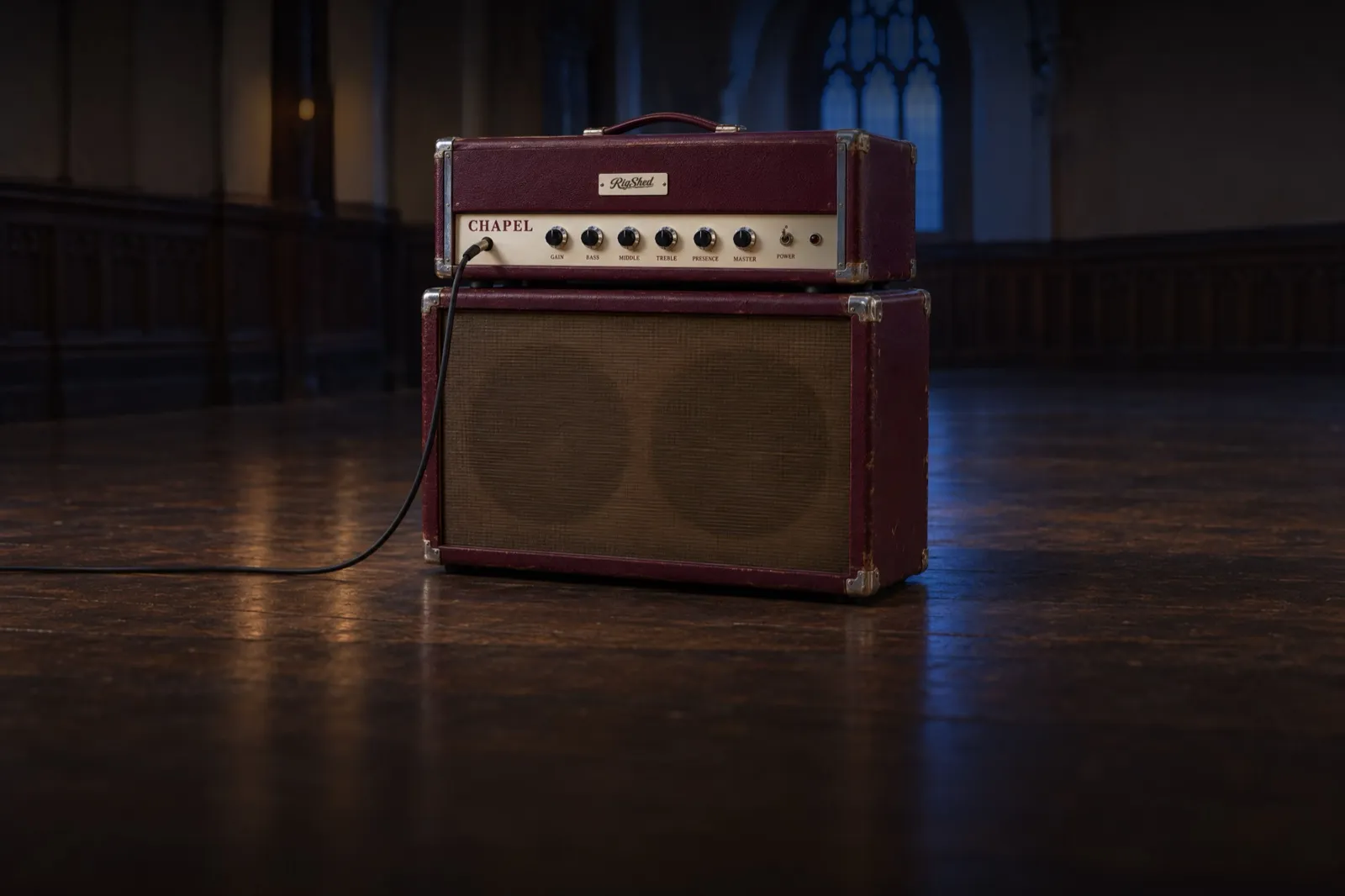
Chapel
Into the open-back 2×12
A chiming British combo: bright, glassy cleans that turn to a jangly, vocal crunch.
-
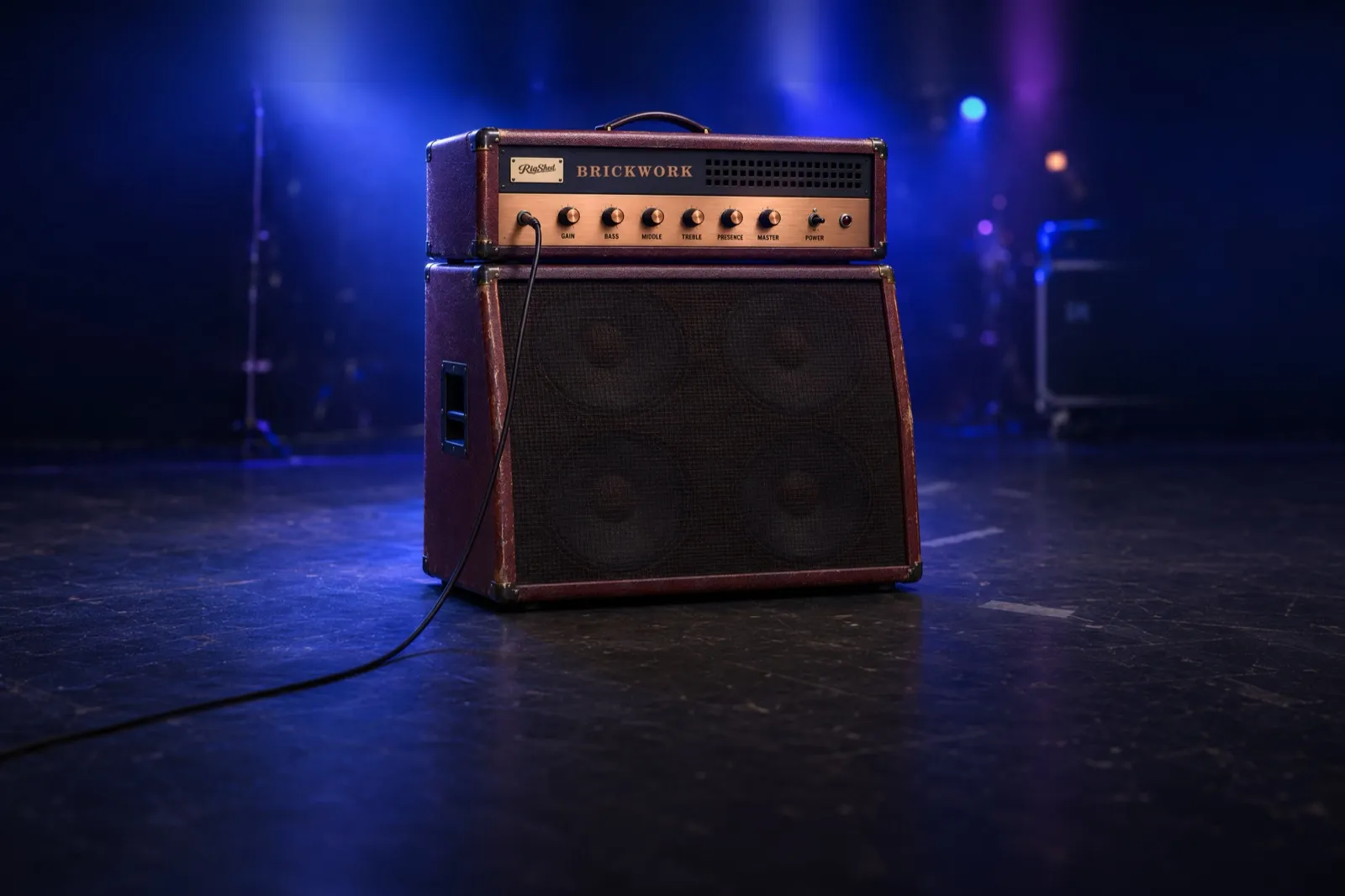
Brickwork
Into the closed-back 4×12, vintage
A big British head with no master volume, crunching from the power valves. Classic rock rhythm.
-
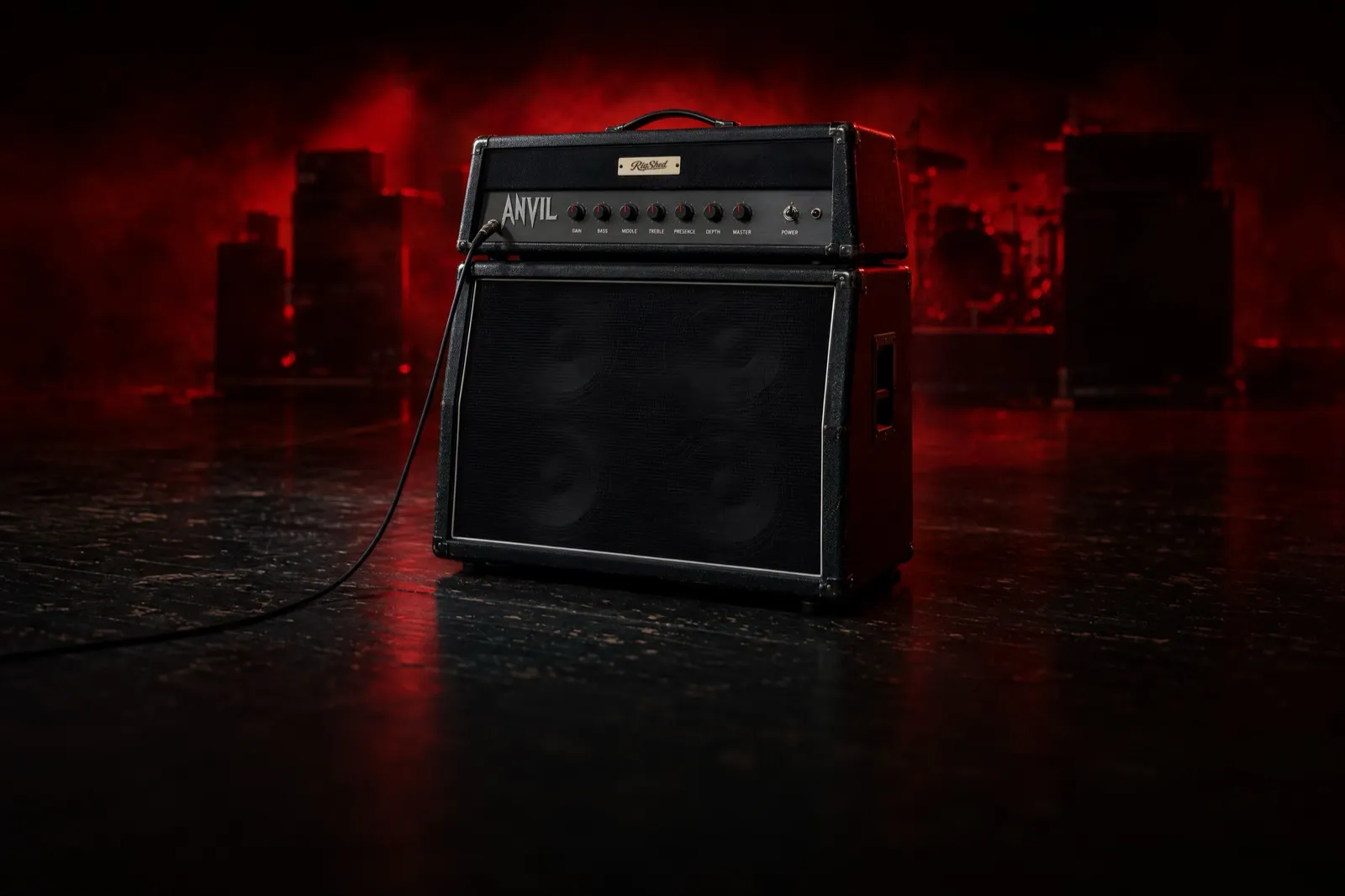
Anvil
Into the closed-back 4×12, vintage
A British head with an extra gain stage: hot, forward and aggressive. The sound of hard rock and early metal.
-
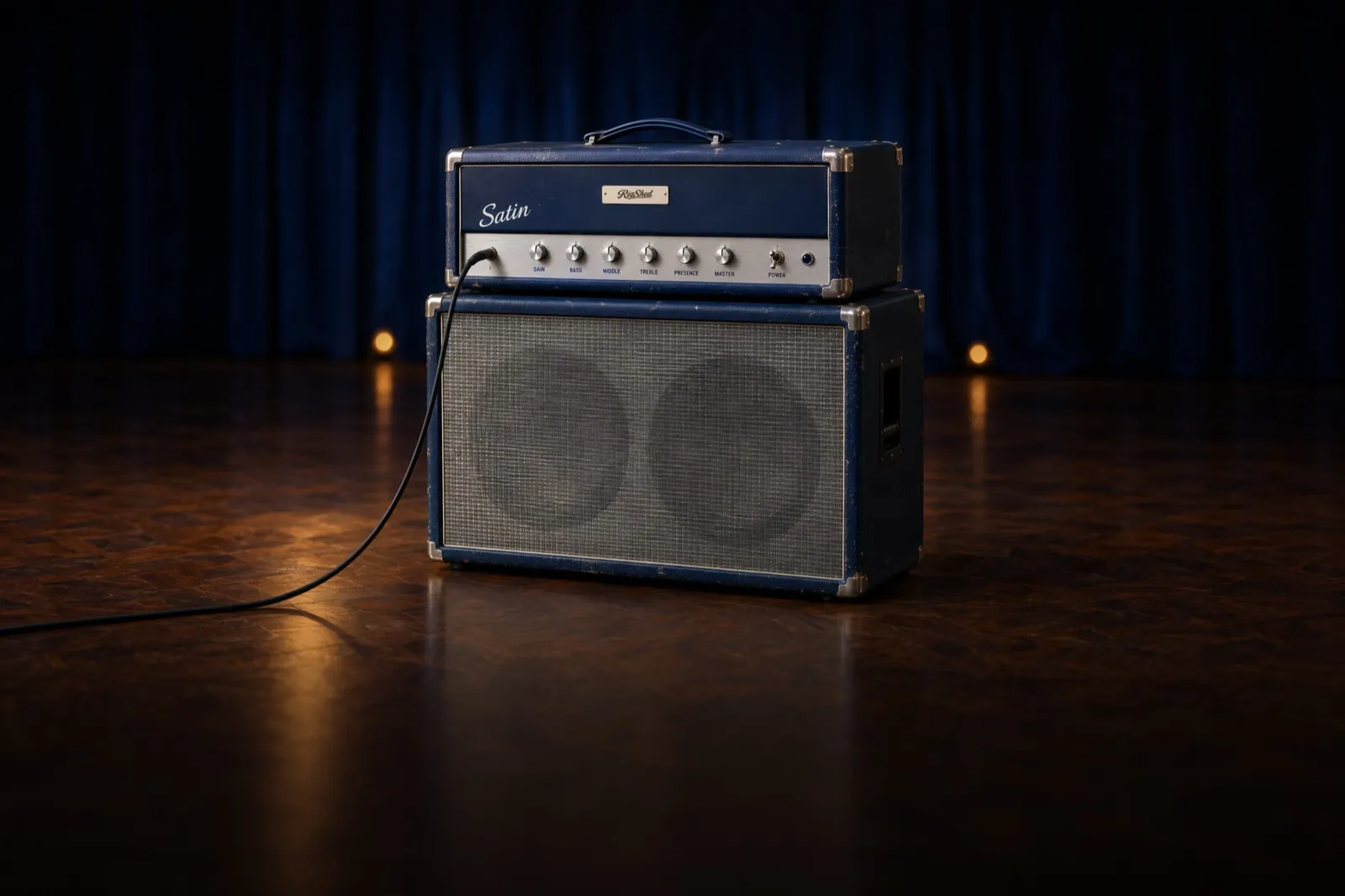
Satin
Into the closed-back 2×12
A smooth, compressed boutique overdrive that sings. Fluid leads and touch-sensitive rhythm.
-
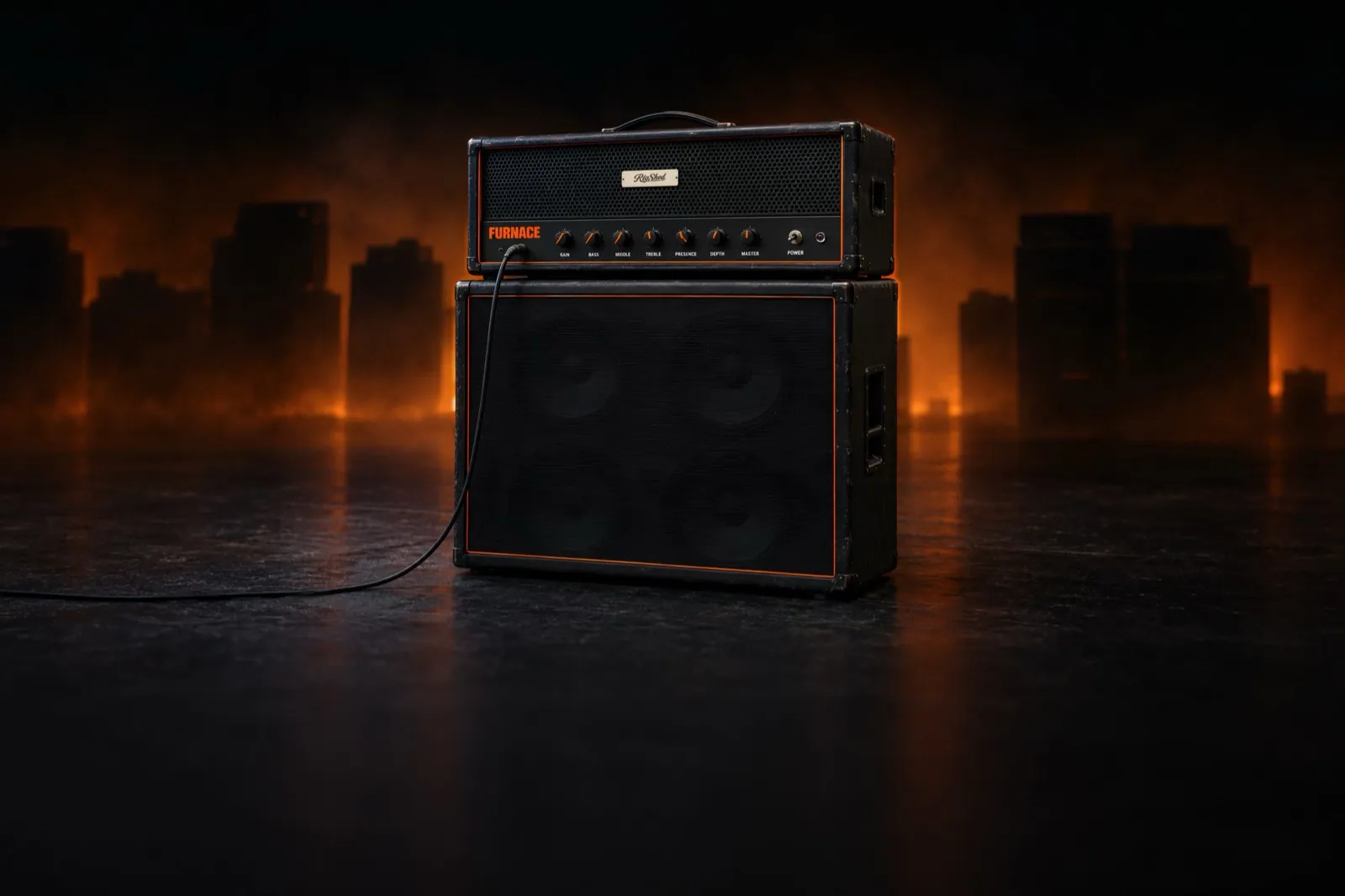
Furnace
Into the closed-back 4×12, modern
Modern American high gain: tight, scooped and huge, for low tunings.
-
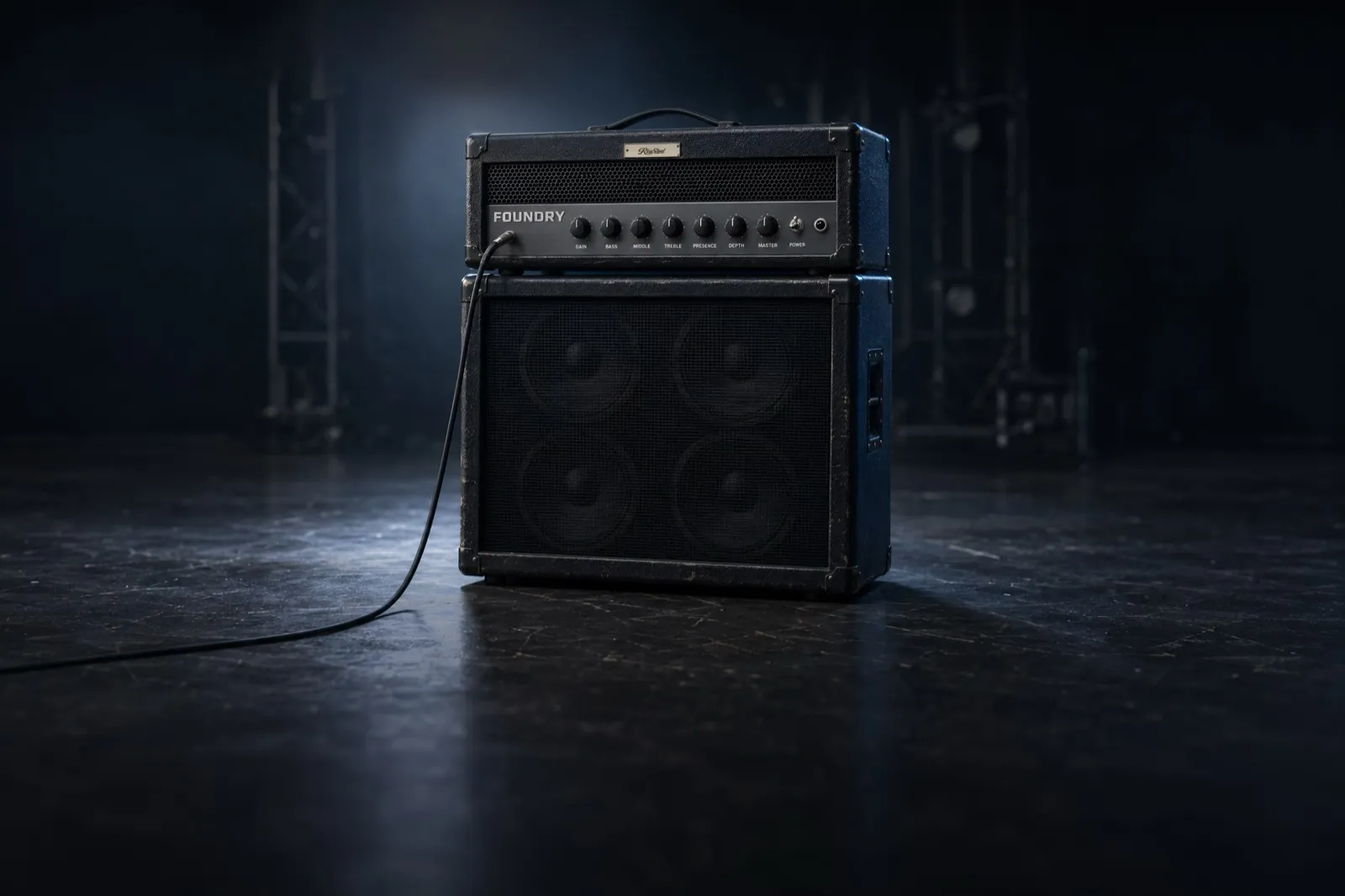
Foundry
Into the closed-back 4×12, modern
Cascaded high gain into a closed-back 4x12. Tight, heavy and still alive to the hand.
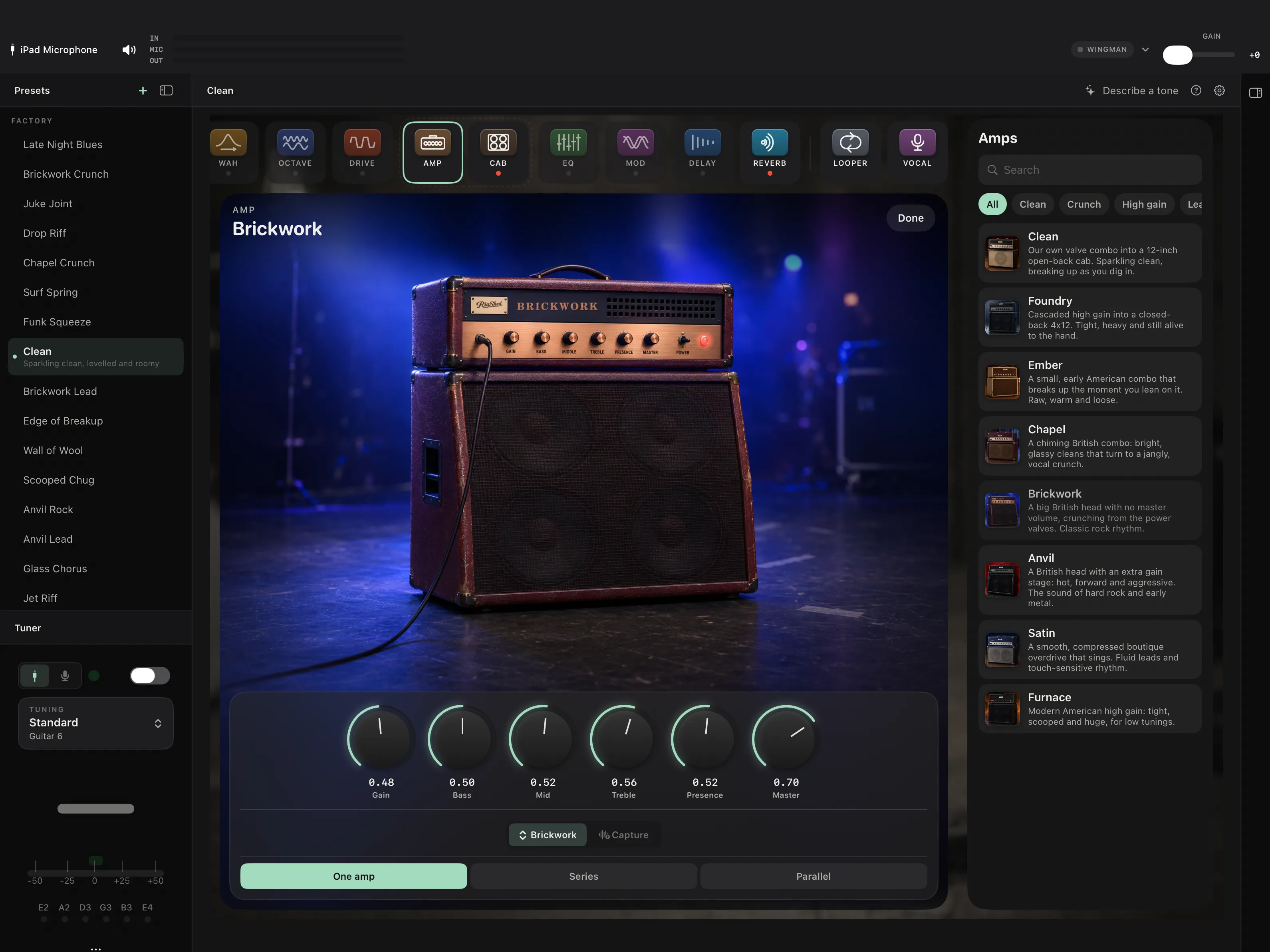
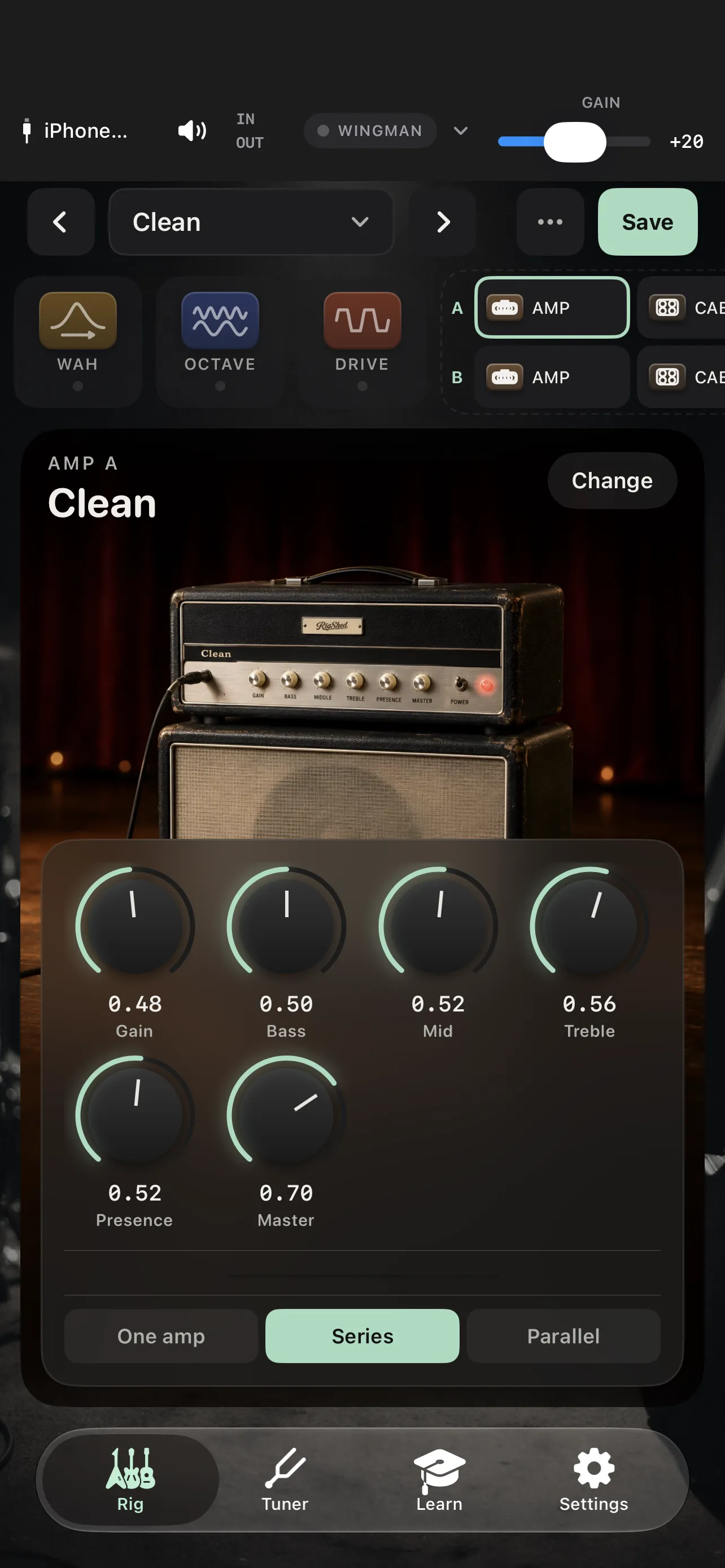
Two of them at once
Both amps sit at the amp's place in the chain, so everything after the amp is after both of them.
In series
The first amp drives the second.
In parallel
The same guitar goes to both, and a blend sets how much of each you hear.
The second amp is a full amp, not a copy of the first: any of the eight, or a capture of your own, with its own cab and its own microphone in front of it.
- Measured on a power chord: 4.4 dB more upper-harmonic content than the clean amp driven by the hottest distortion pedal flat out, for 1.5 dB more intermodulation
- Within 3.9 dB of a closed-back target from 60 Hz to 8 kHz, and level-matched to the clean amp so switching compares tone rather than loudness
- Seven knobs, not six — Depth is power-amp feedback at the bottom end, the chest thump, and the clean amp has no equivalent
- Saturation runs at 4× oversampling, so what you hear is harmonics of the note rather than fold-back
- Two amps run at the amp’s place in the chain: in series, where the first drives the second, or in parallel, where a blend sets how much of each you hear
- The second is a full amp — any of the eight, or a capture of your own, with its own cab and its own microphone in front of it
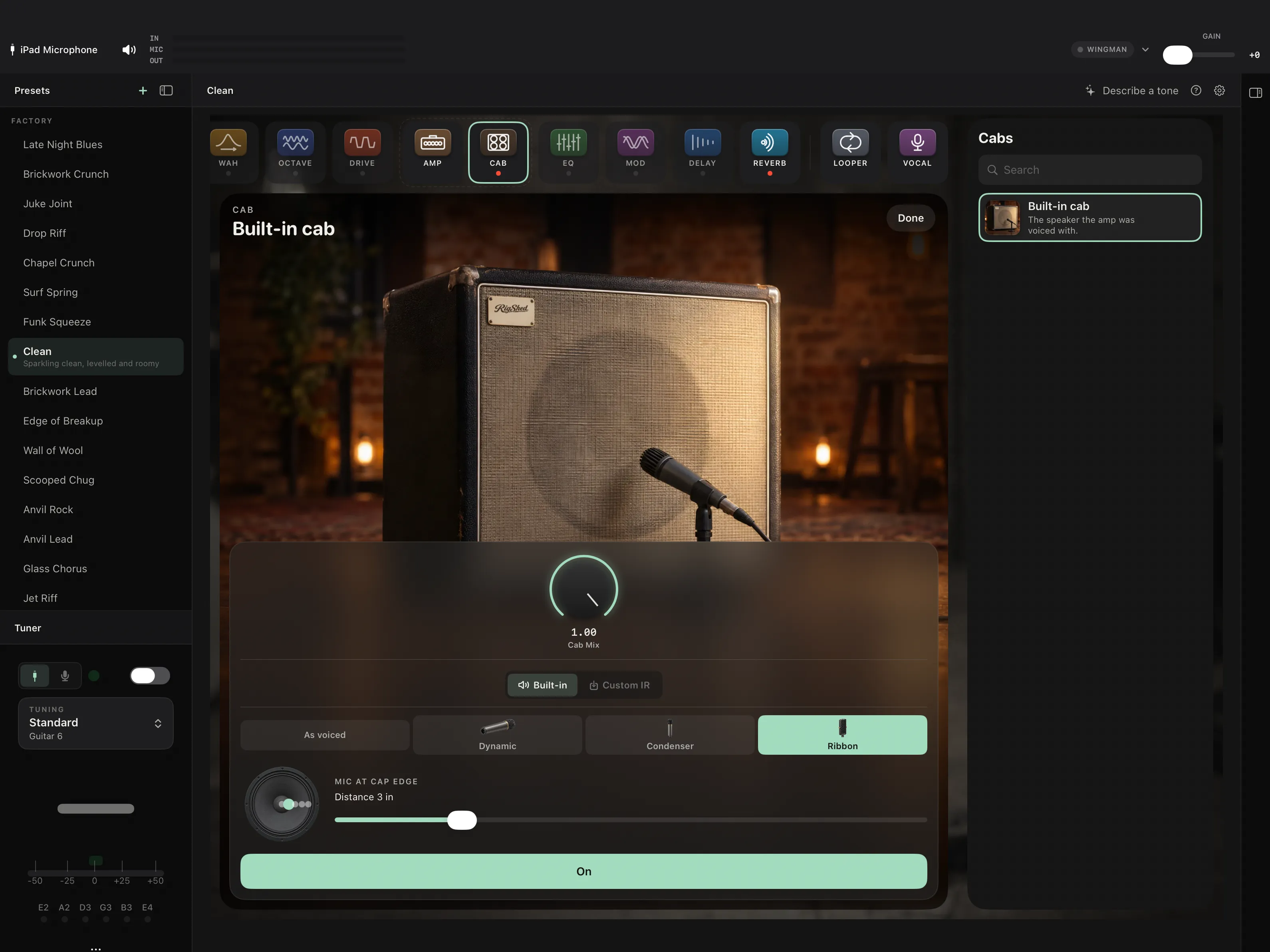
Five cabs, and a microphone in front of each
A speaker on its own is only half of a recorded amp. The other half is where the microphone is standing.
- Type — dynamic, condenser or ribbon, or leave it as the cab was voiced.
- Position — across the speaker, from the centre of the cone out to the edge.
- Distance — up against the grille, or back off it.
Set independently for each amp, so two amps in parallel can be miked two different ways.
-
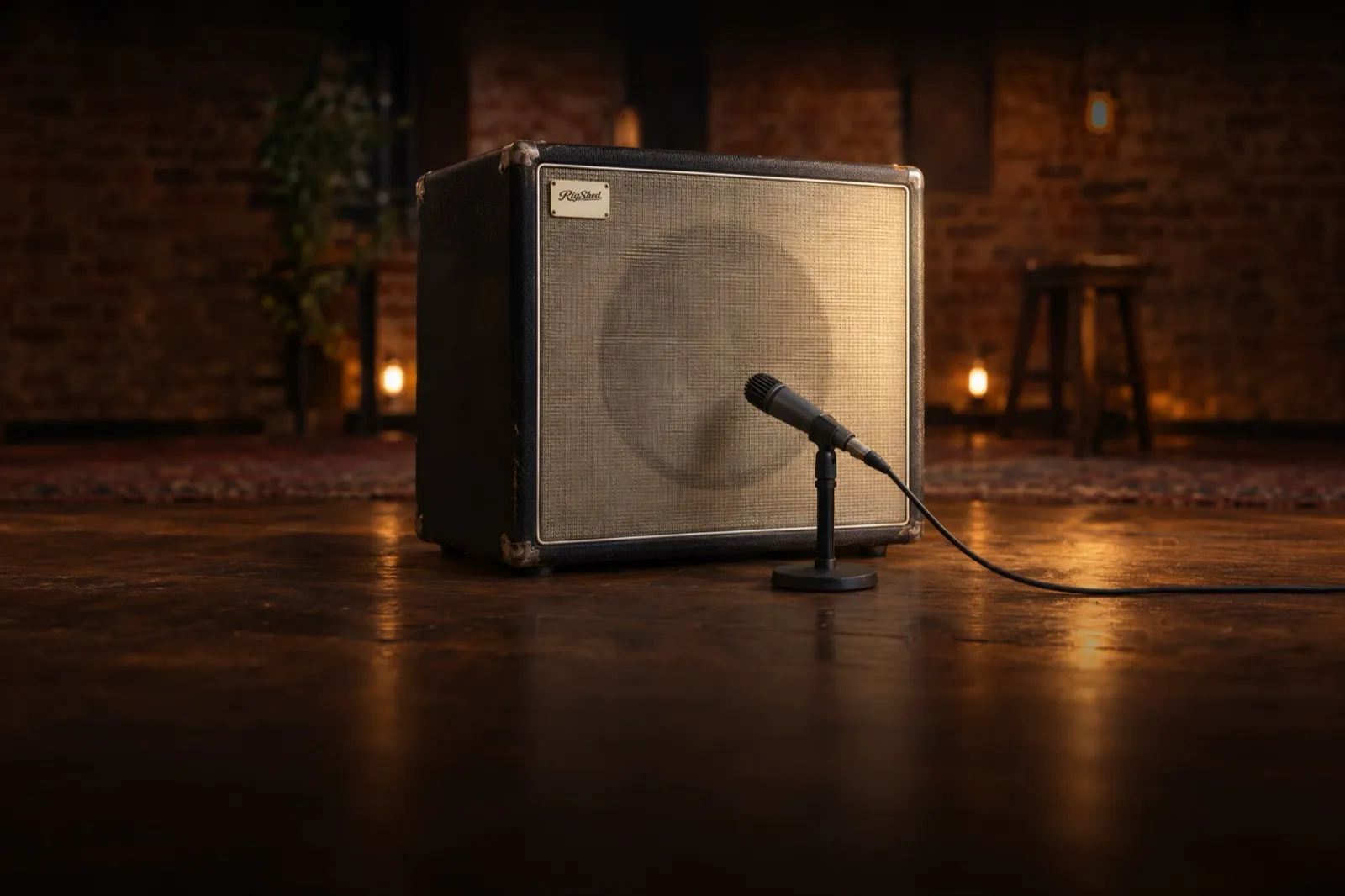
Open-back 1×12
Cabinet
The cab Clean is voiced into.
-
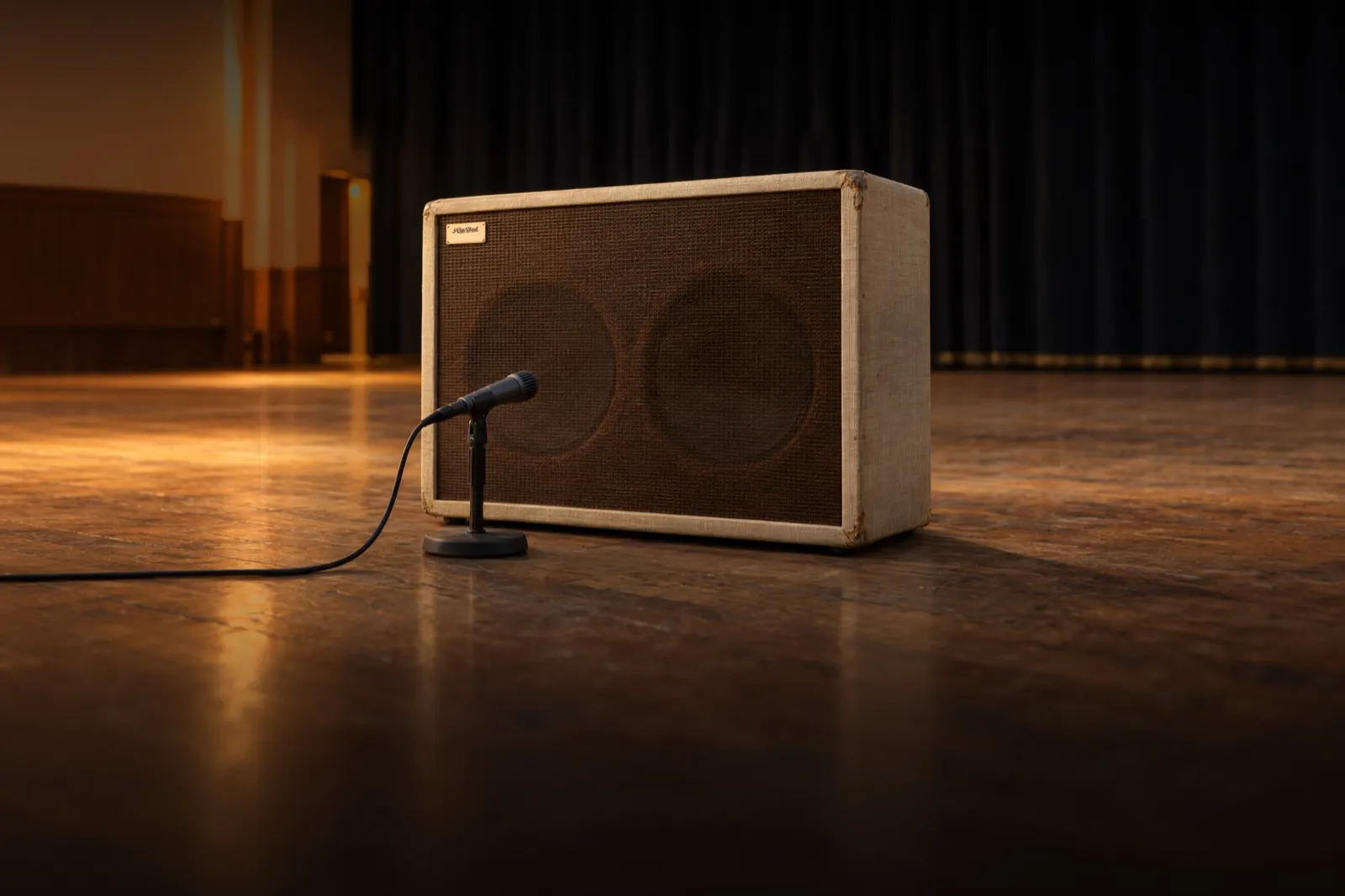
Open-back 2×12
Cabinet
The cab Ember, Chapel are voiced into.
-
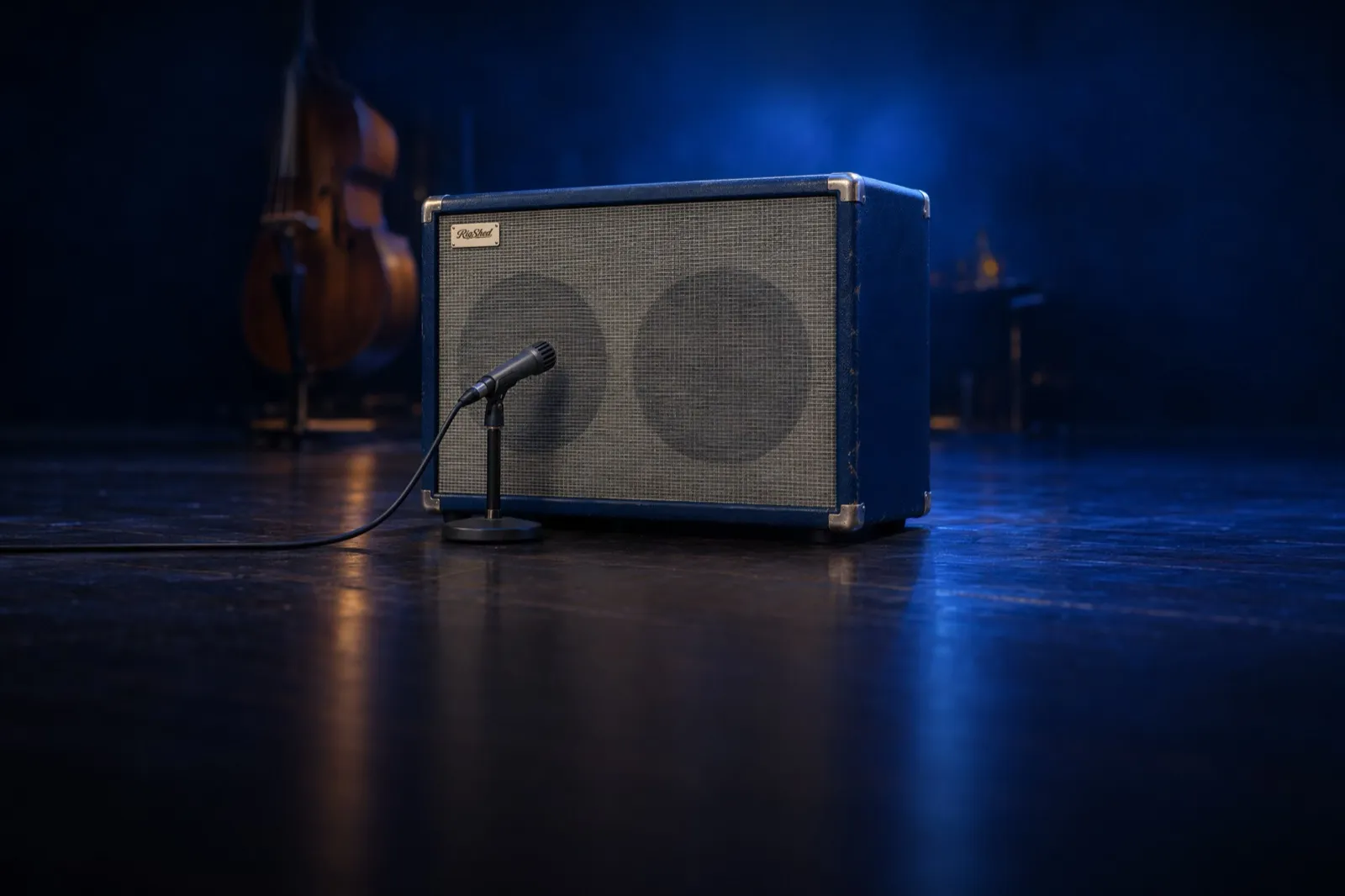
Closed-back 2×12
Cabinet
The cab Satin, and any loaded capture are voiced into.
-
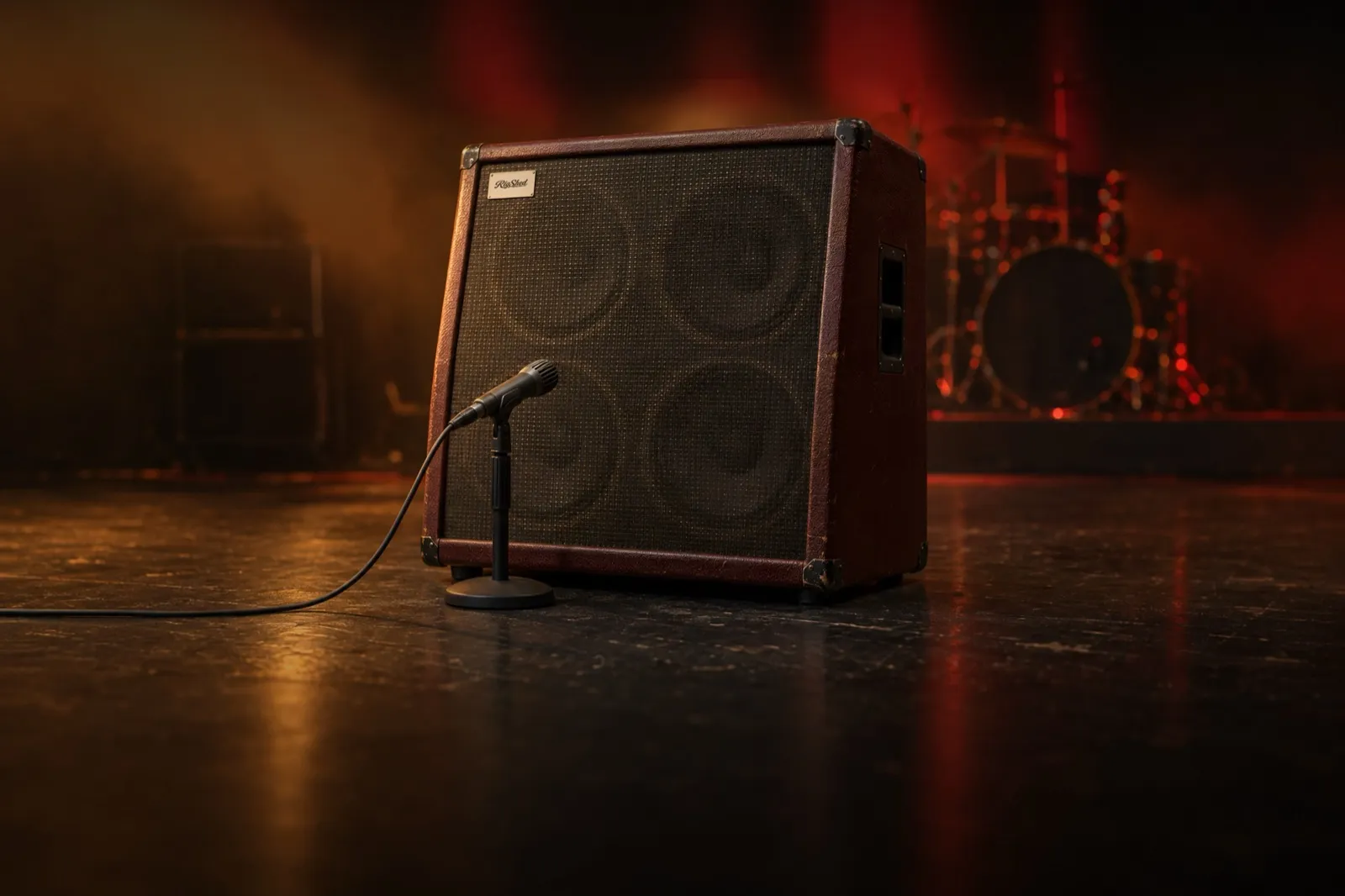
Closed-back 4×12, vintage
Cabinet
The cab Brickwork, Anvil are voiced into.
-
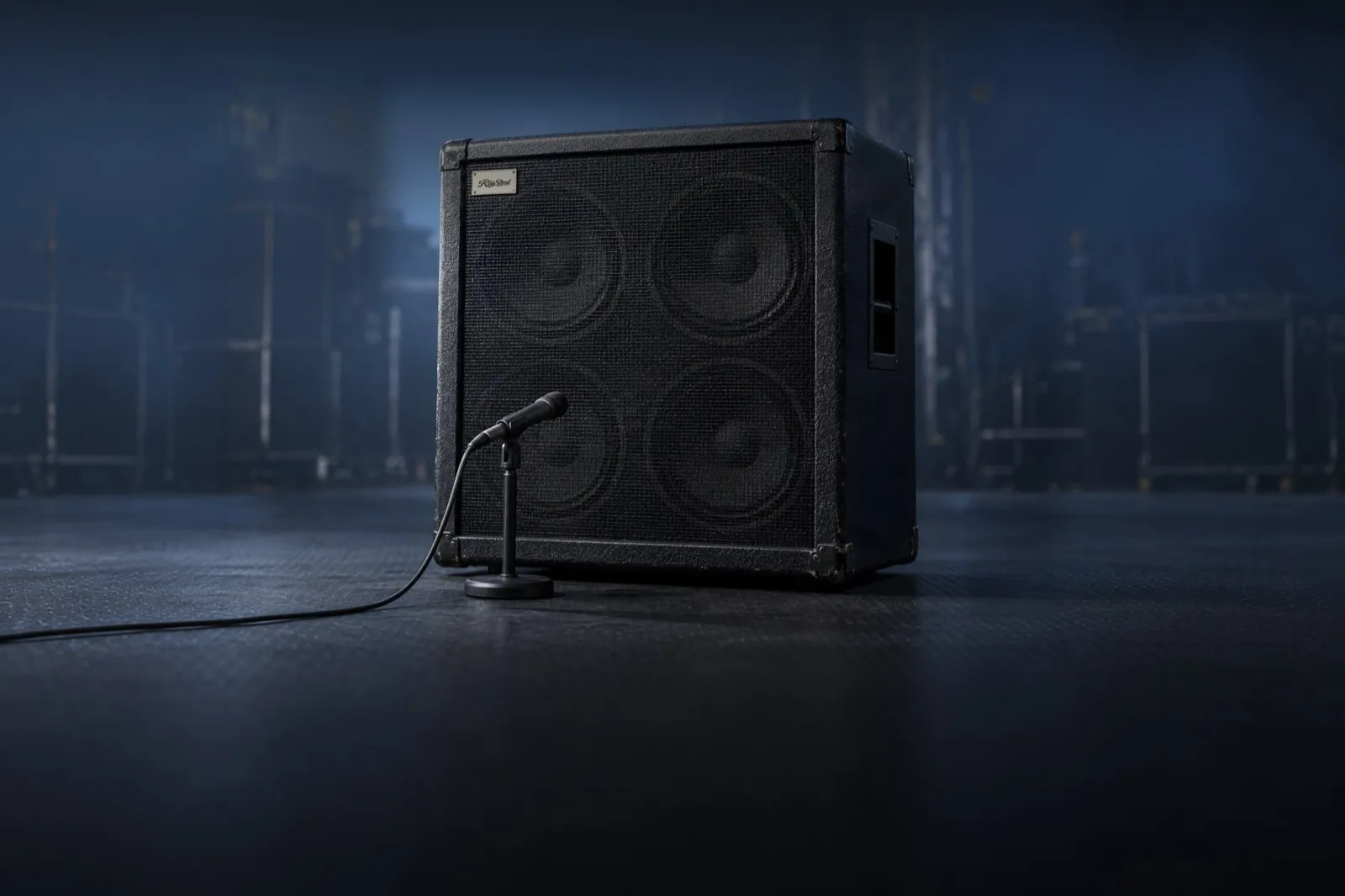
Closed-back 4×12, modern
Cabinet
The cab Furnace, Foundry are voiced into.
Or bring your own
Load a capture as either amp and an impulse response as either cab, as many as you like.
Captures are .nam files and impulse responses are
.wav. Drop them into the RigShed folder in Files or in the
Finder and they appear in the app — no import dialog, nothing to
convert. A rig remembers a capture by name and fingerprint, so it finds
the right one again even if you have reorganised your library.
Whatever architecture a capture was trained with, it loads. The engine links all five — including the one every modern capture uses, which is what people mean when they ask about A2. That is not a version badge: it is the reason a capture someone shared this morning opens rather than erroring.
There is no cap on how many you keep, on any tier.
-
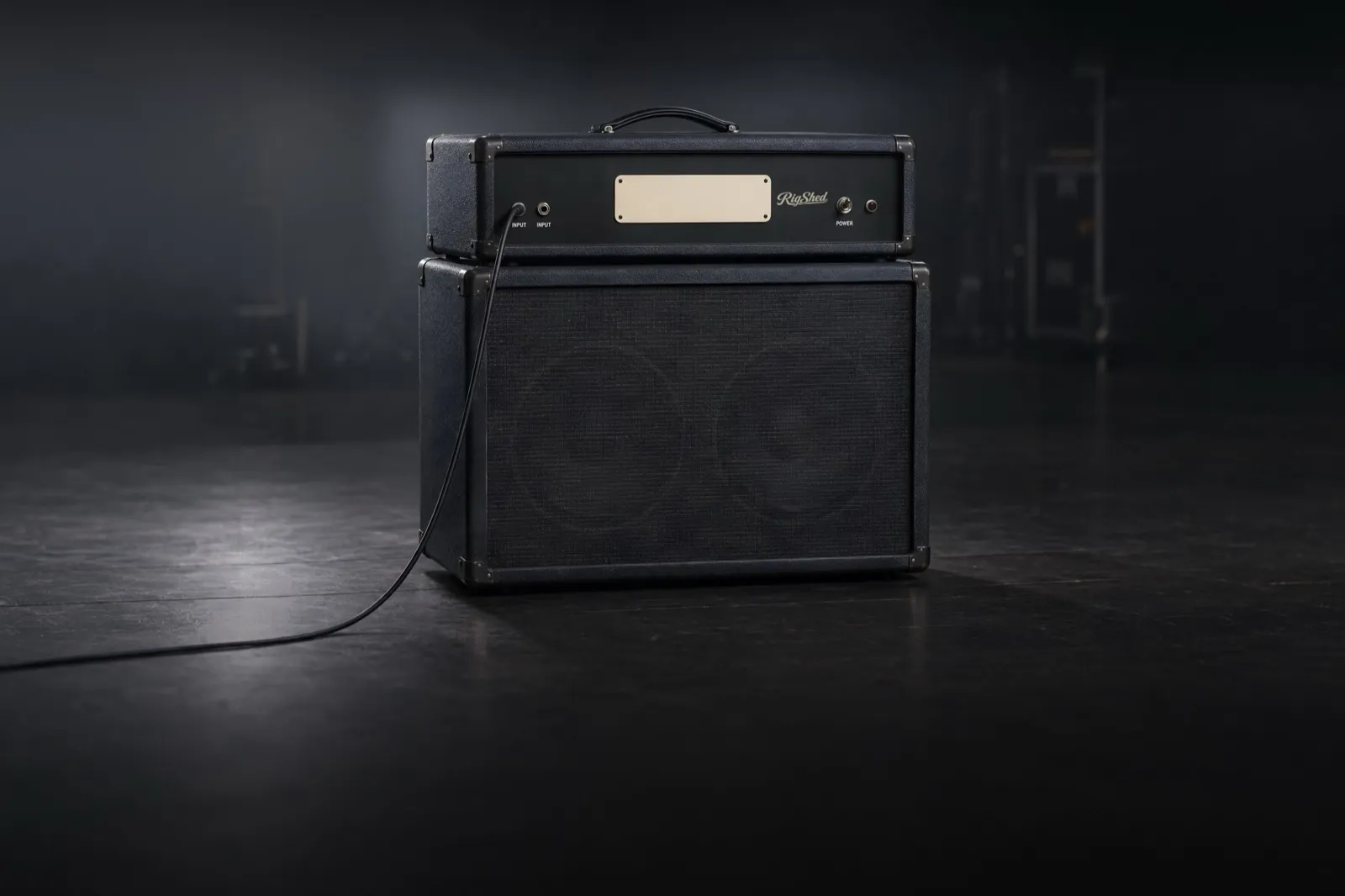
A loaded capture
Your own amp
A plain head with your capture's name on the plate, and two controls — Level and Mix. A capture is a fixed snapshot of one amp at one setting, so there is nothing else to offer.
-
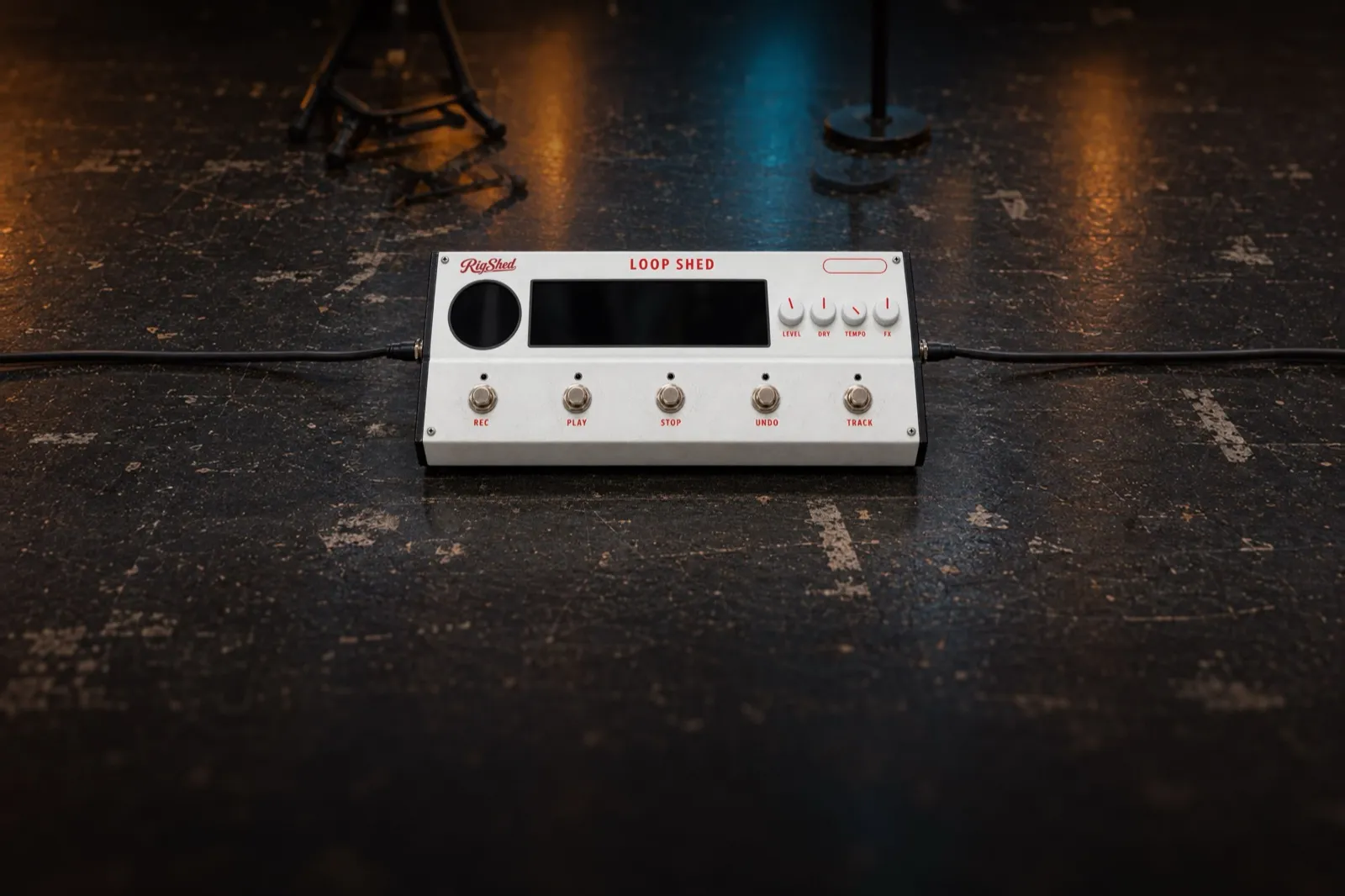
The Loop Shed
Five-track looper
Five tracks up to 90 seconds, and every track keeps its own rig — record a rhythm part through Chapel and play a lead over it through Foundry.
41 pedals
In the order a real board would run them, which is the order the app starts in. You can reorder the whole chain, and where a pedal sits changes what the next one hears.
Each one was photographed somewhere that suits it. That is not only decoration: in the app the piece you are editing fills the panel as its own photograph, so the board you build is the board you see.
Noise gates
First in the chain, before anything has a chance to amplify the hiss.
-
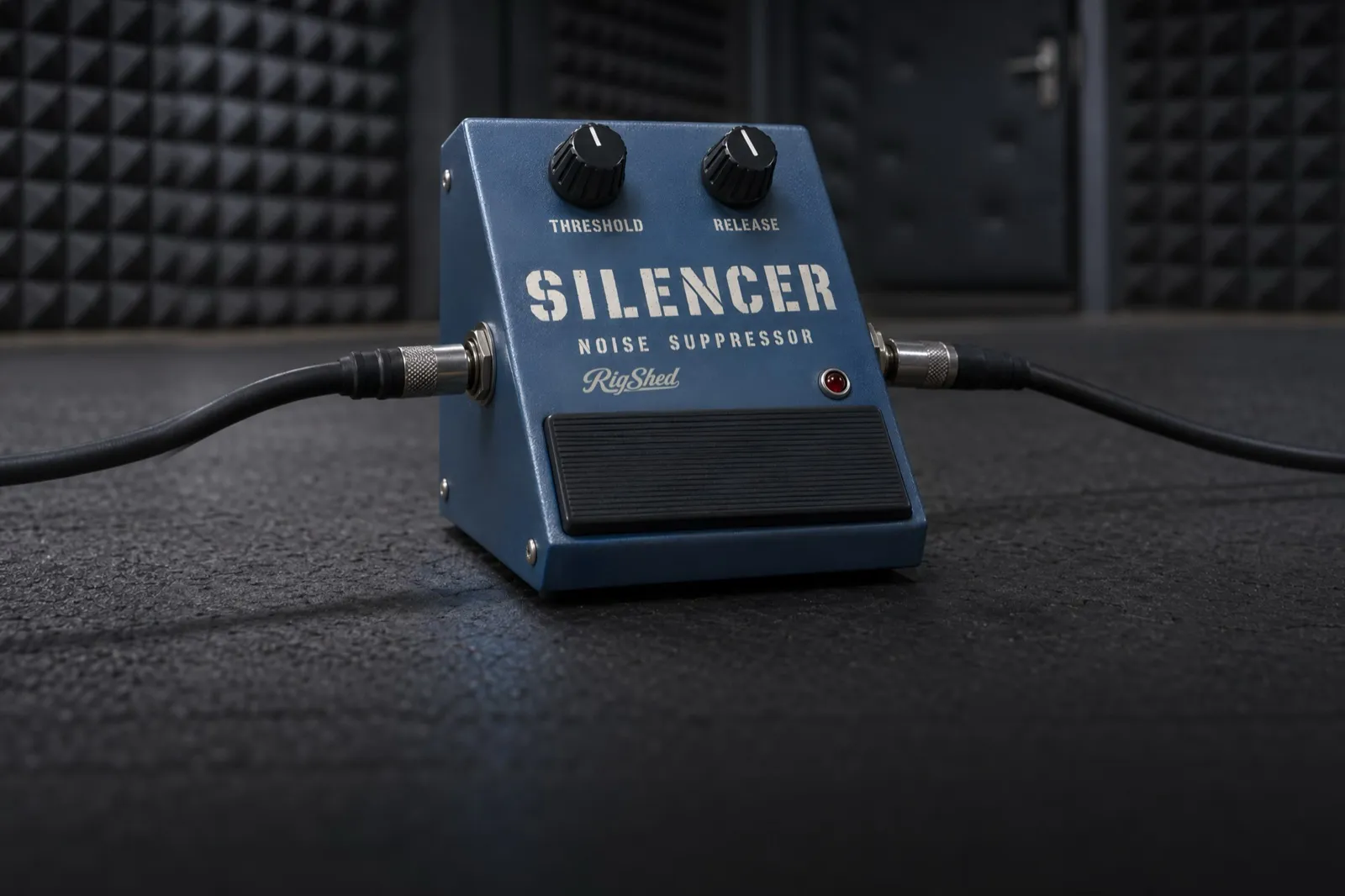
Silencer
Noise Suppressor
Balanced and general purpose.
-
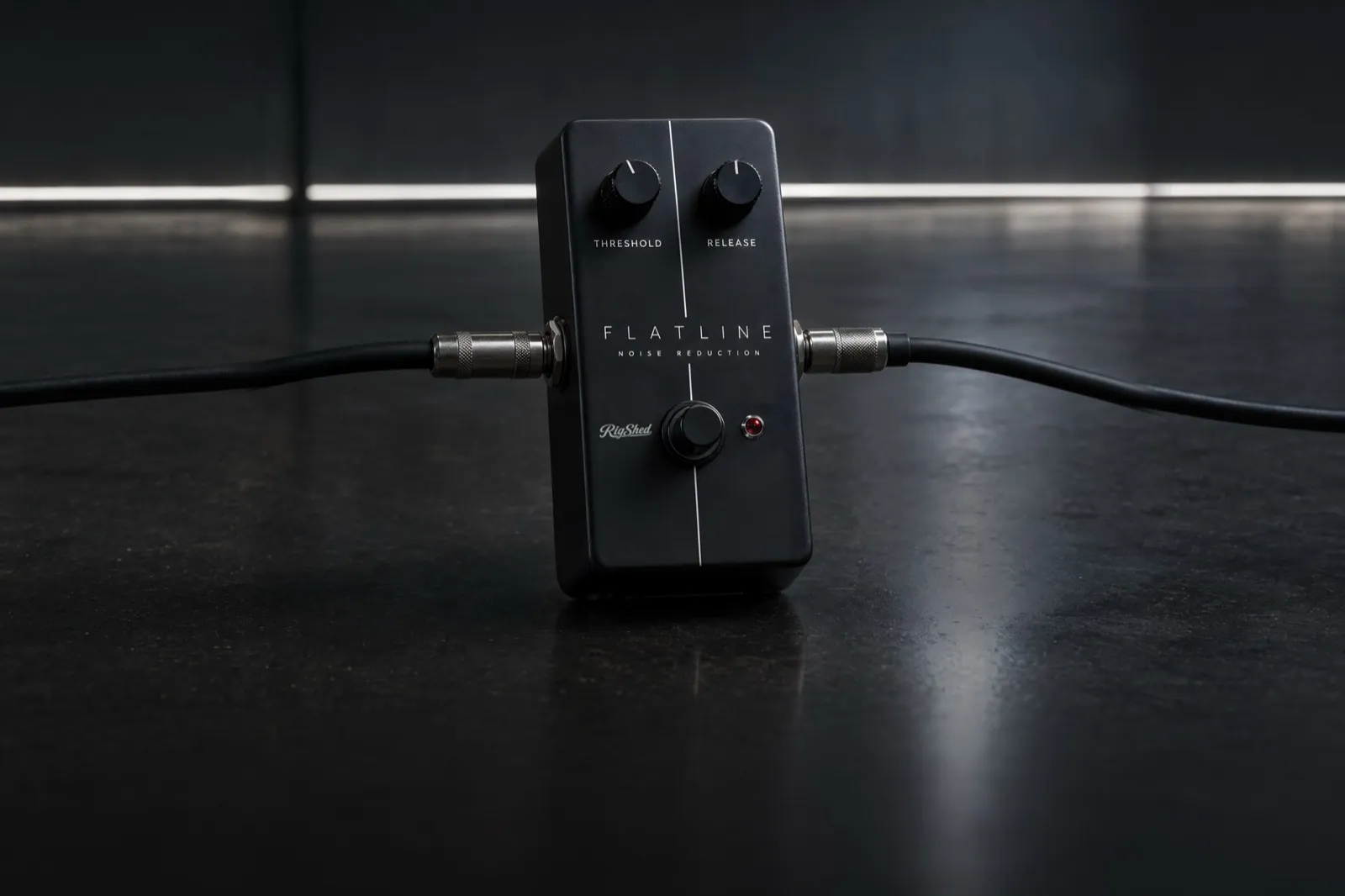
Flatline
Noise Reduction
Gentler, more musical.
-
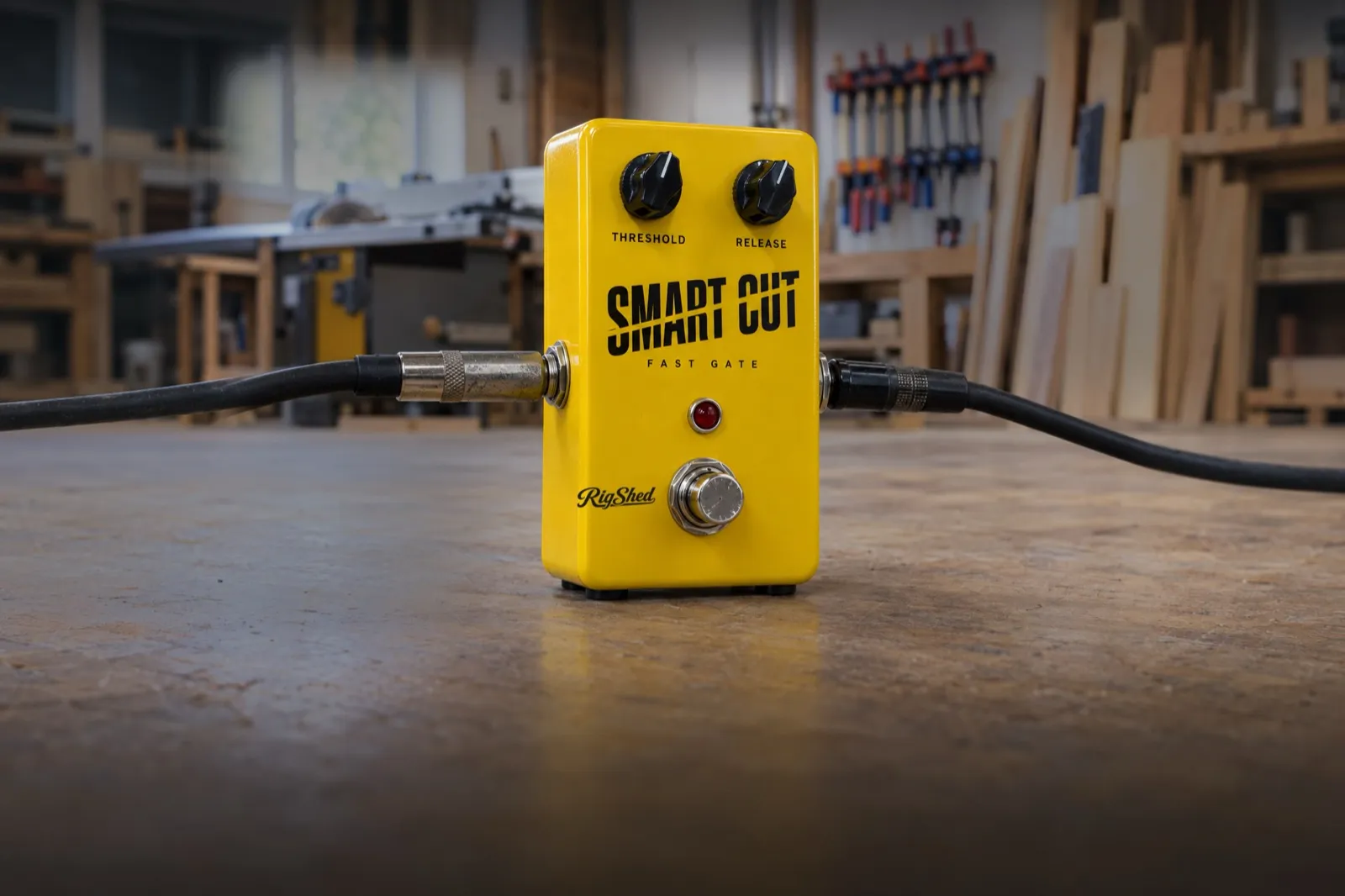
Smart Cut
Fast Gate
Fast and tight.
-
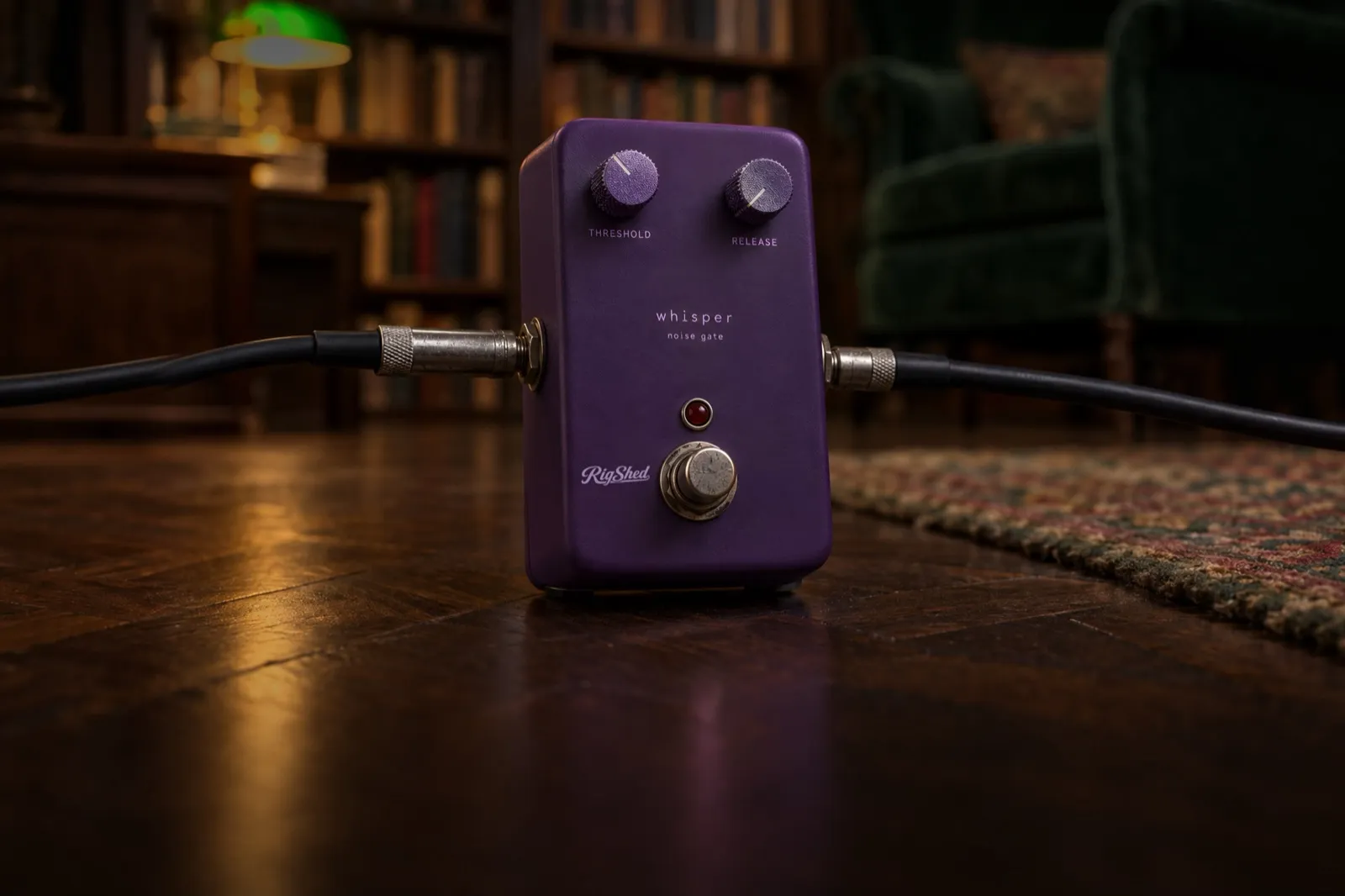
Whisper
Noise Gate
Shallow — tames hiss without killing sustain.
-
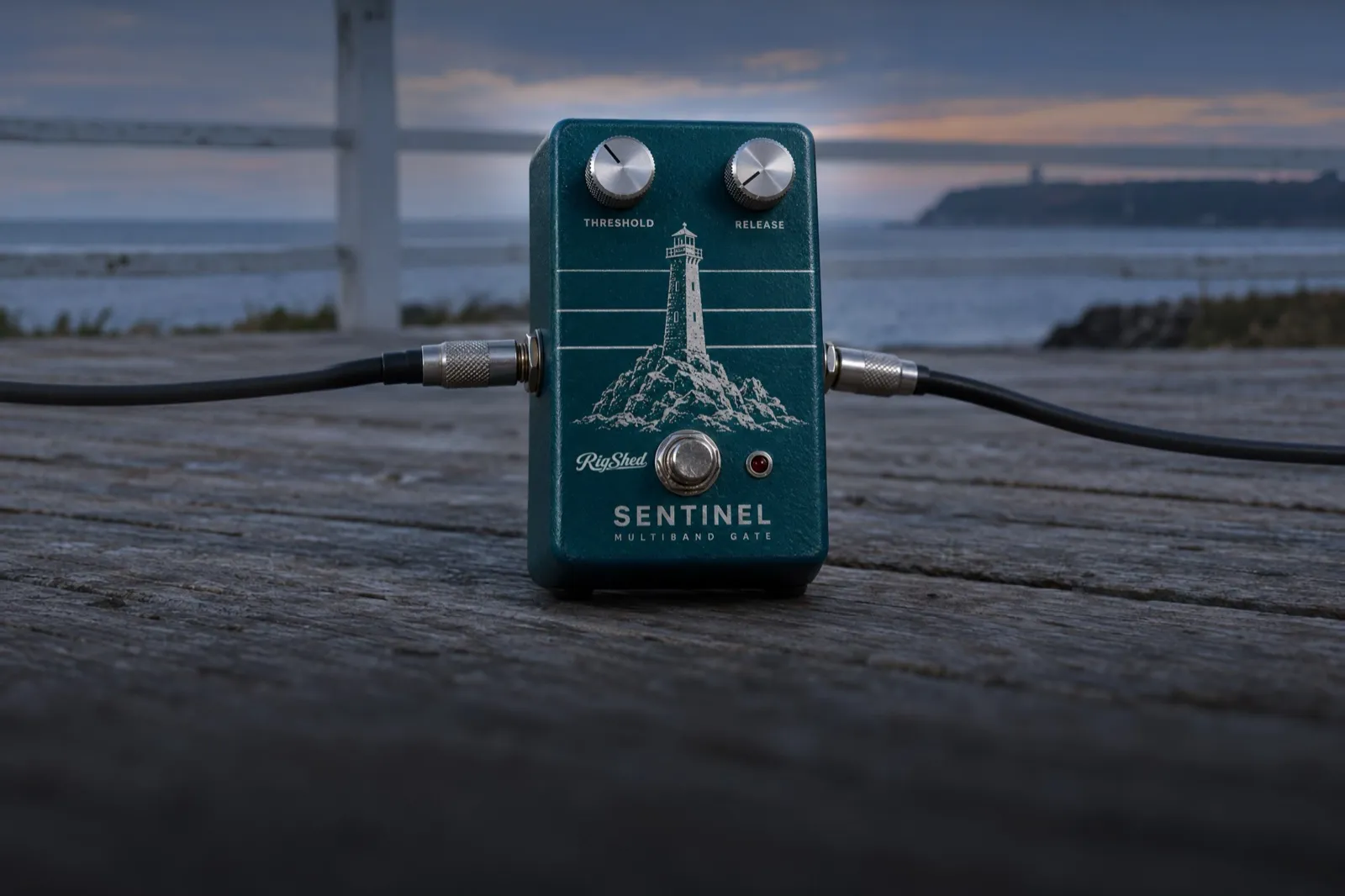
Sentinel
Multiband Gate
Brick wall, for chugging.
Compressors
Evening out what you play before the drive stage gets hold of it.
-
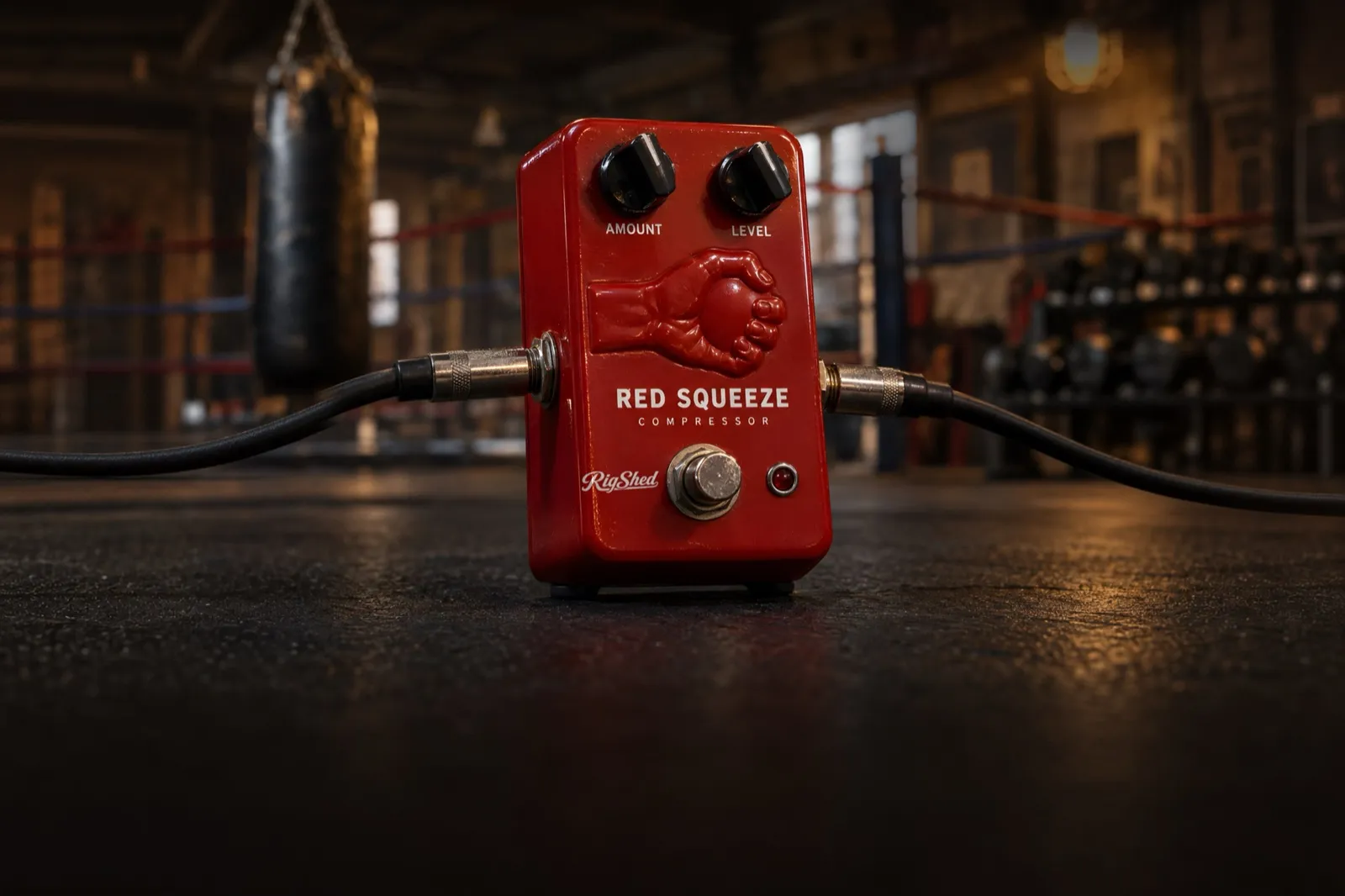
Red Squeeze
Compressor
Classic squeeze.
-
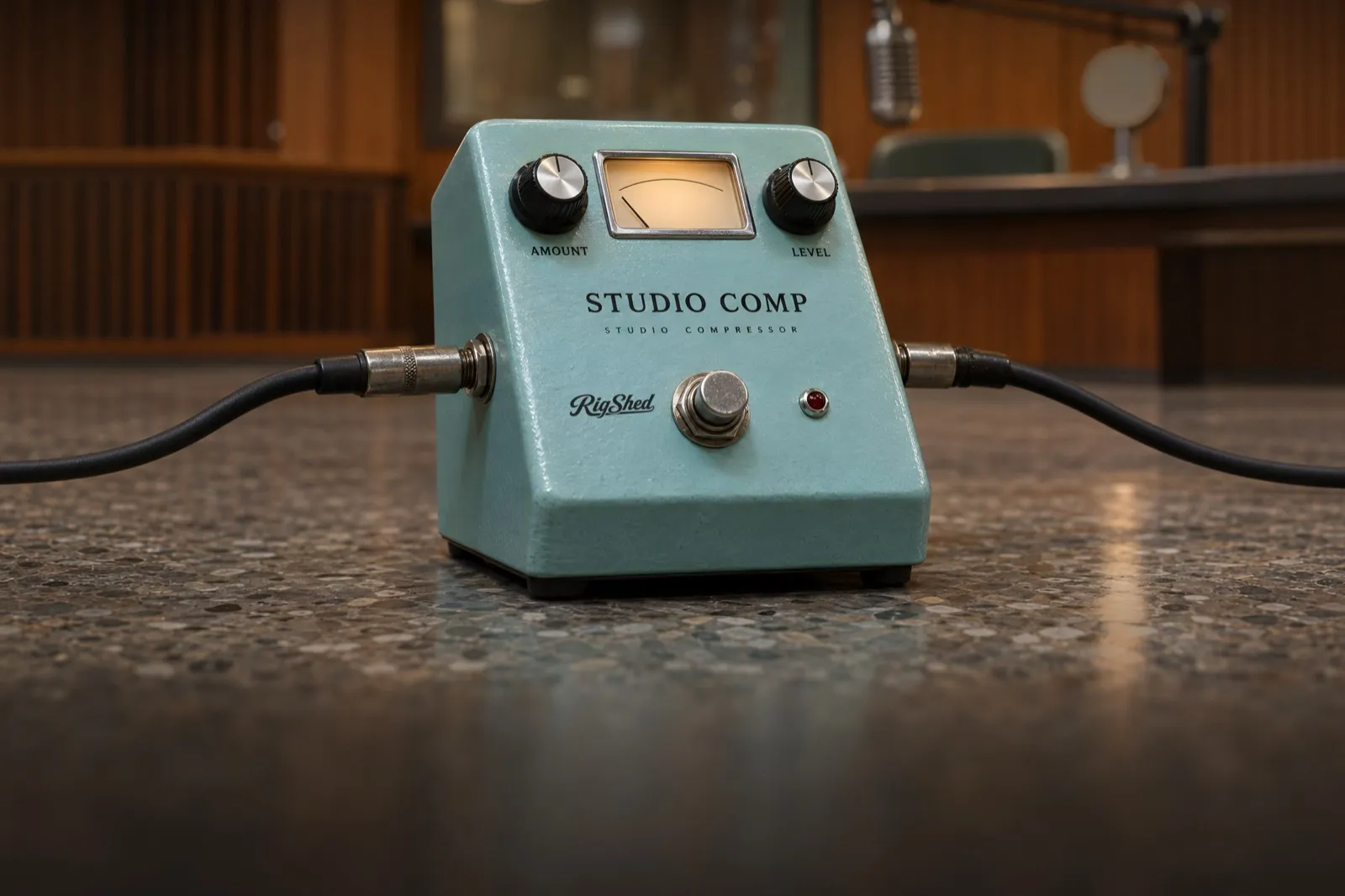
Studio Comp
Studio Compressor
Studio-style sustain.
-
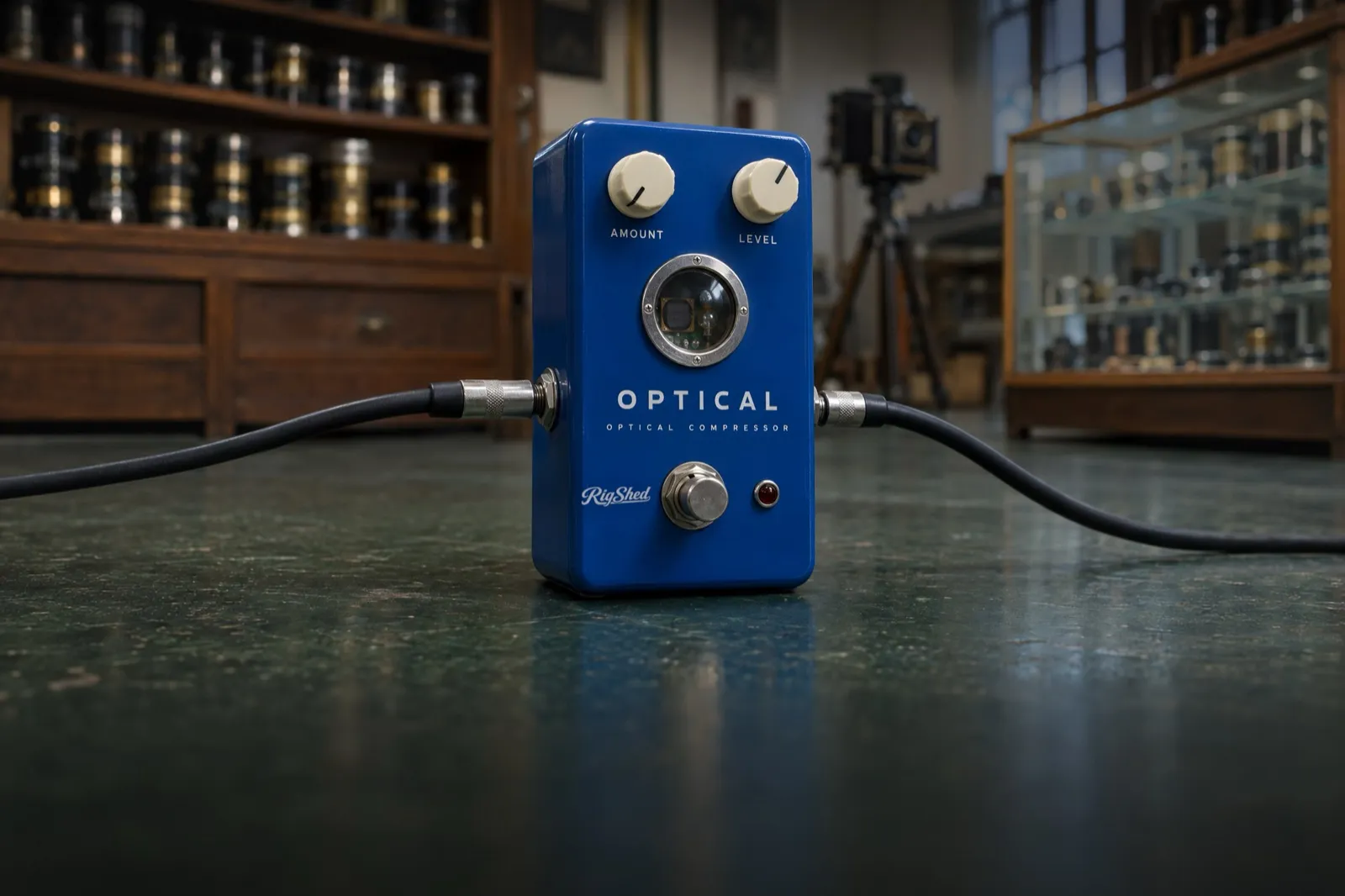
Optical
Optical Compressor
Smooth optical response.
-
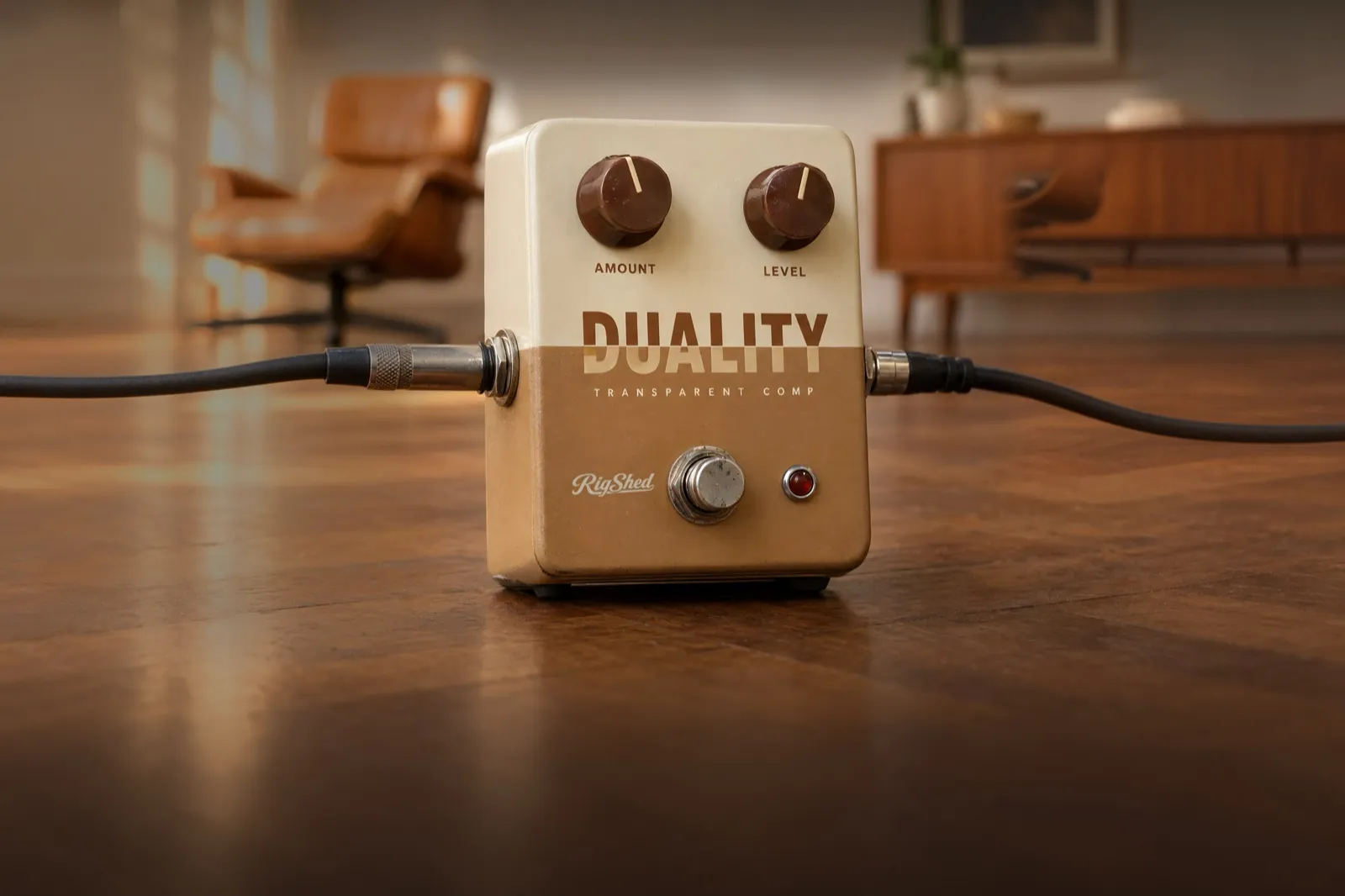
Duality
Transparent Comp
Parallel blend, stays transparent.
-
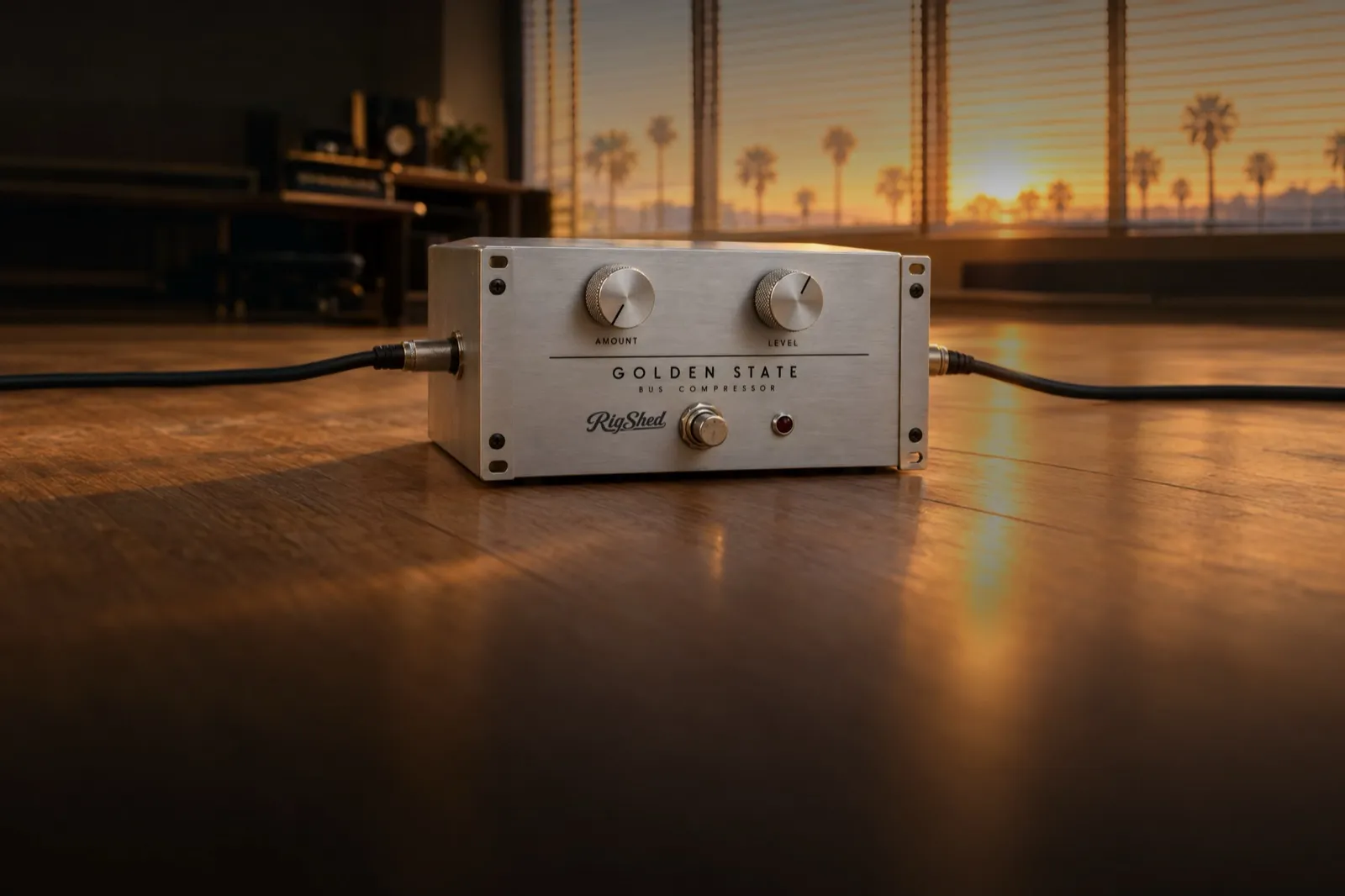
Golden State
Bus Compressor
Fast, FET-style.
Wah
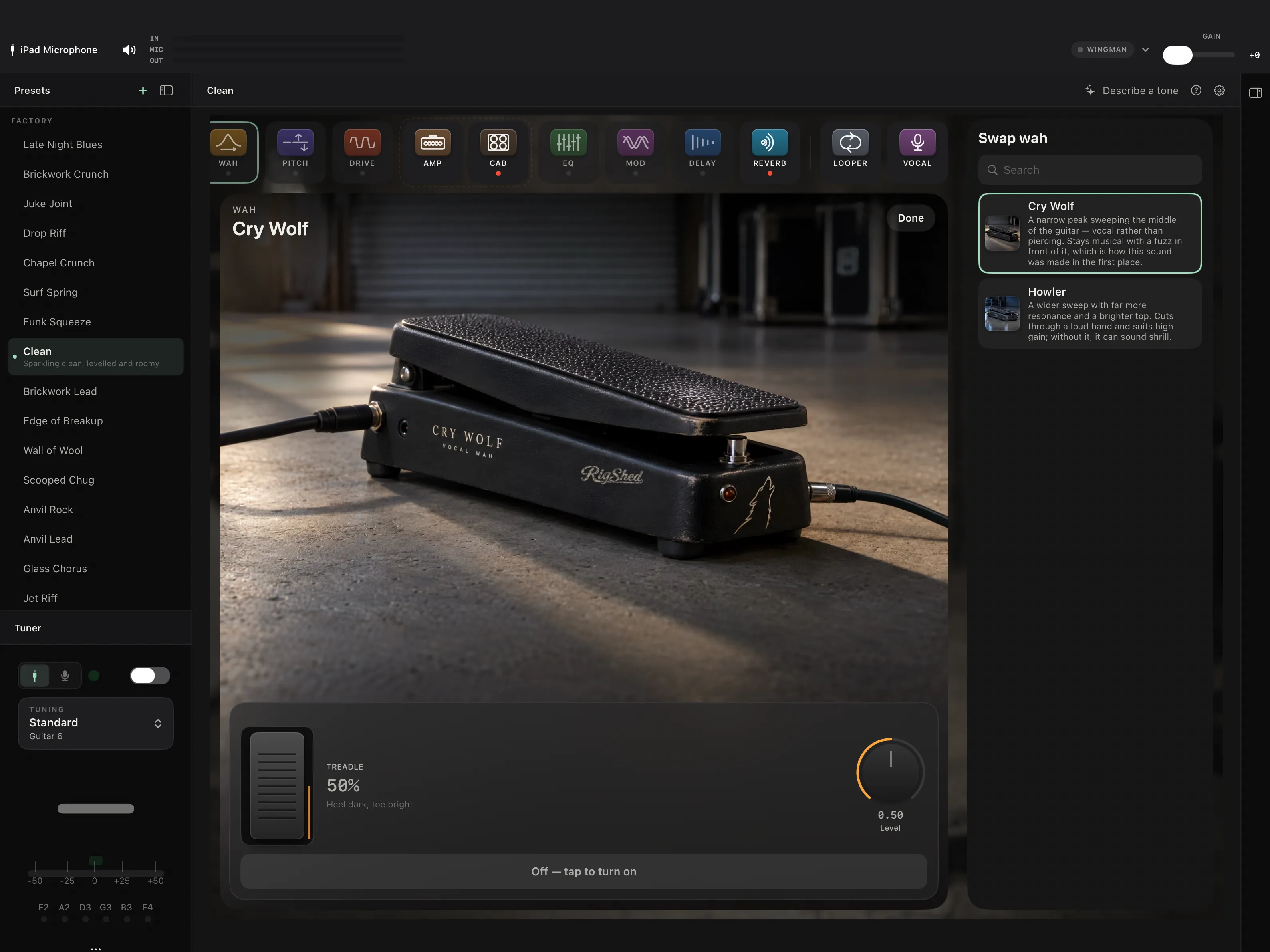
A treadle you rock with a finger, with Level beside it.
-
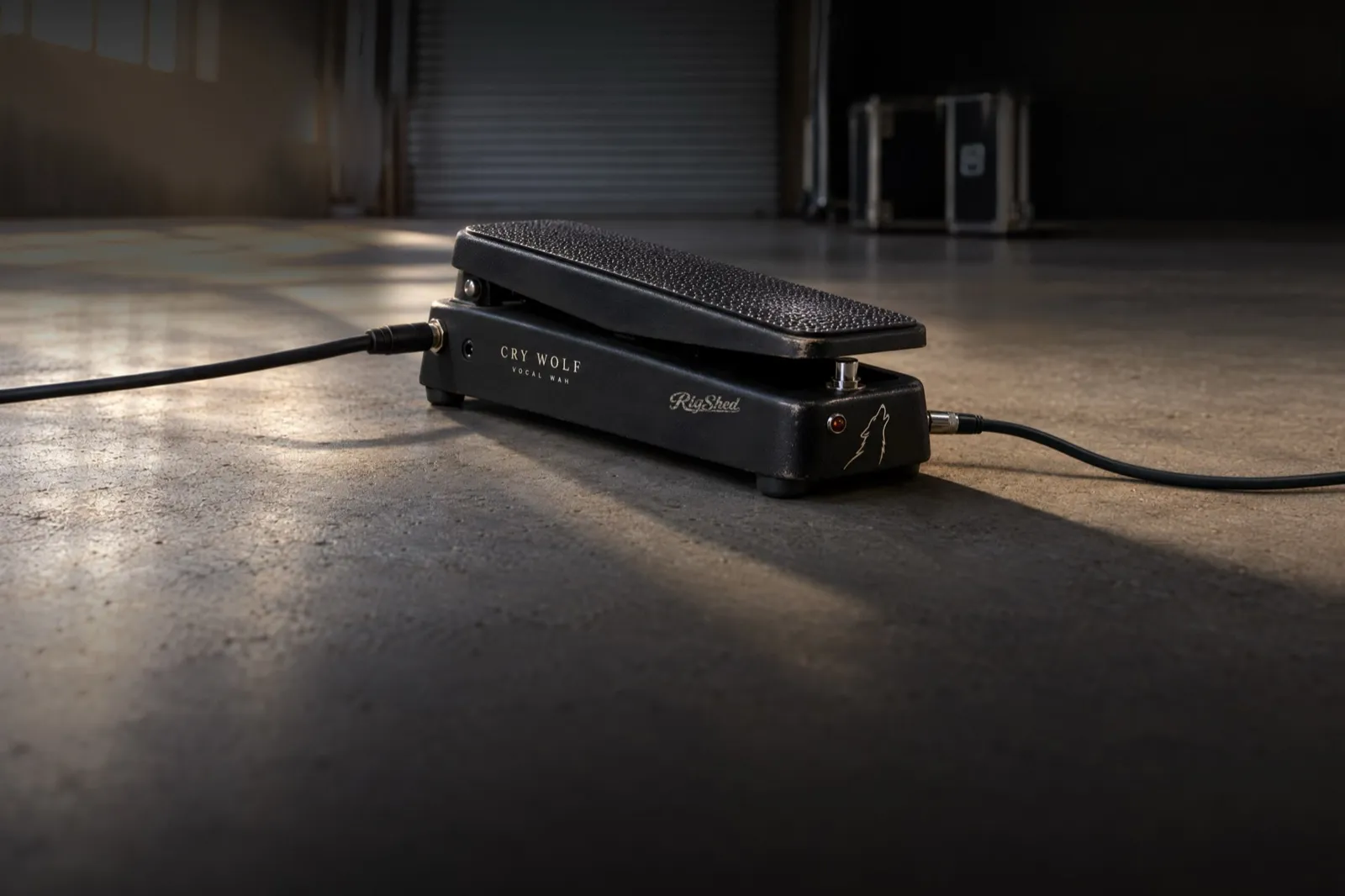
Cry Wolf
Vocal Wah
Broad and throaty. The one that sounds like a voice.
-
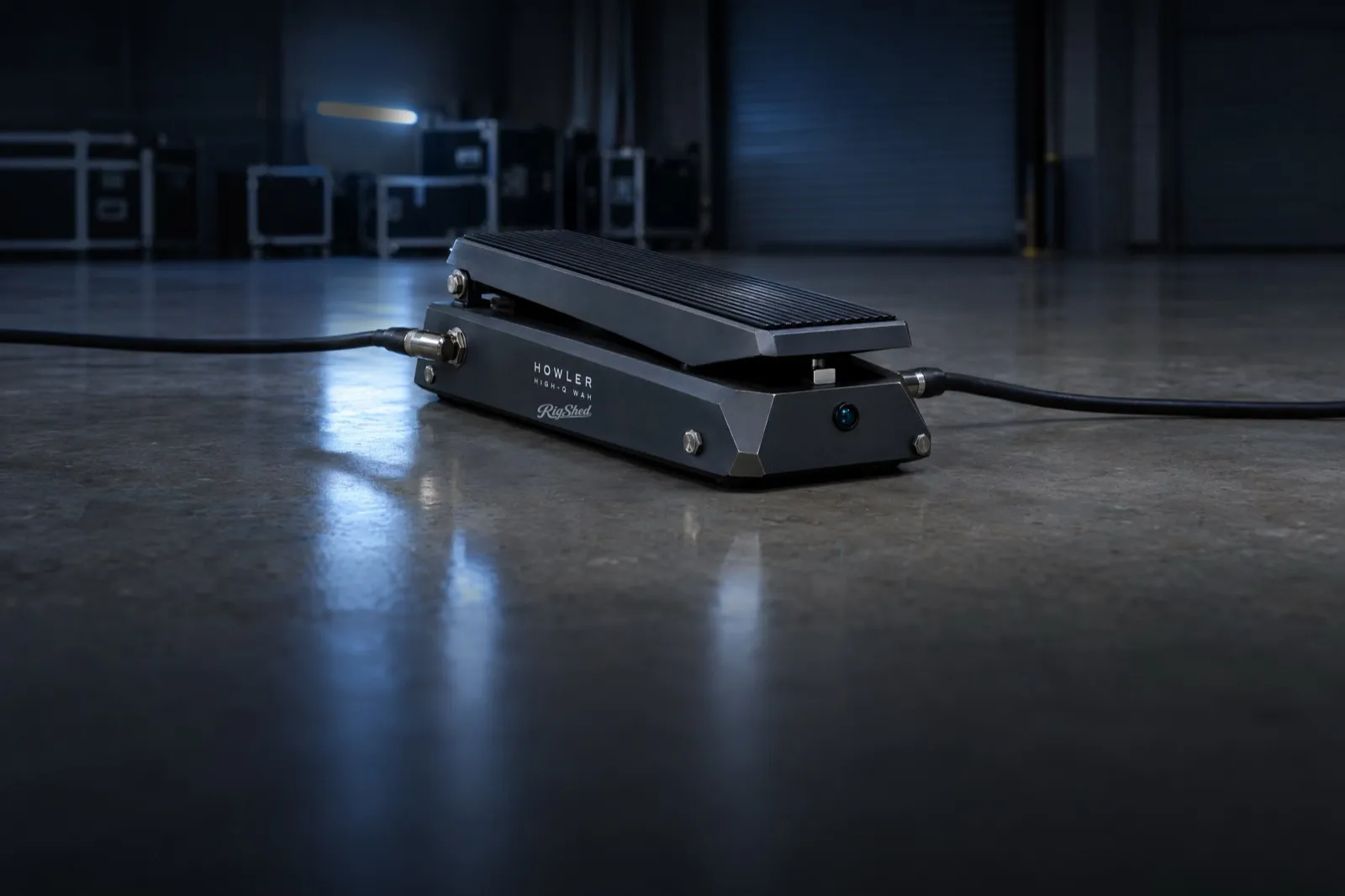
Howler
High-Q Wah
A narrower, sharper peak, so it speaks harder.
Octave and pitch
Before the dirt — both need a clean fundamental to follow.
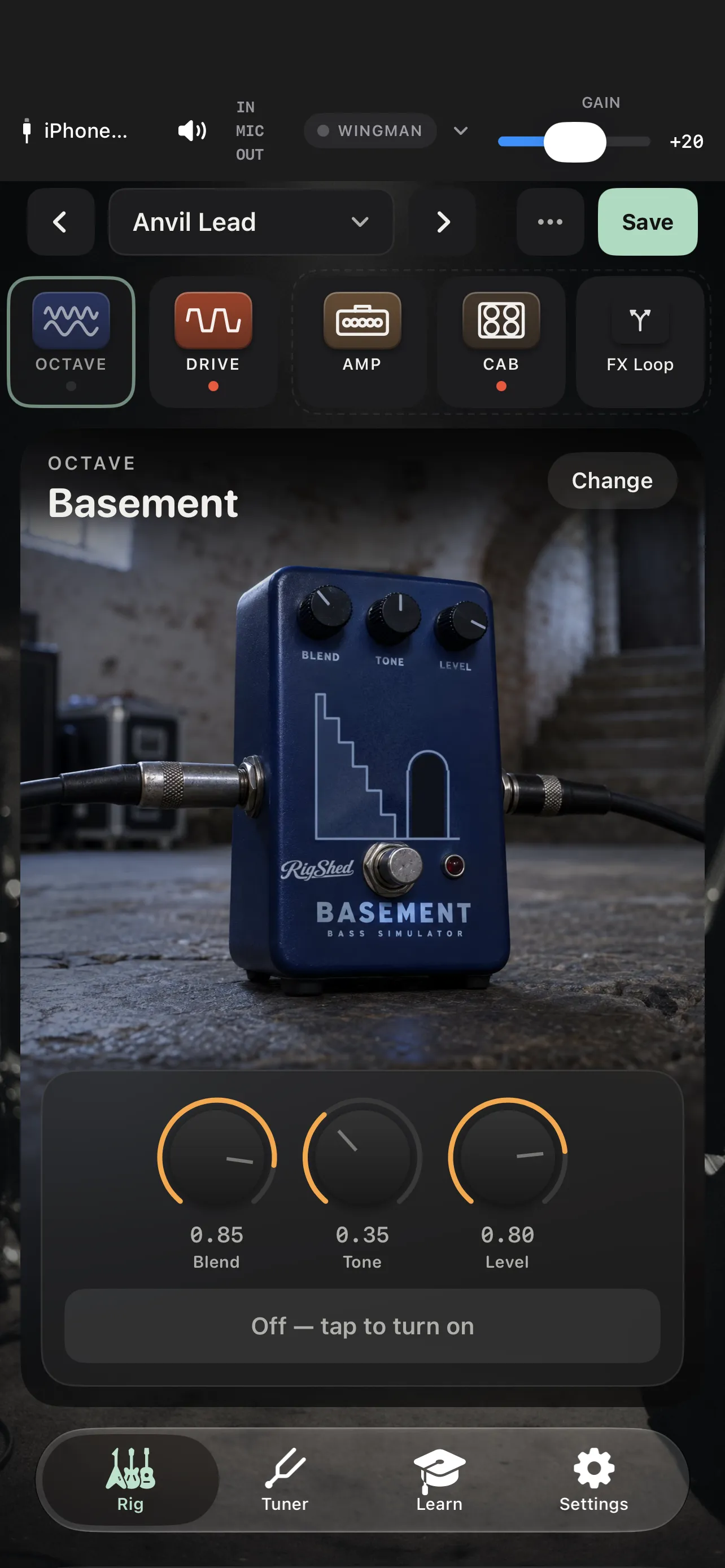
-
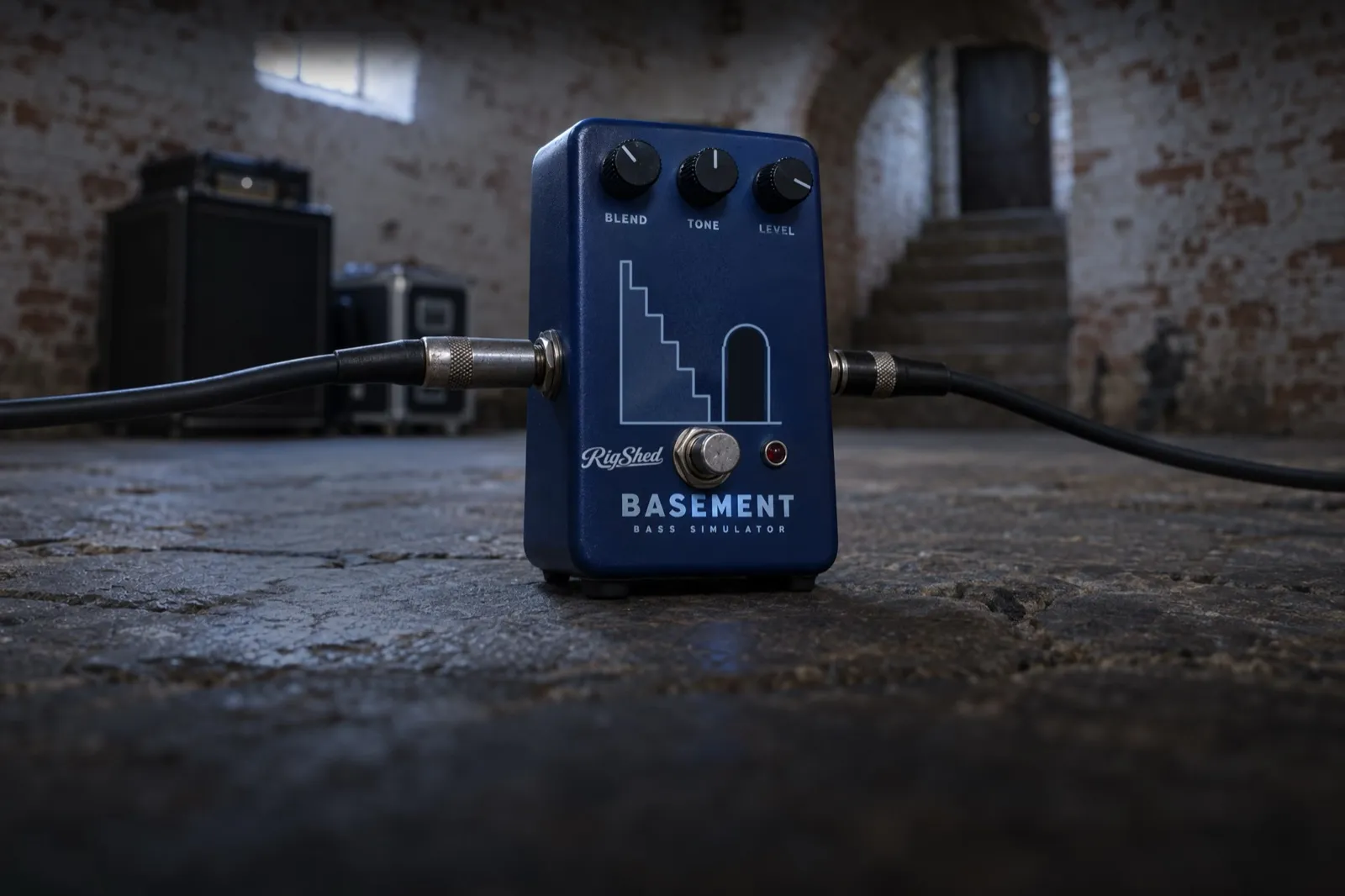
Basement
Octave Down
A clean octave down, one note at a time. It leaves the amp alone.
-
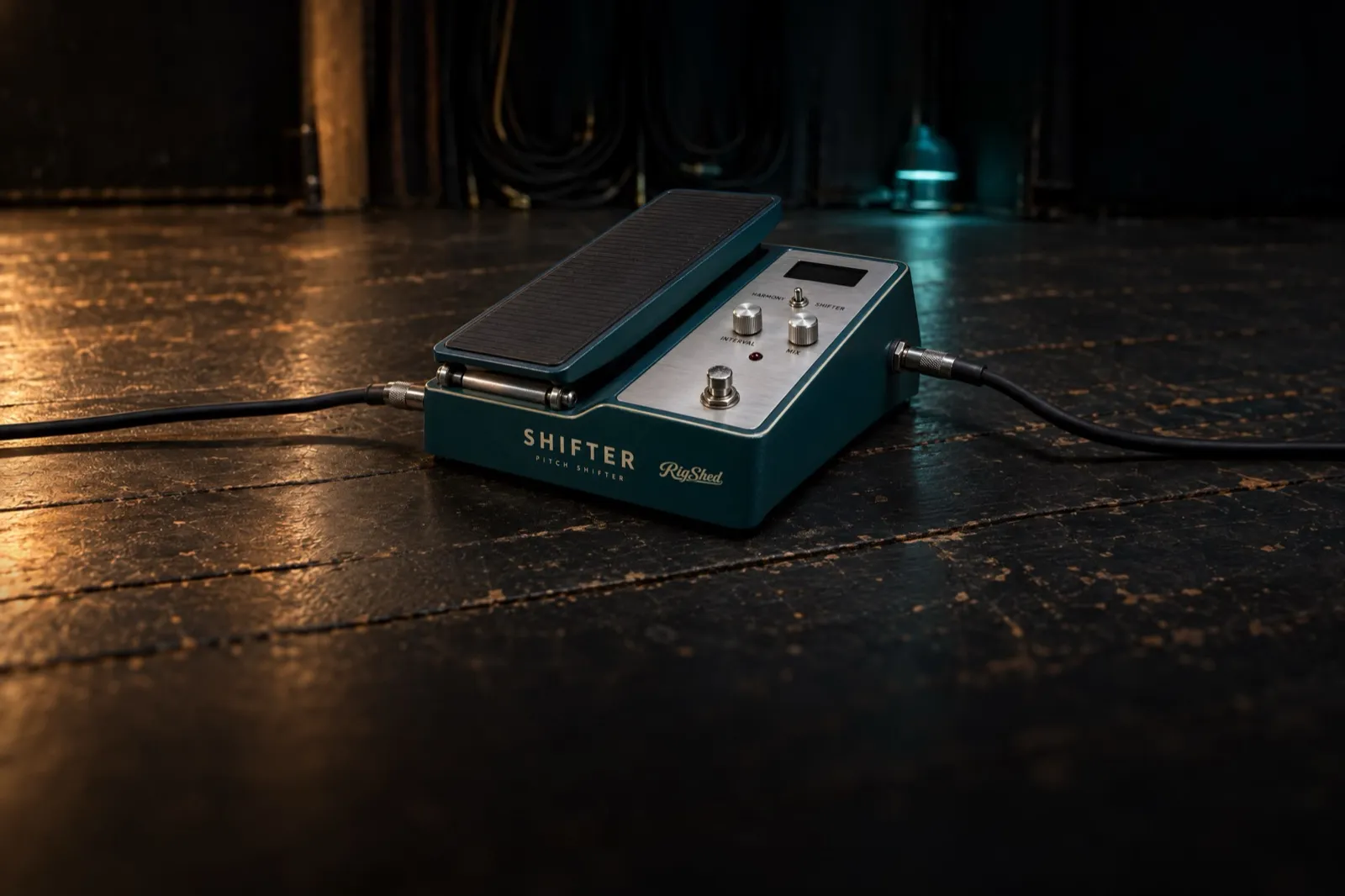
Shifter
Pitch Shifter
Twelve semitones either way, with a treadle and a harmony switch.
Drives
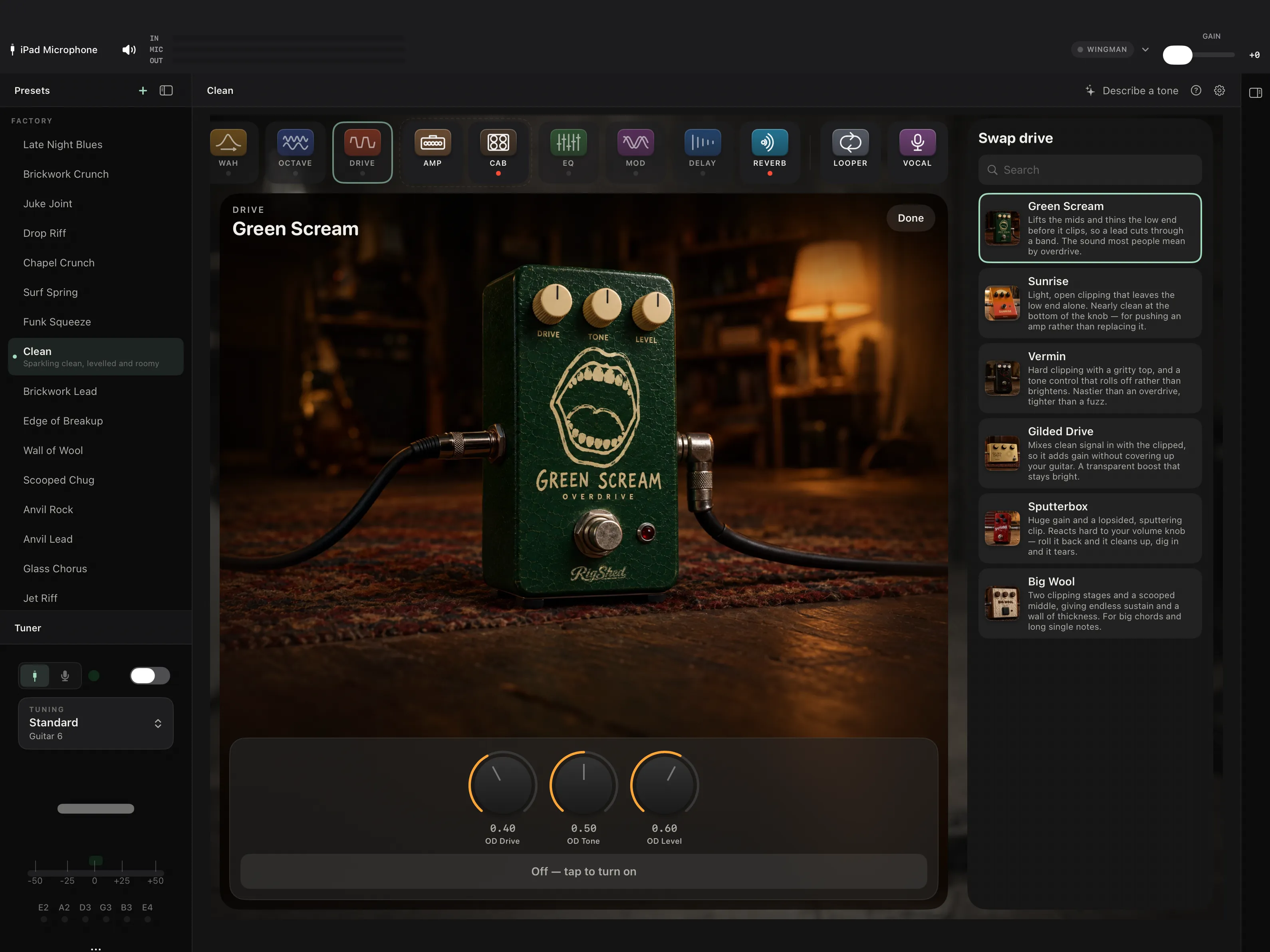
Six ways into break-up, from a clean nudge to full fuzz.
-
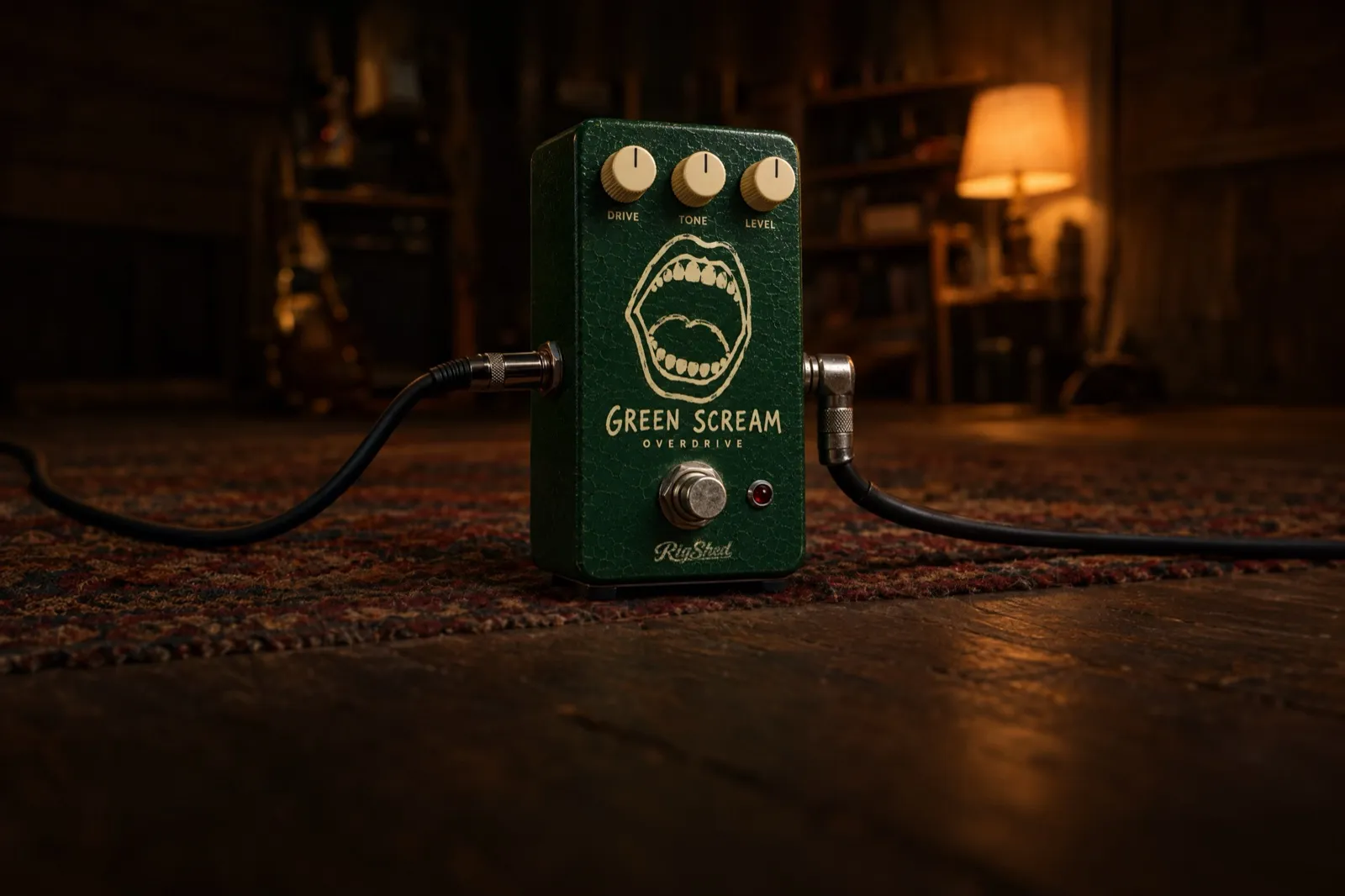
Green Scream
Overdrive
Mid-humped overdrive. The clean guitar runs under the hump, so the low E stays.
-
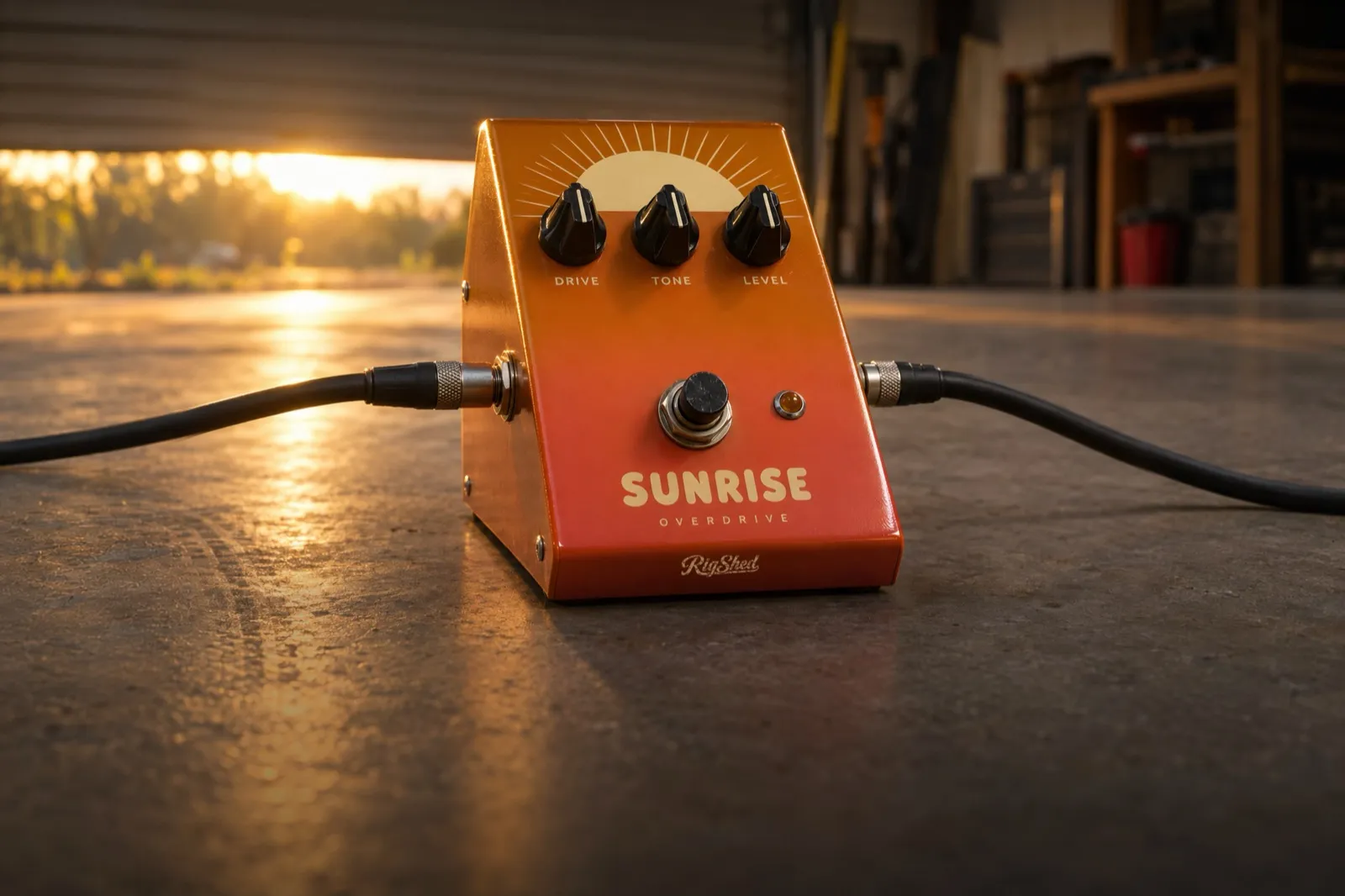
Sunrise
Overdrive
Transparent and low-colour.
-
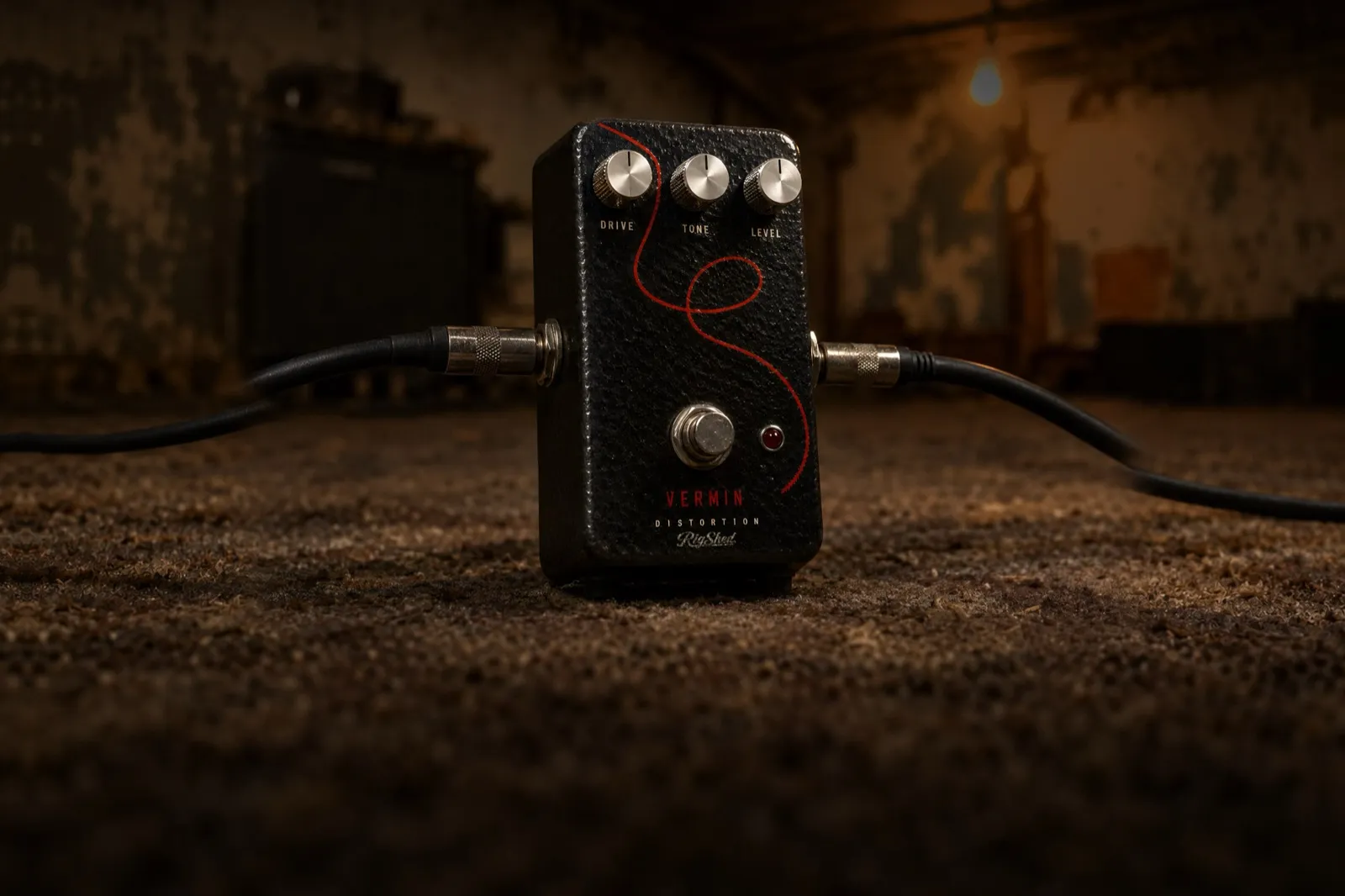
Vermin
Distortion
Hard, aggressive clipping.
-
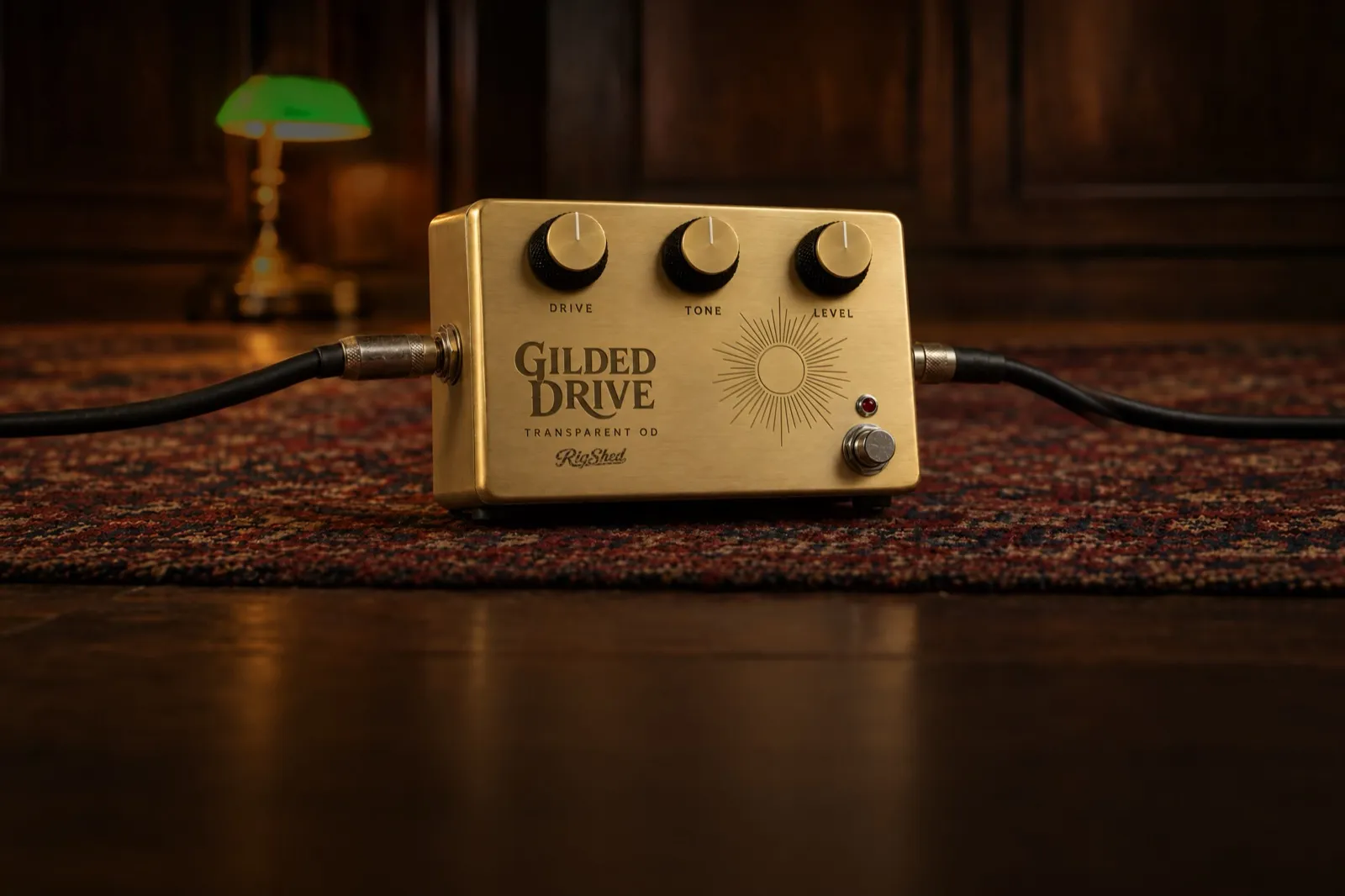
Gilded Drive
Transparent OD
Clean boost into gentle break-up.
-
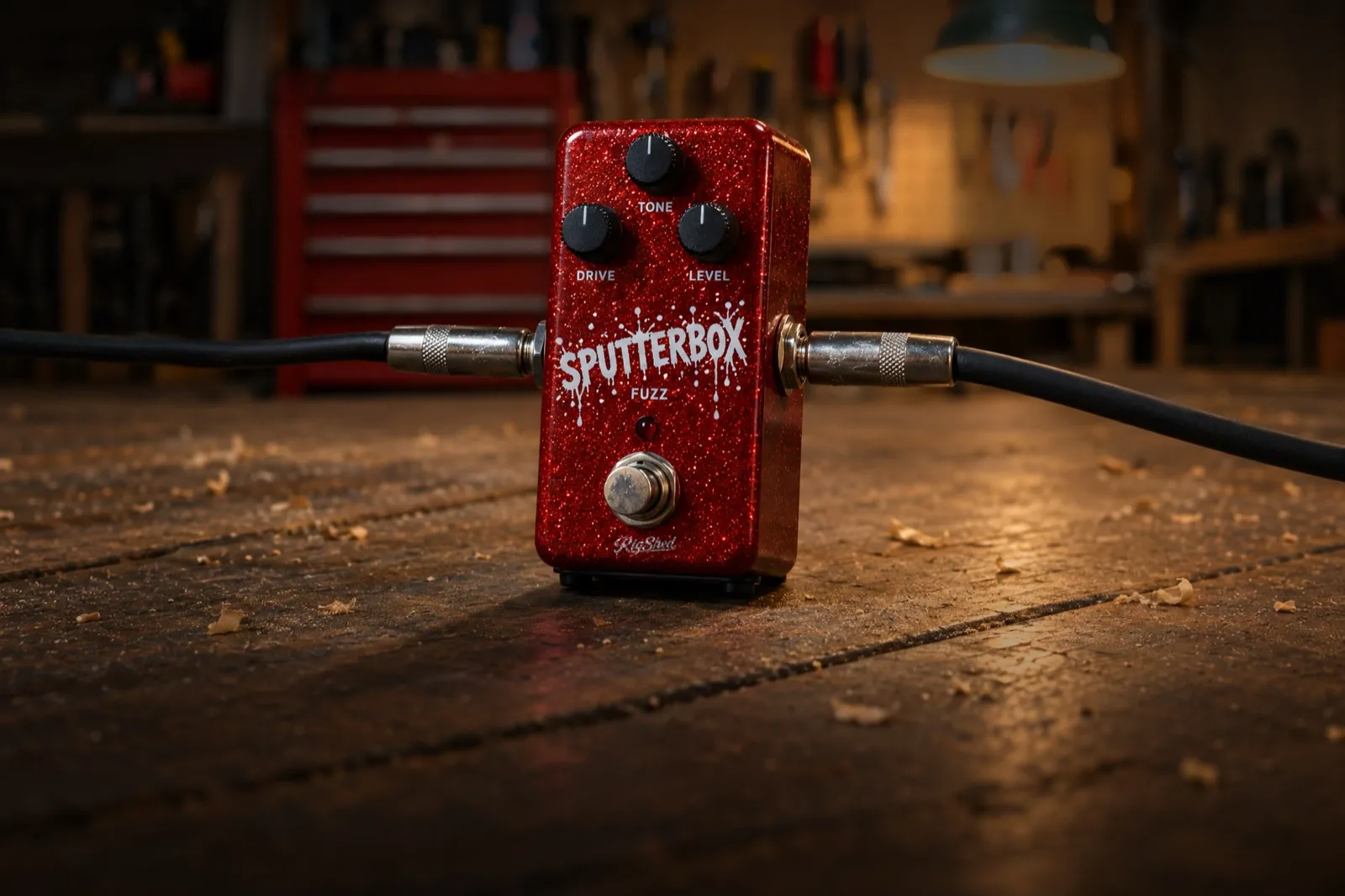
Sputterbox
Fuzz
Spitty, gated fuzz.
-
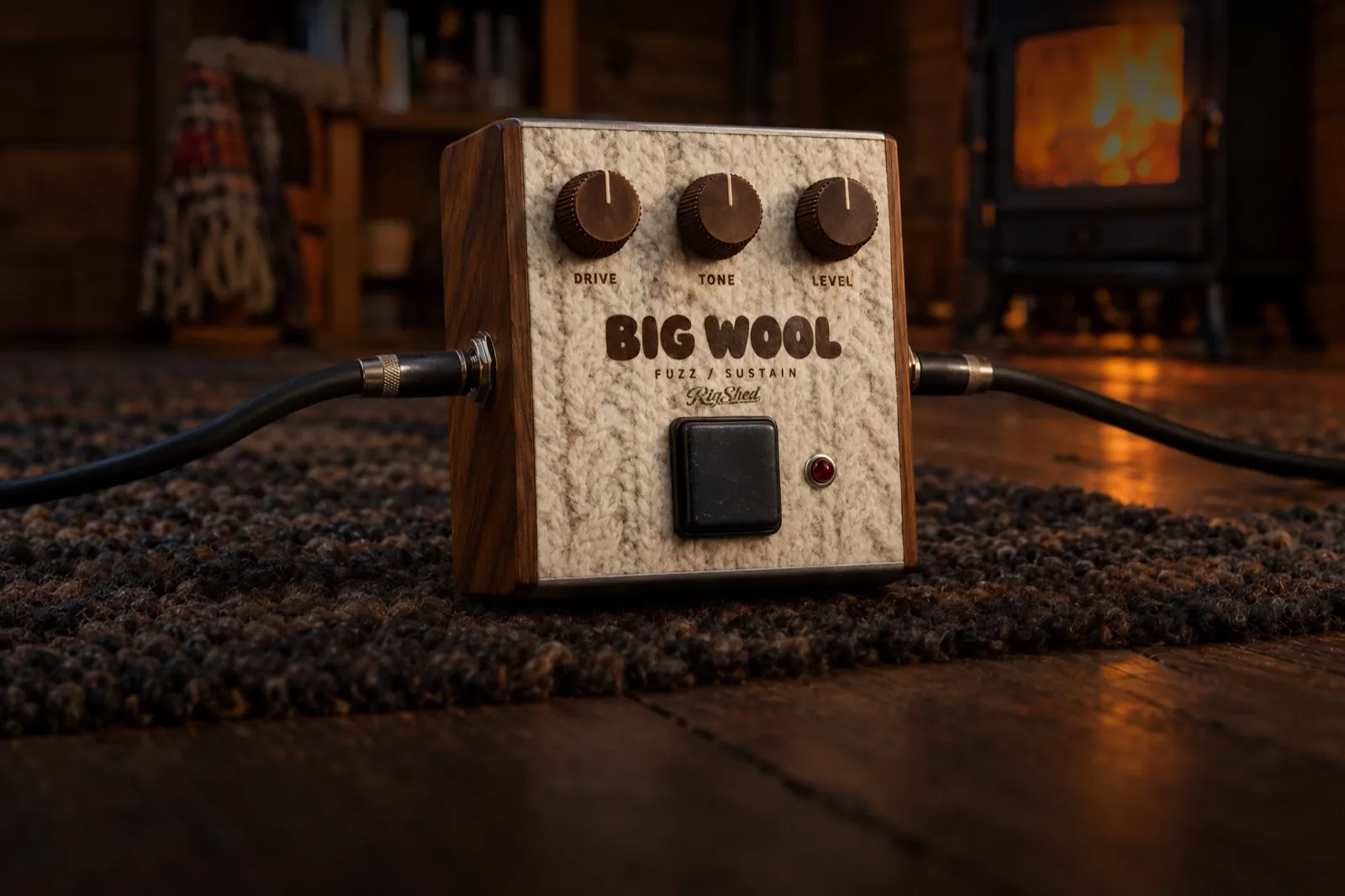
Big Wool
Fuzz / Sustain
Thick and scooped, with long sustain.
Equalisers
Five genuinely different equalisers, not one with five presets.
-
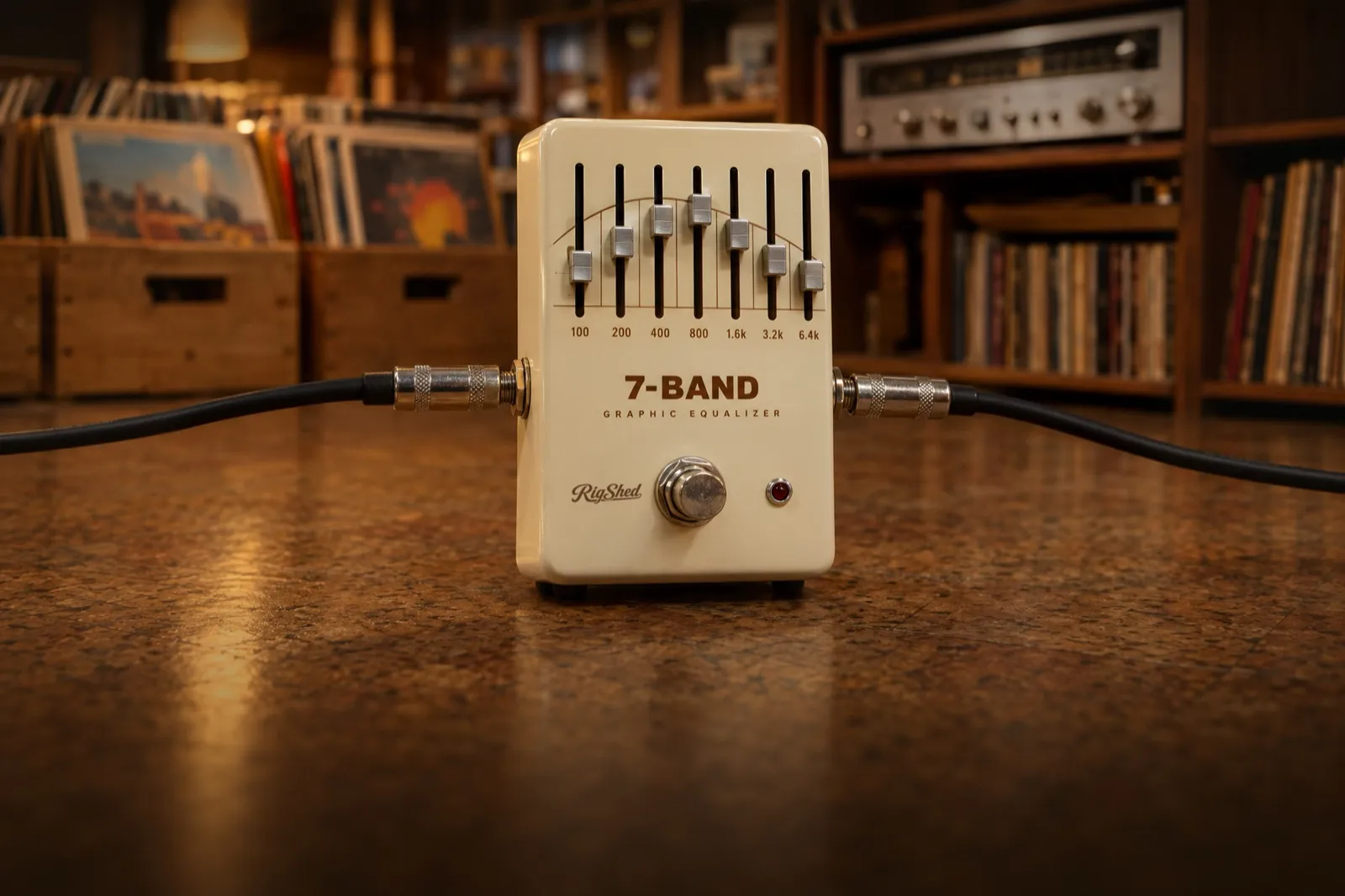
7-Band
Graphic Equalizer
Seven faders, 100 Hz to 6.4 kHz.
-
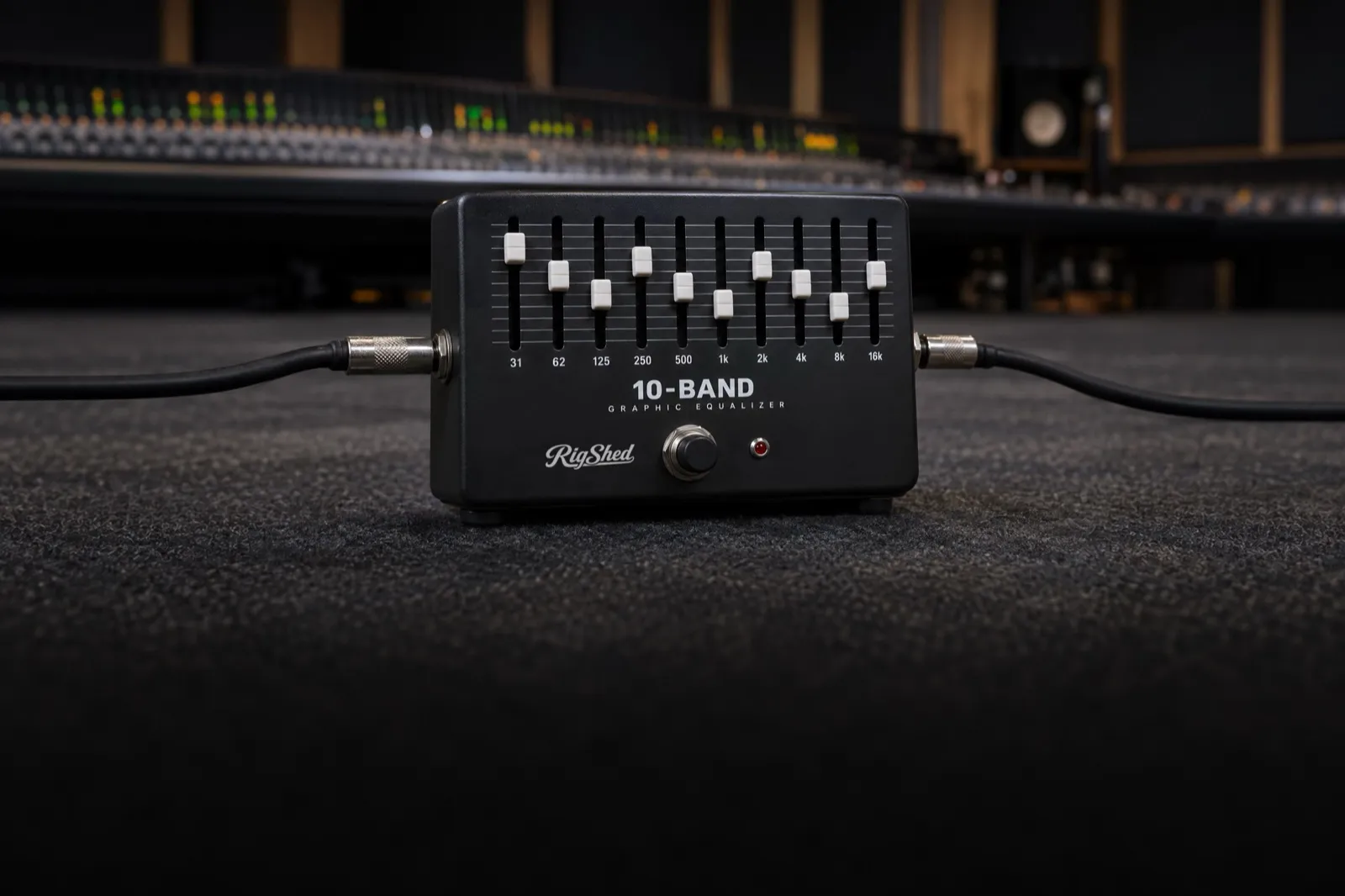
10-Band
Graphic Equalizer
Ten faders, 31 Hz to 16 kHz.
-
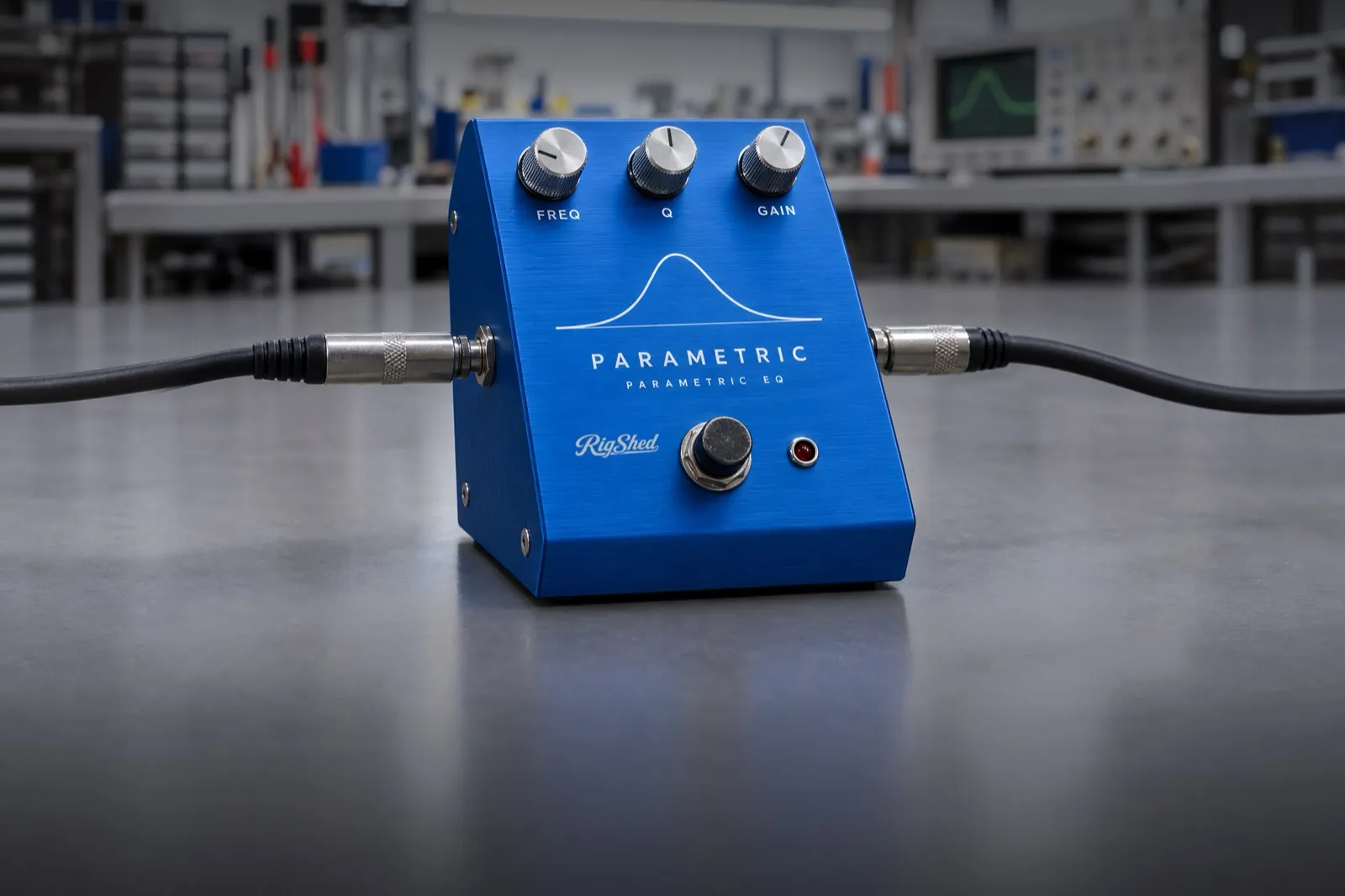
Parametric
Parametric EQ
One sweepable bell — Freq, Q and Gain.
-
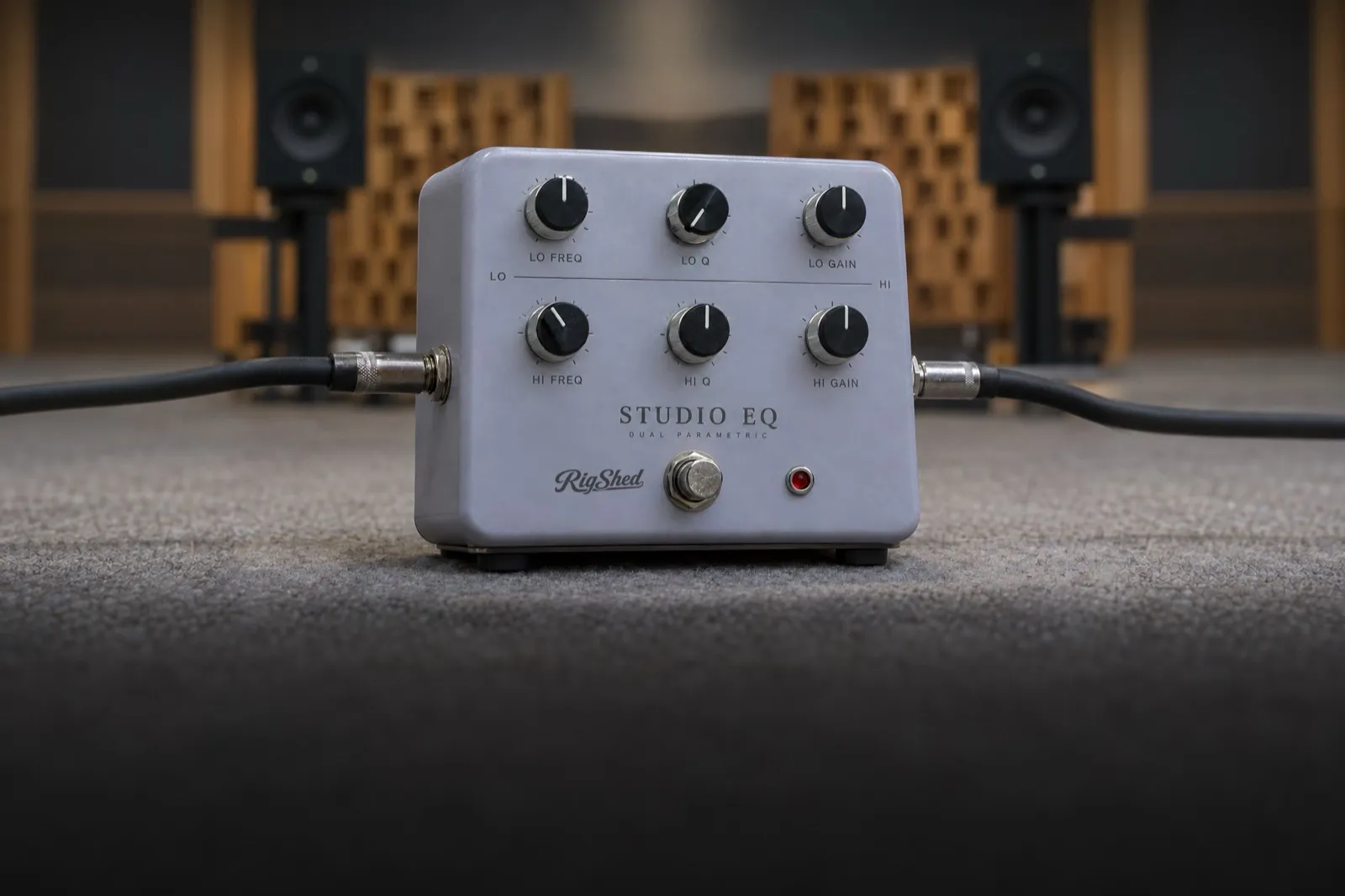
Studio EQ
Dual Parametric
Two sweepable bells, low and high.
-
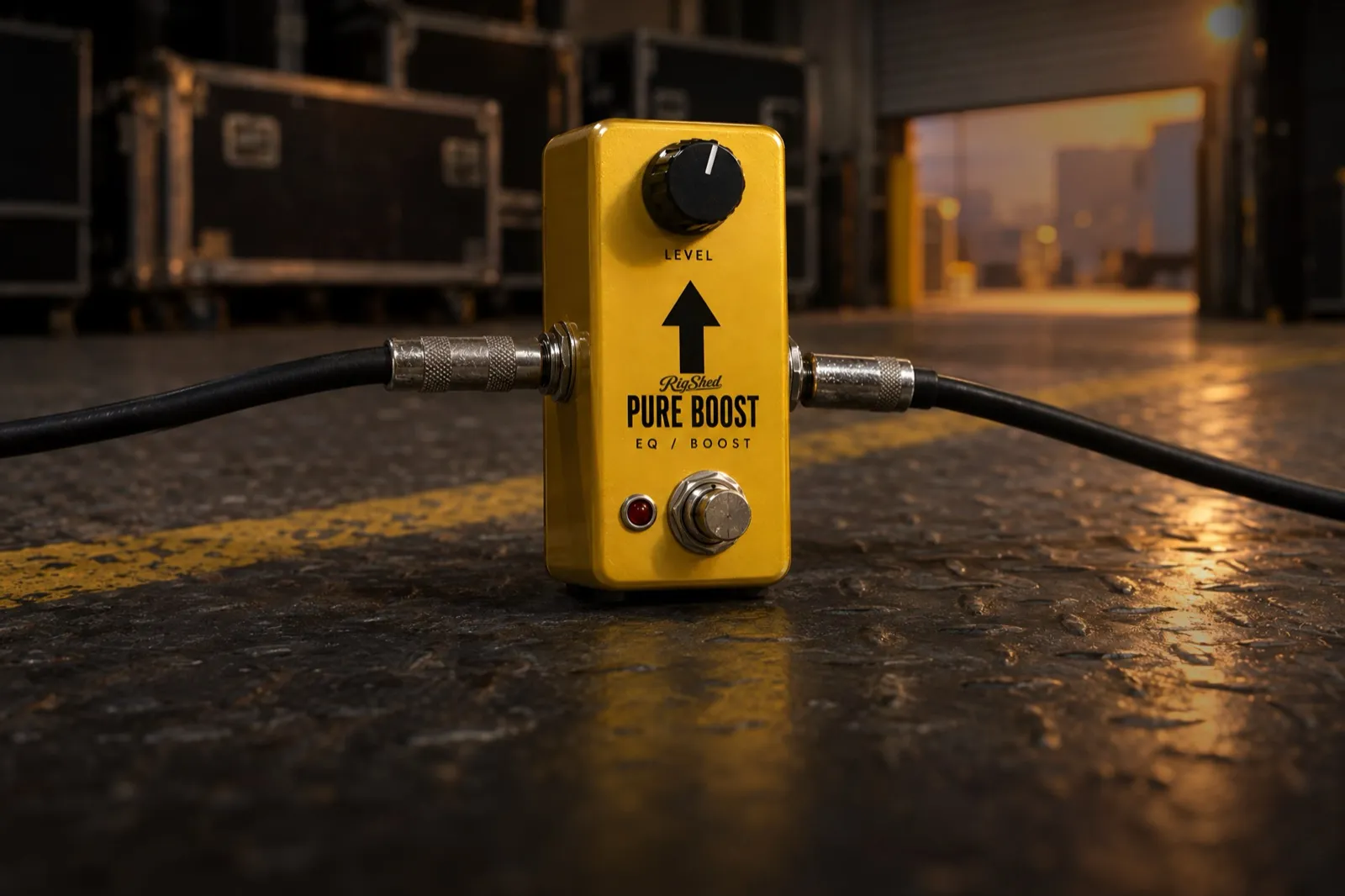
Pure Boost
EQ / Boost
No filters at all. One clean level control.
Modulation
After the cab, where modulation sits on a real board.
-
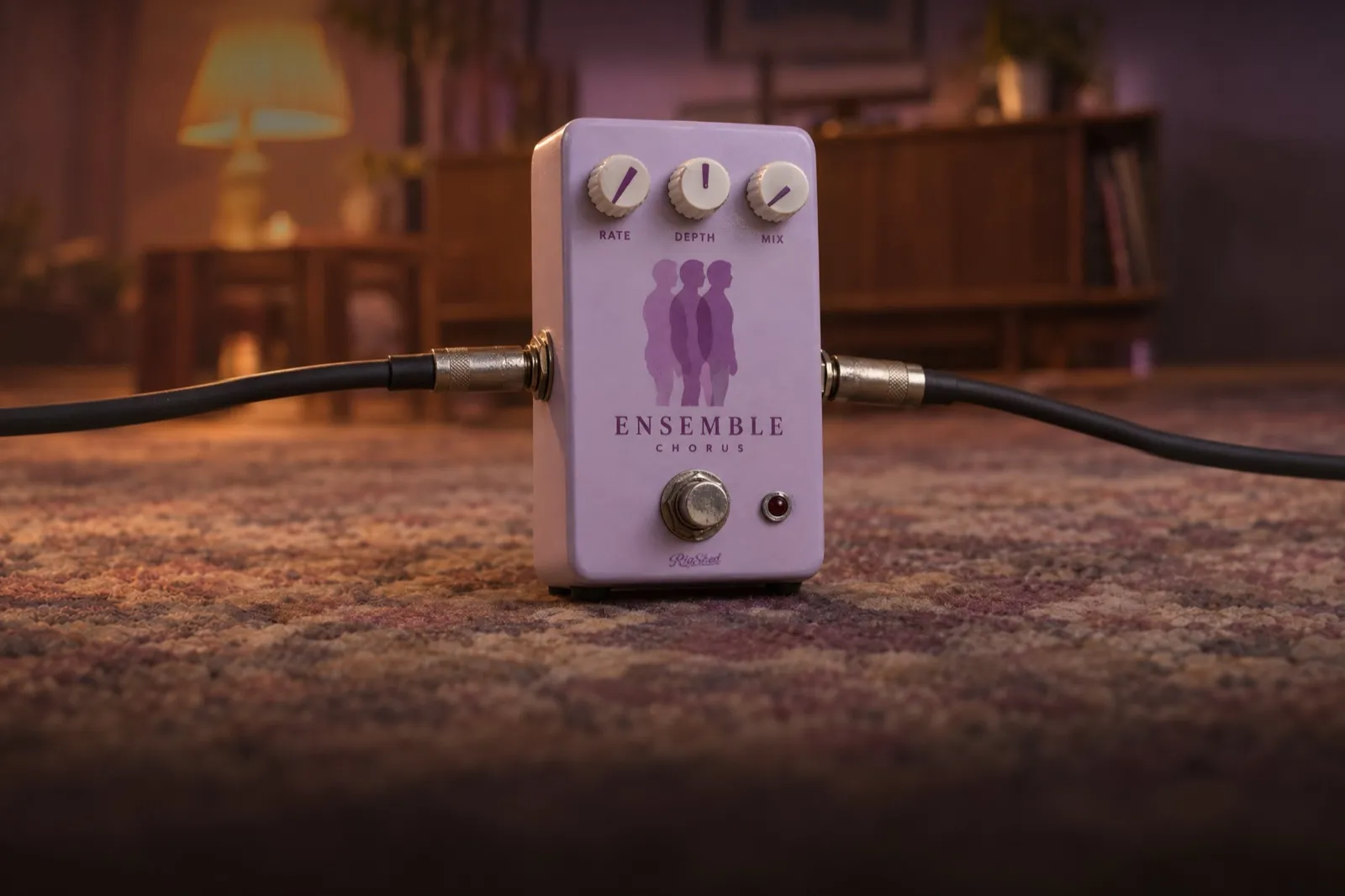
Ensemble
Chorus
Classic bright chorus.
-
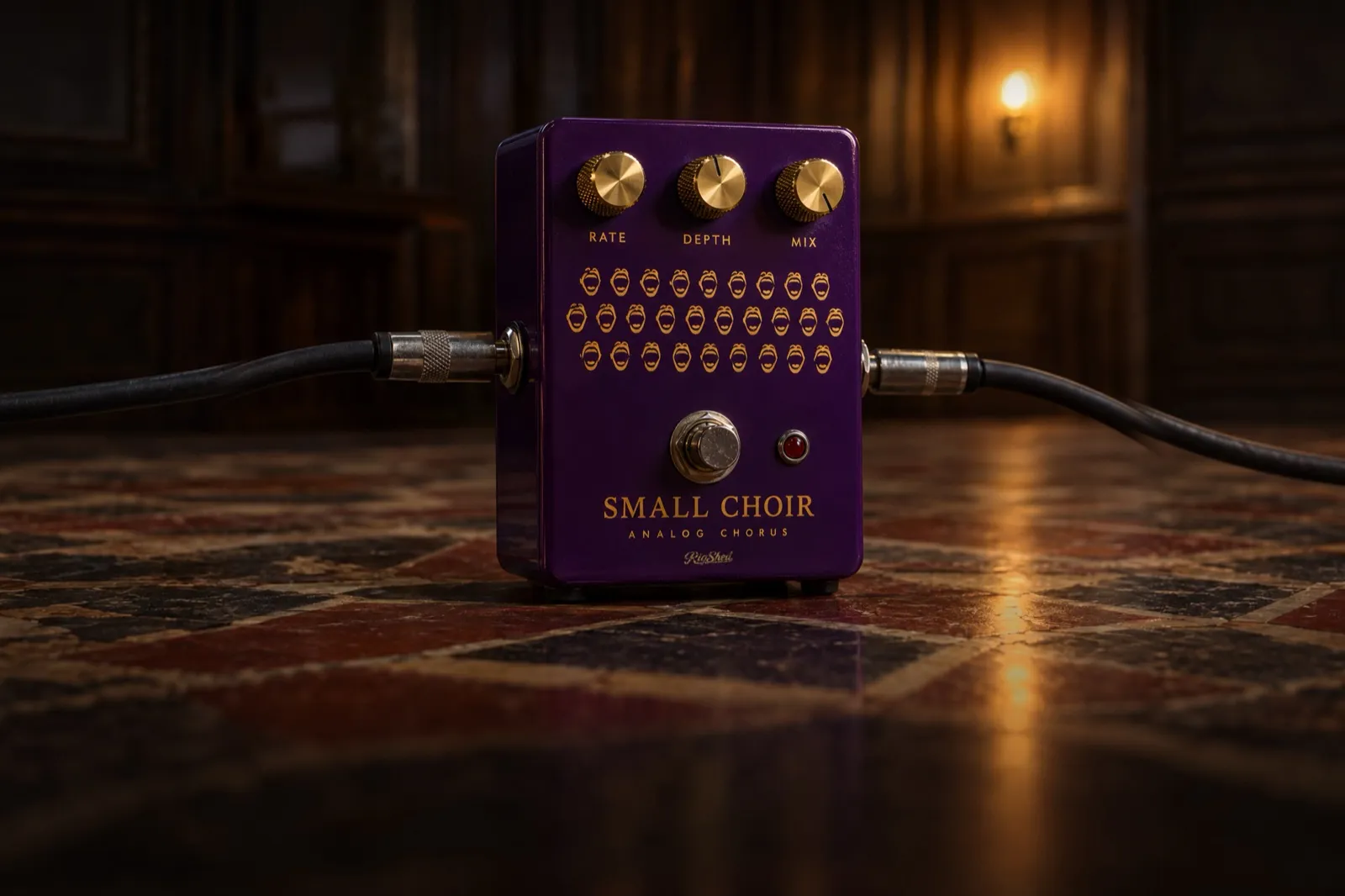
Small Choir
Analog Chorus
Warmer, darker chorus.
-
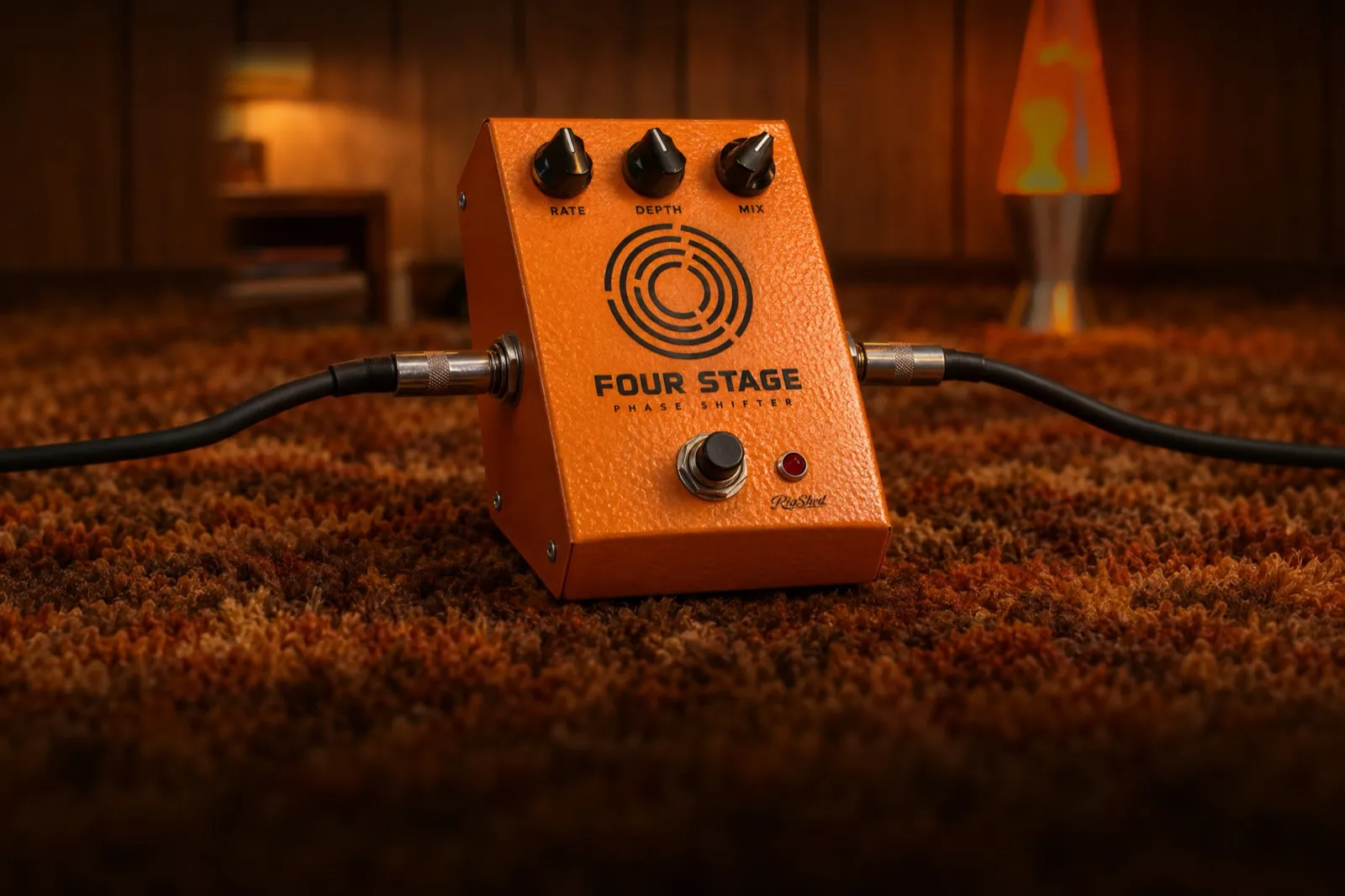
Four Stage
Phase Shifter
Four-stage phaser with feedback.
-
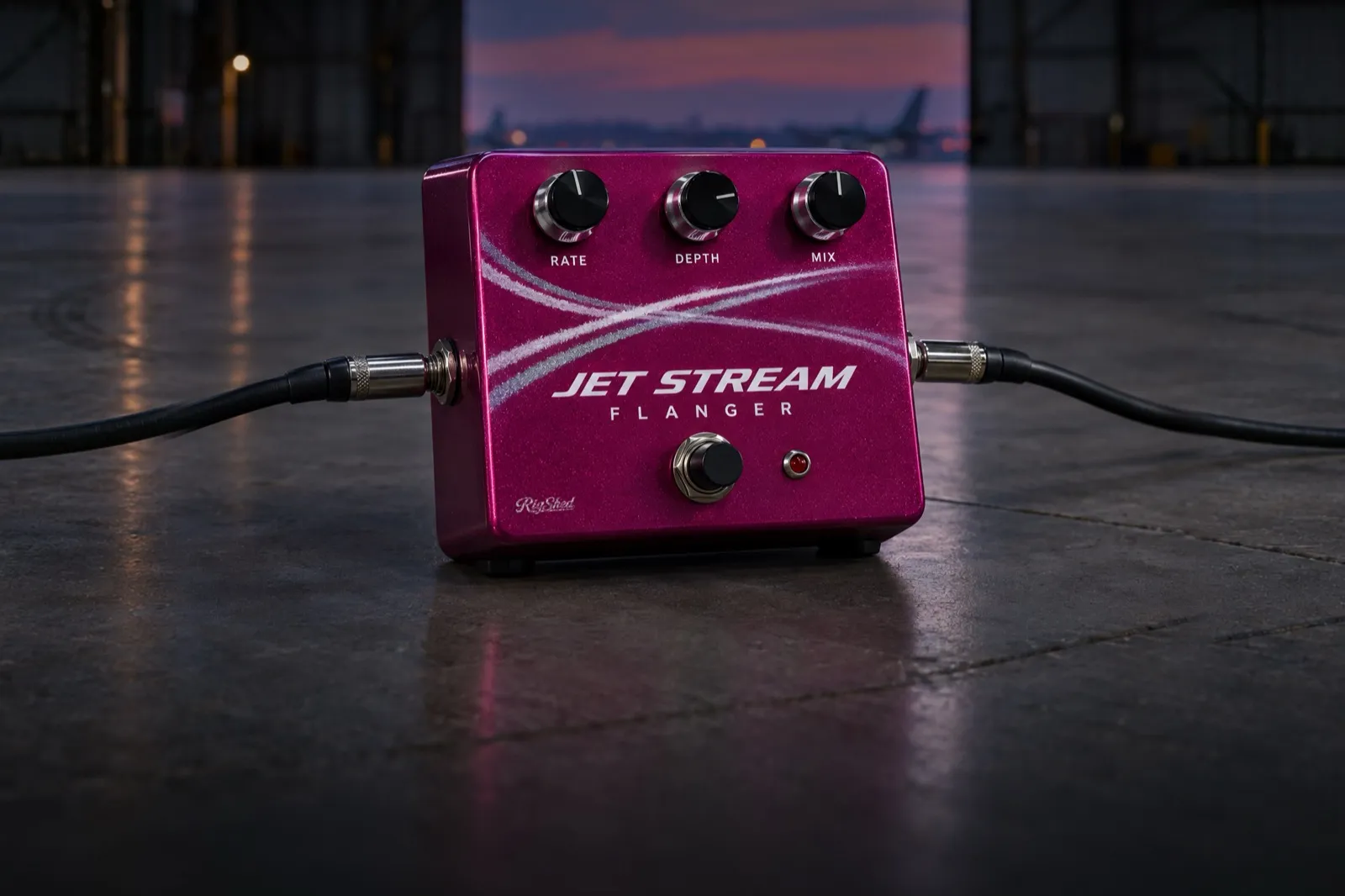
Jet Stream
Flanger
Jet-sweep flanger.
-
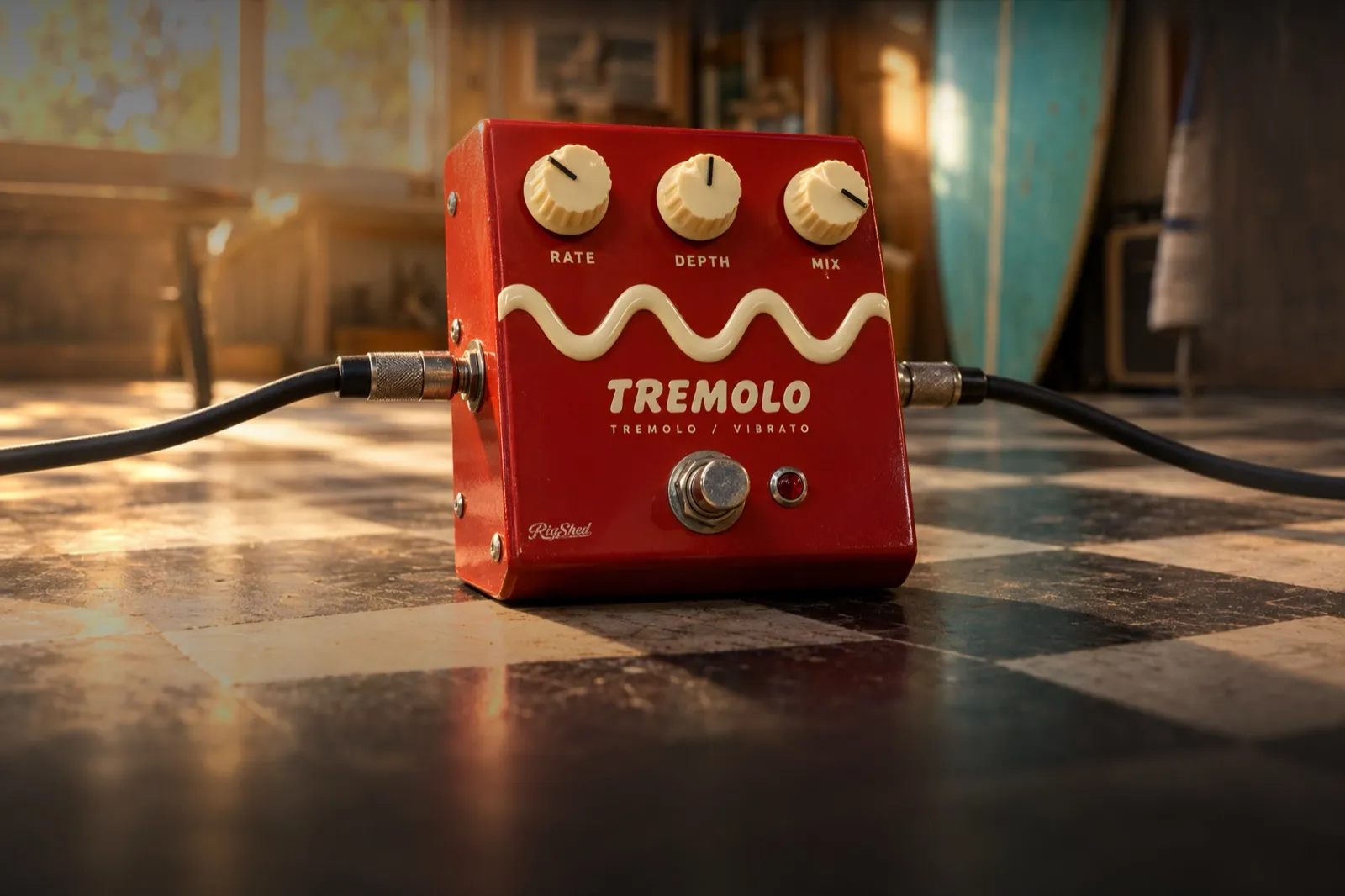
Tremolo
Tremolo / Vibrato
Amplitude and pitch modulation.
-
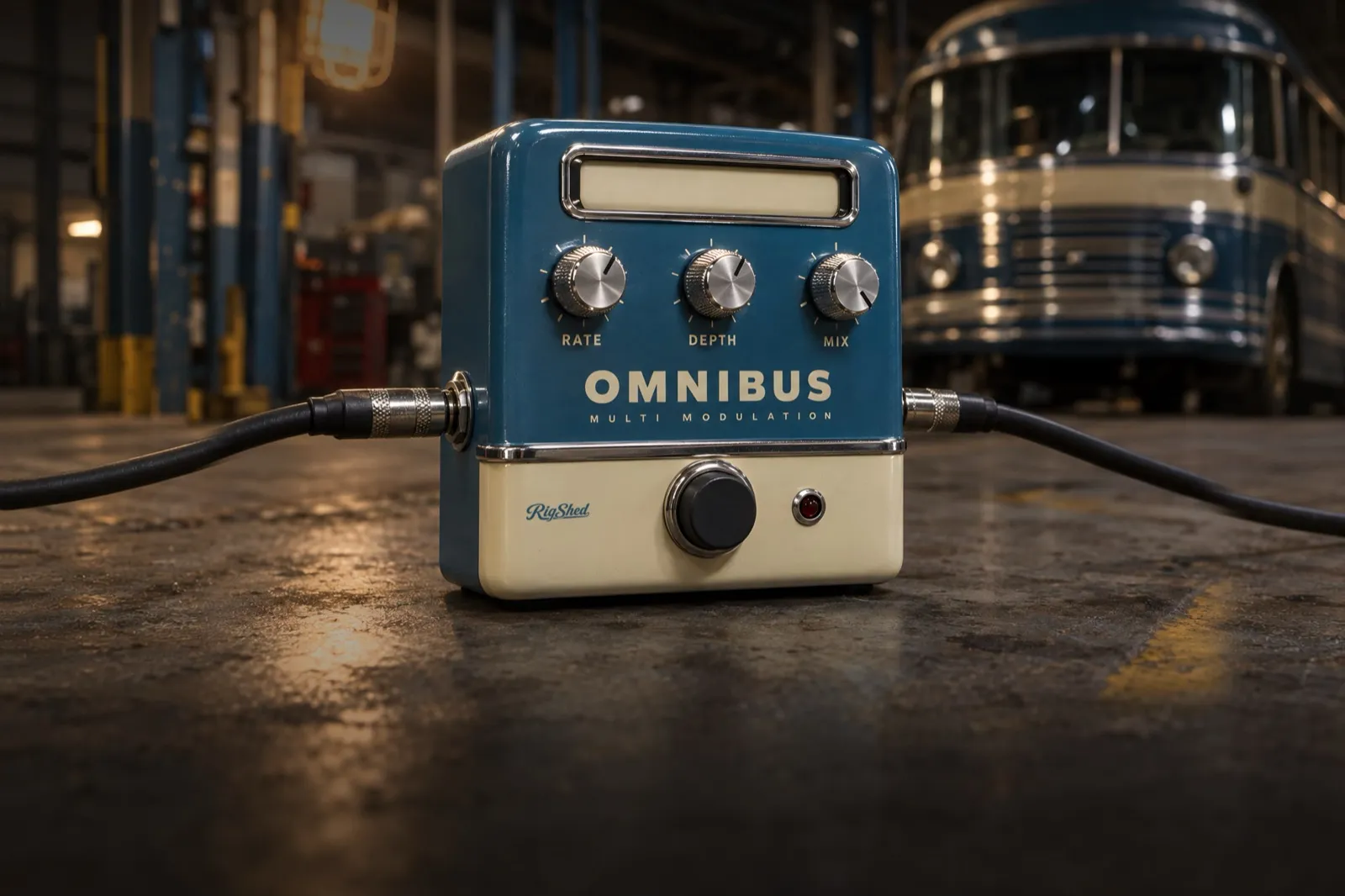
Omnibus
Multi Modulation
Combined modulation.
Delays
All five take tap tempo and BPM sync, in note divisions.
-
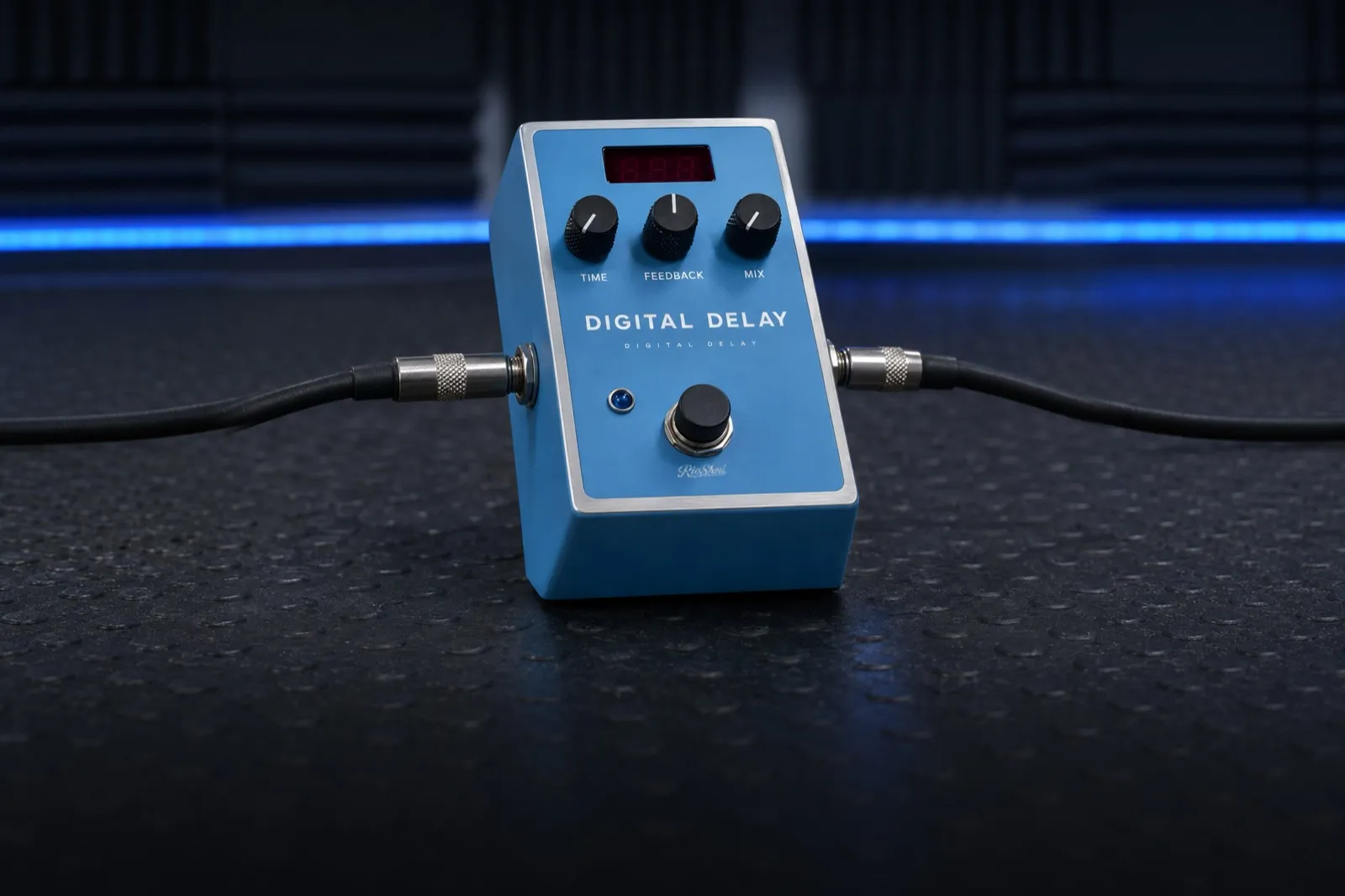
Digital Delay
Digital Delay
Clean, precise repeats.
-
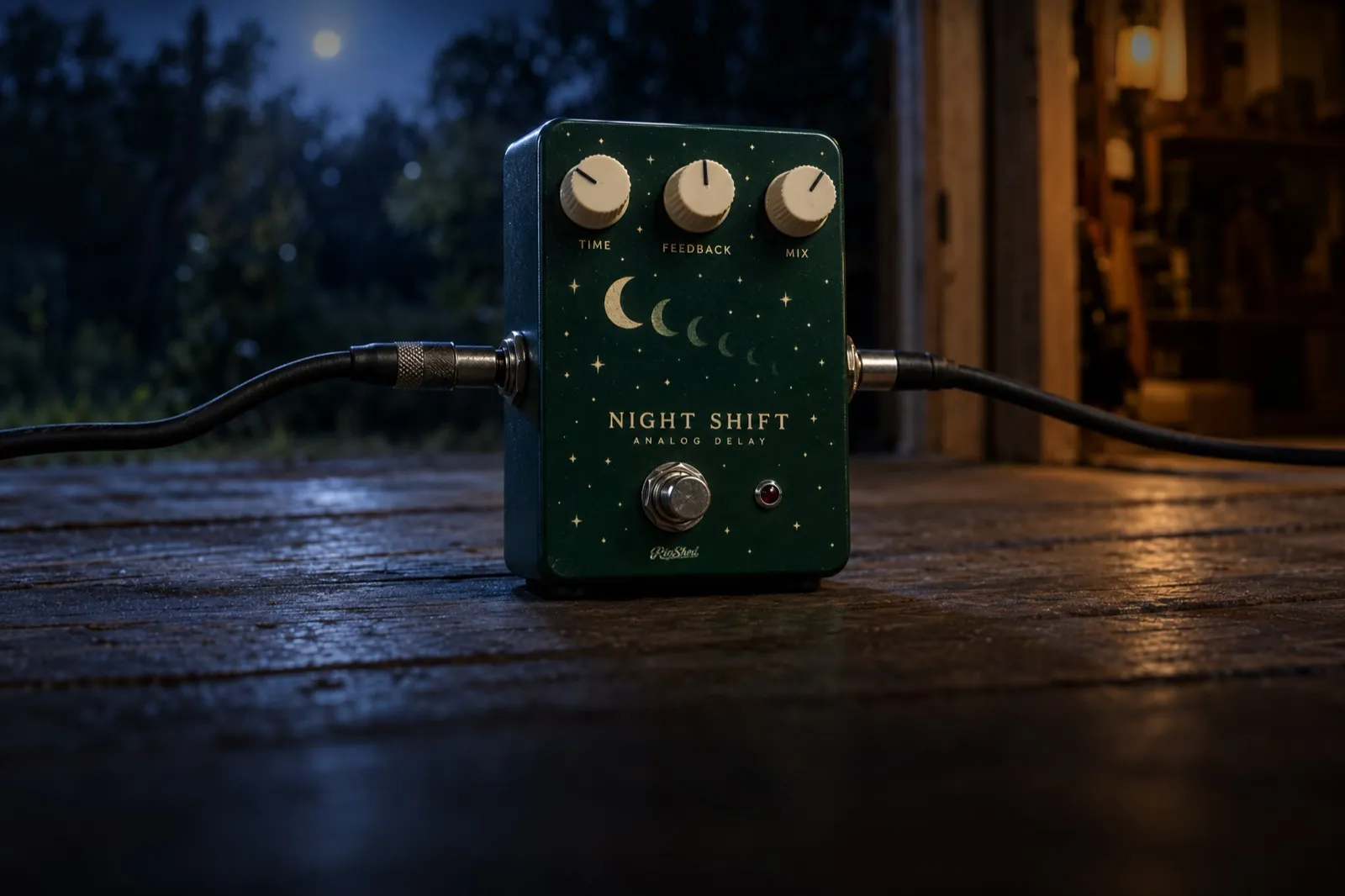
Night Shift
Analog Delay
Bucket-brigade — the repeats darken as they go.
-
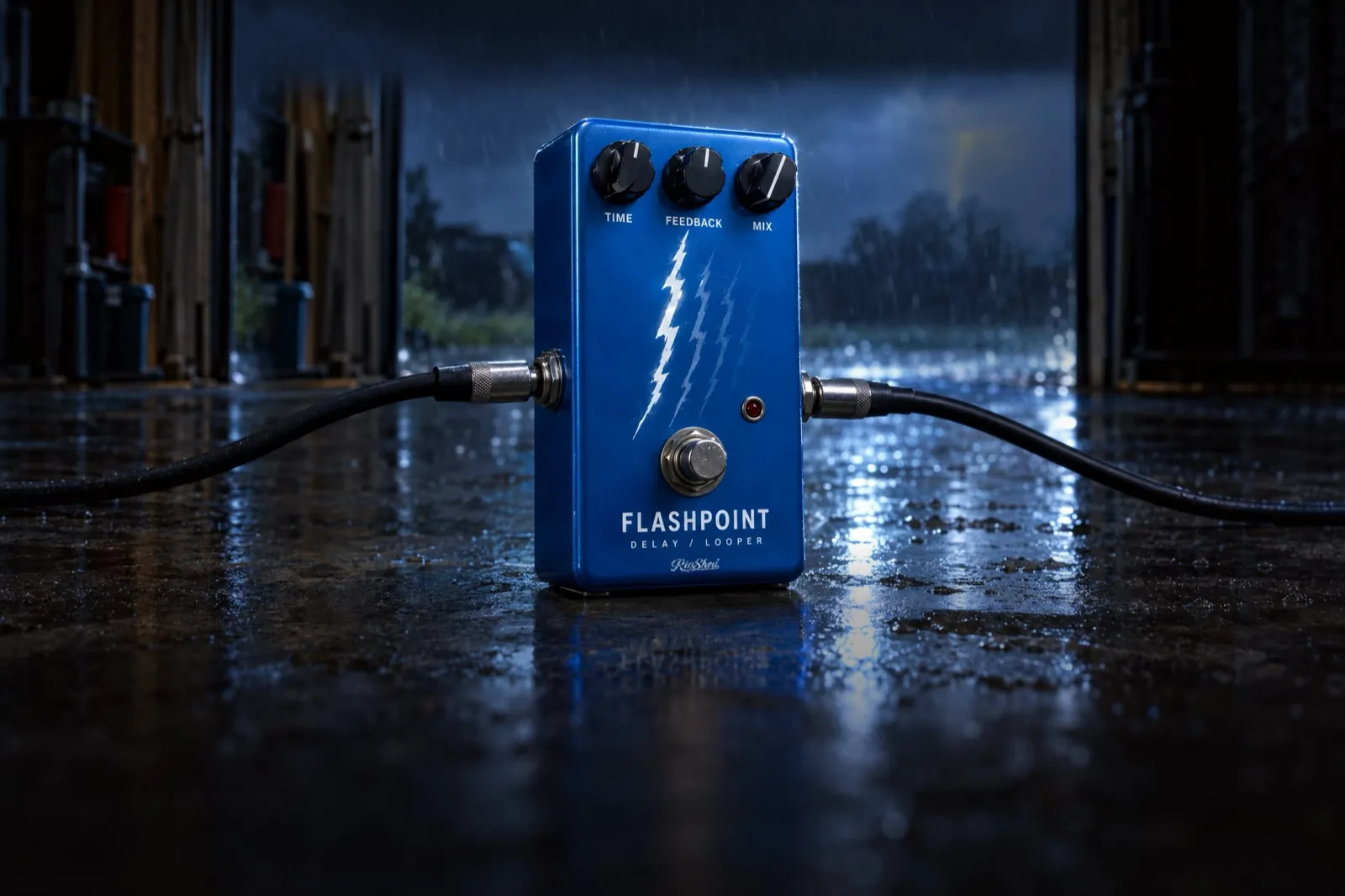
Flashpoint
Delay / Looper
Modern and pristine.
-
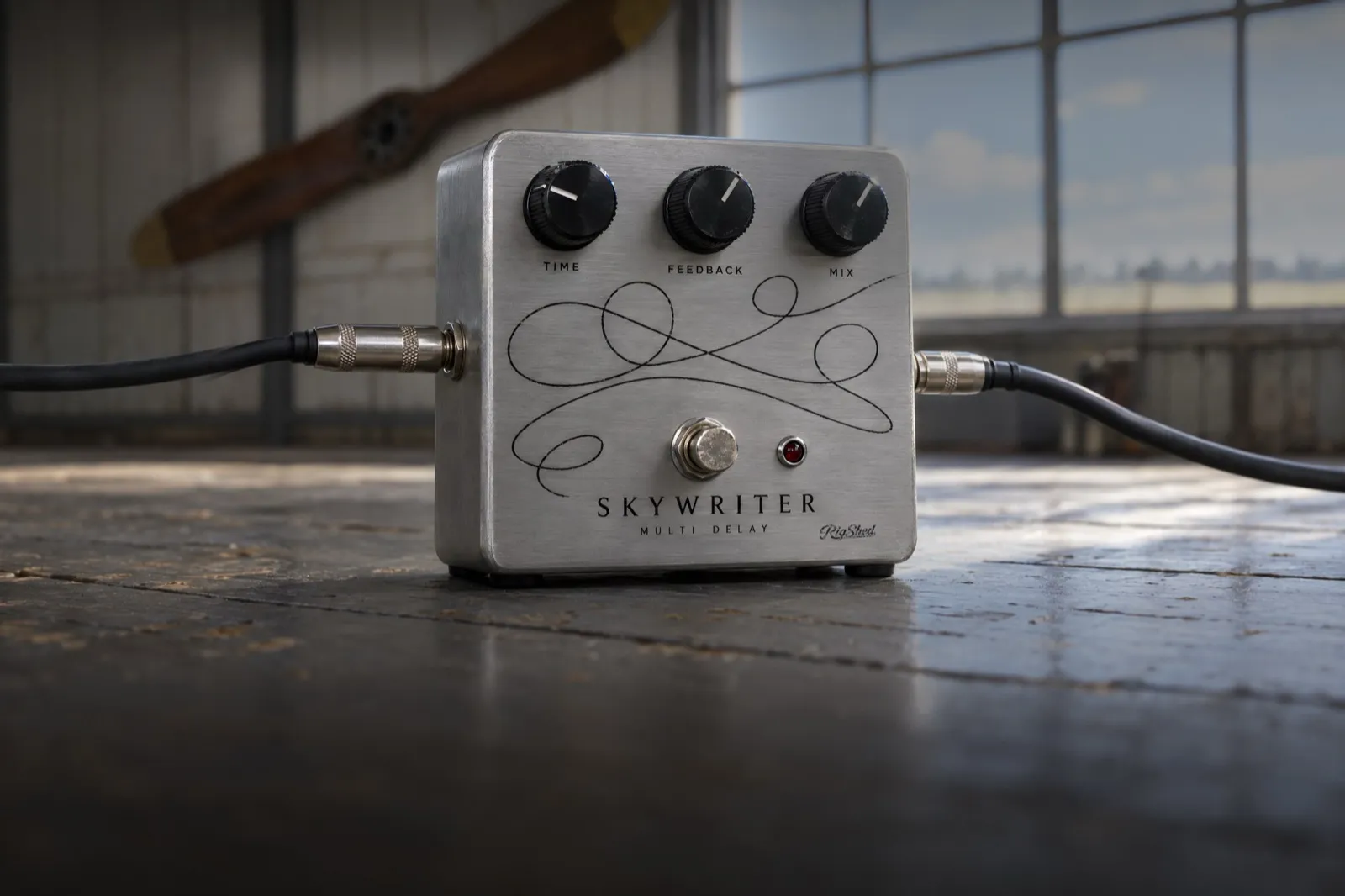
Skywriter
Multi Delay
Tape-style, with wow and flutter.
-
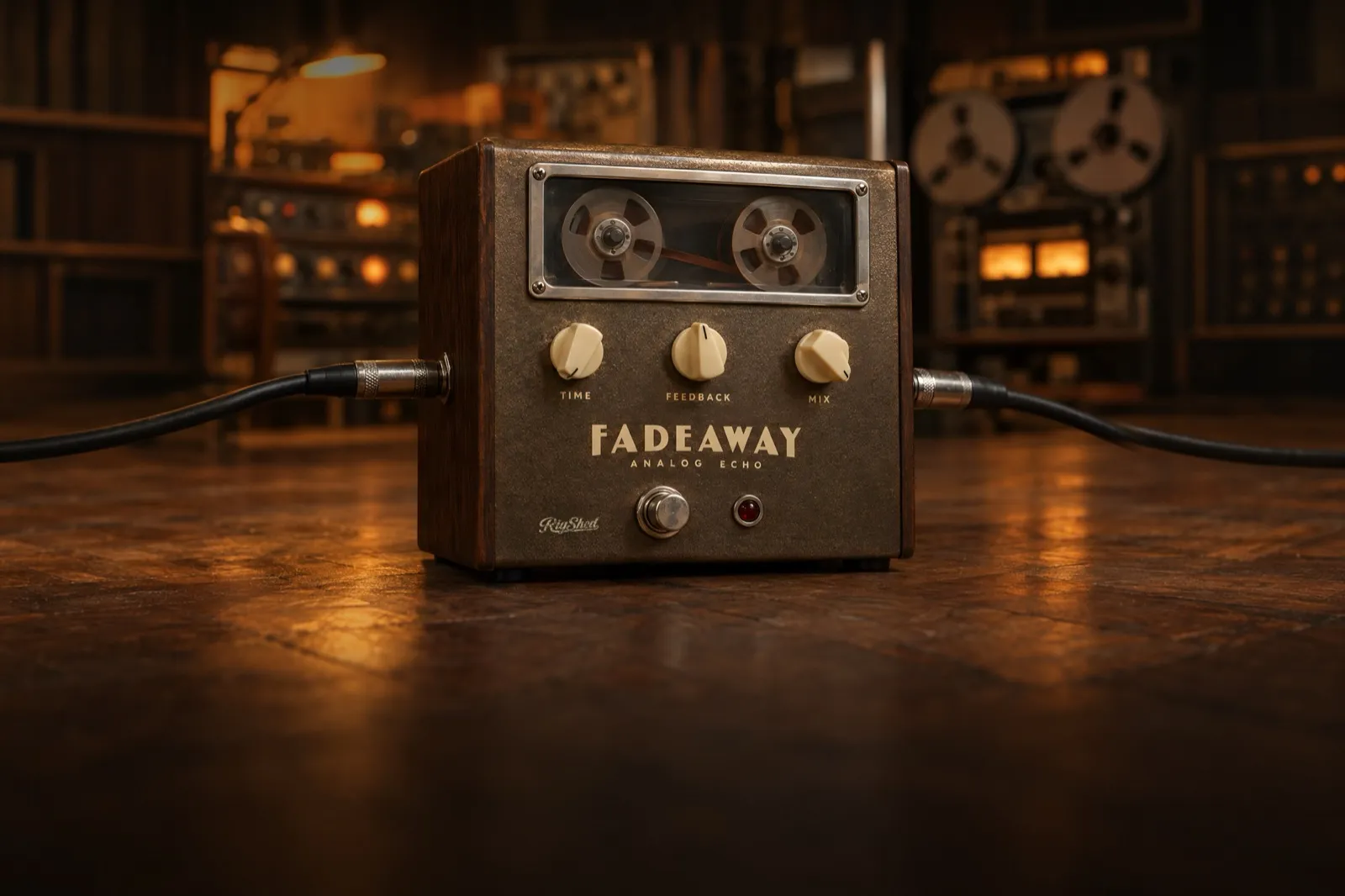
Fadeaway
Analog Echo
Dark, soft analogue echo that fades early.
Reverbs
Last in the chain — the room the whole rig sits in.
-
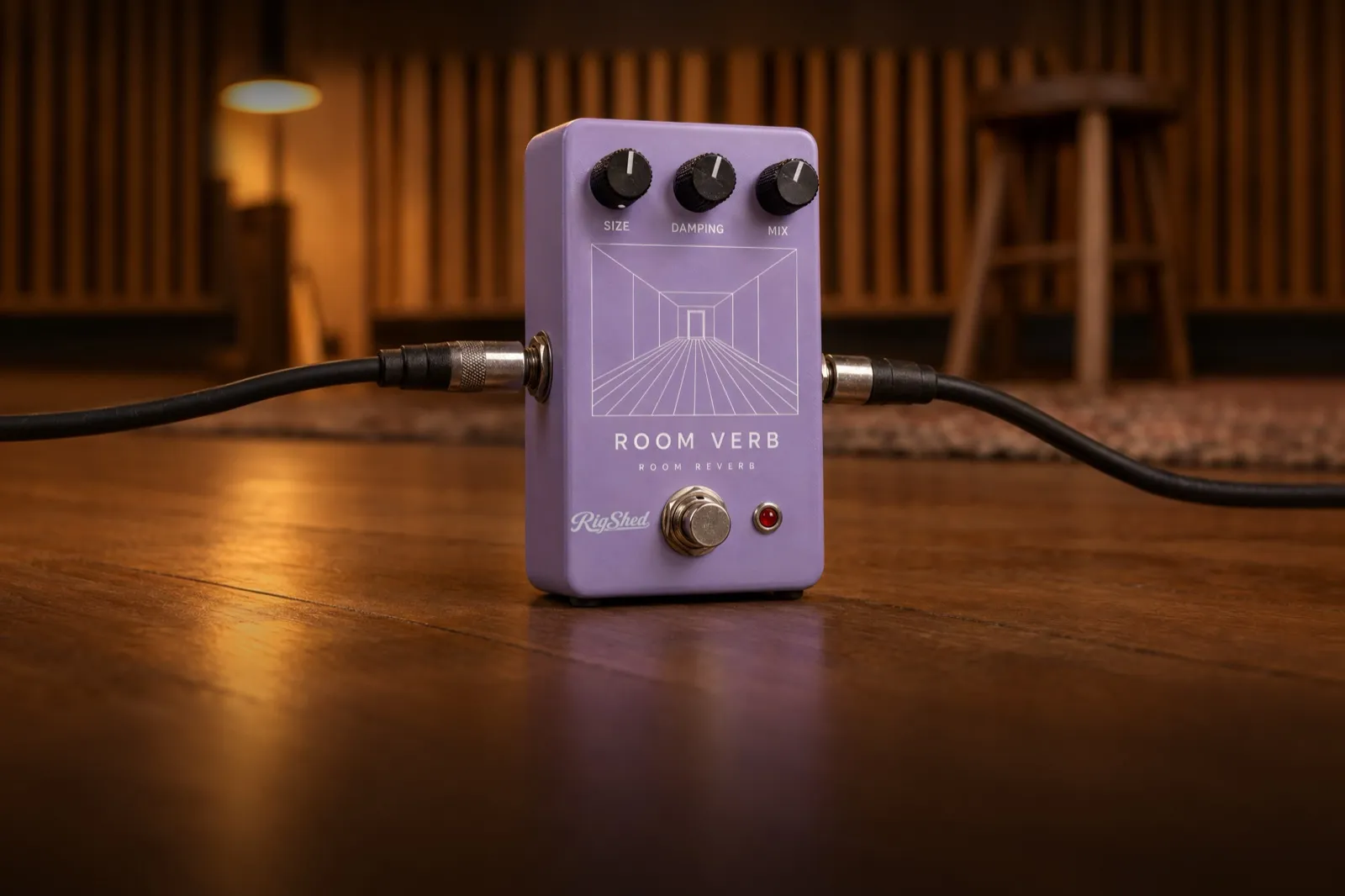
Room Verb
Room Reverb
A small, natural space.
-
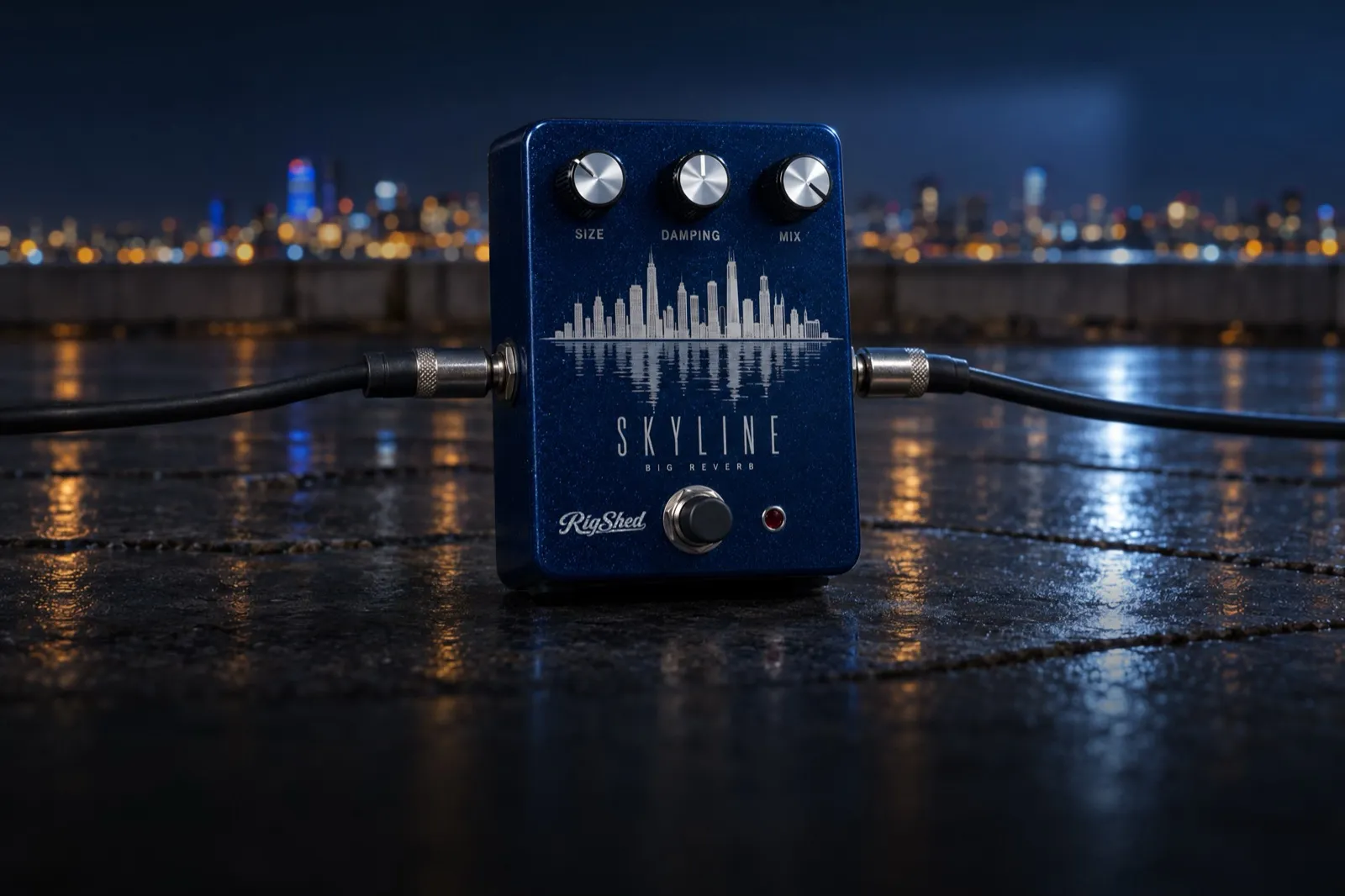
Skyline
Big Reverb
Plate.
-
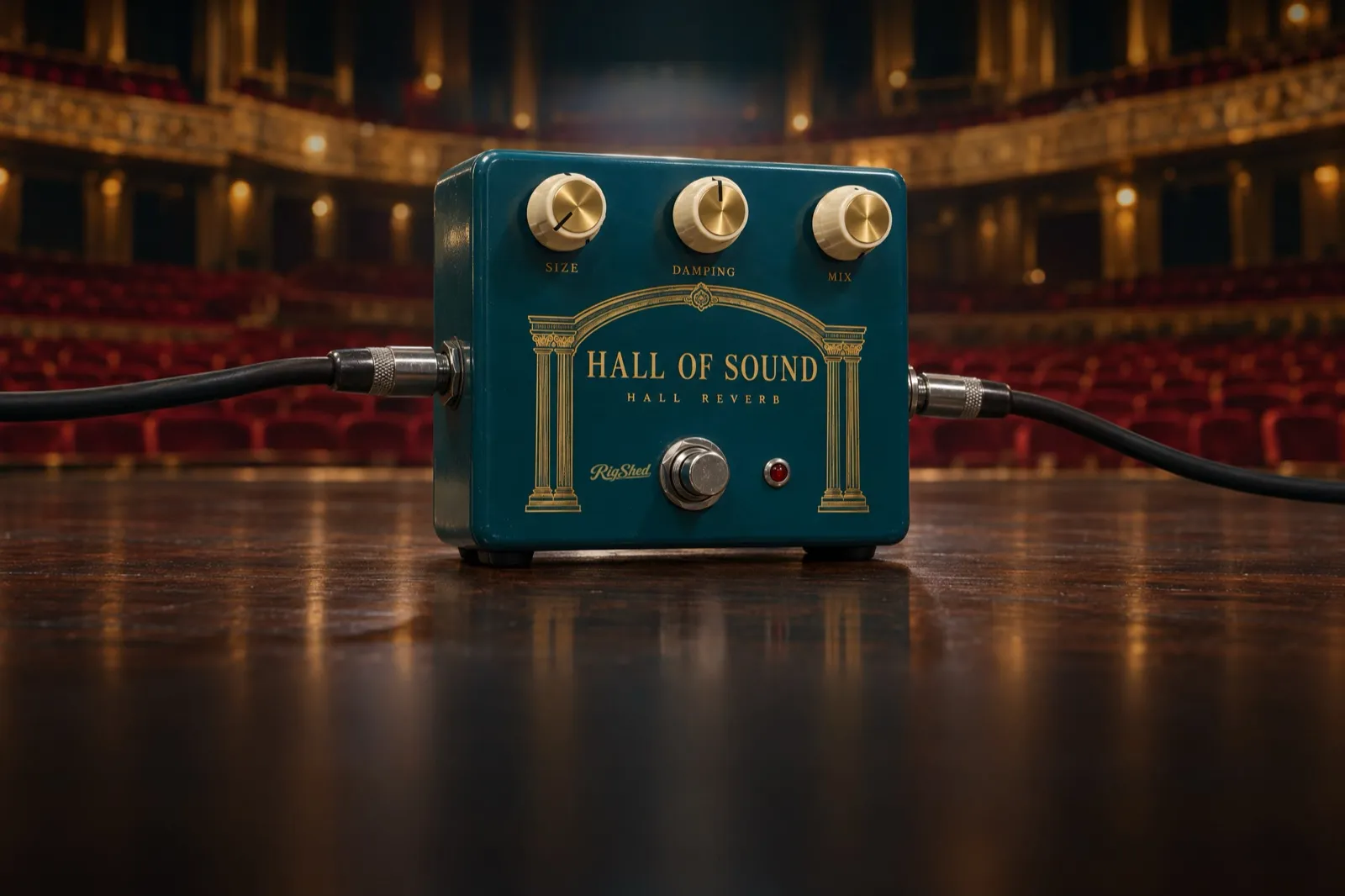
Hall of Sound
Hall Reverb
Large hall.
-
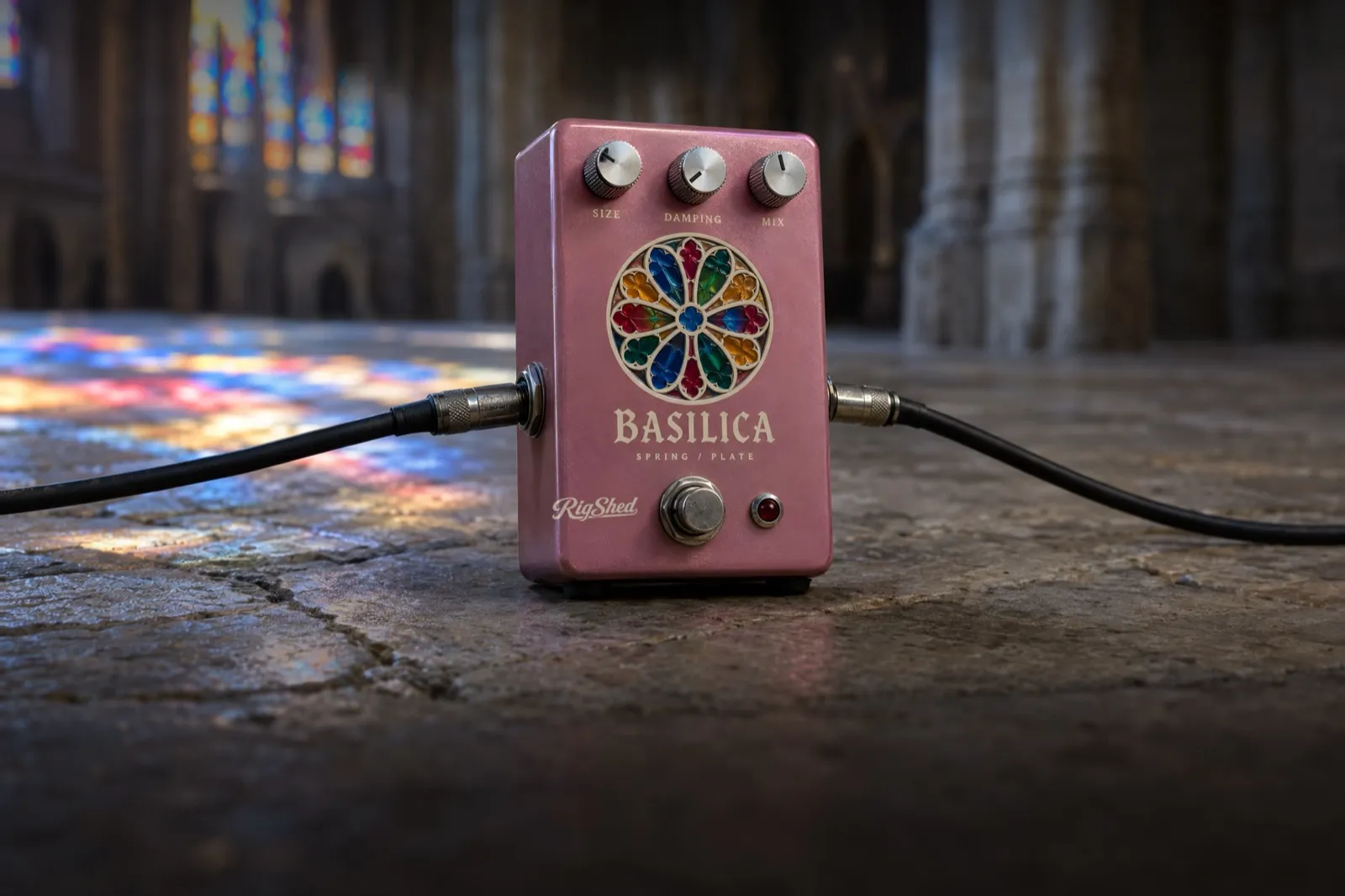
Basilica
Spring / Plate
Ethereal and ambient.
-
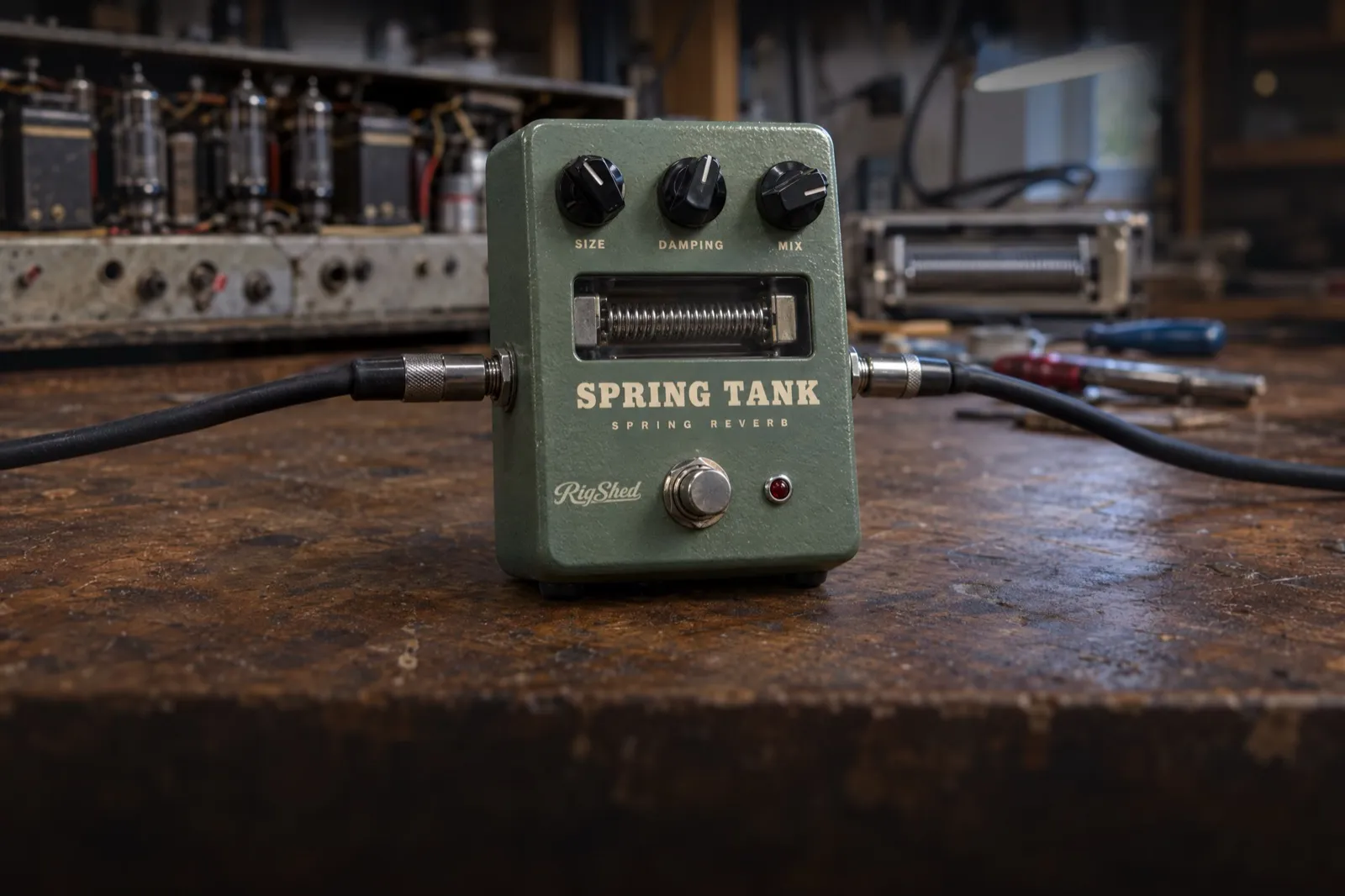
Spring Tank
Spring Reverb
Vintage spring tank.