New
Tell it what you want to sound like
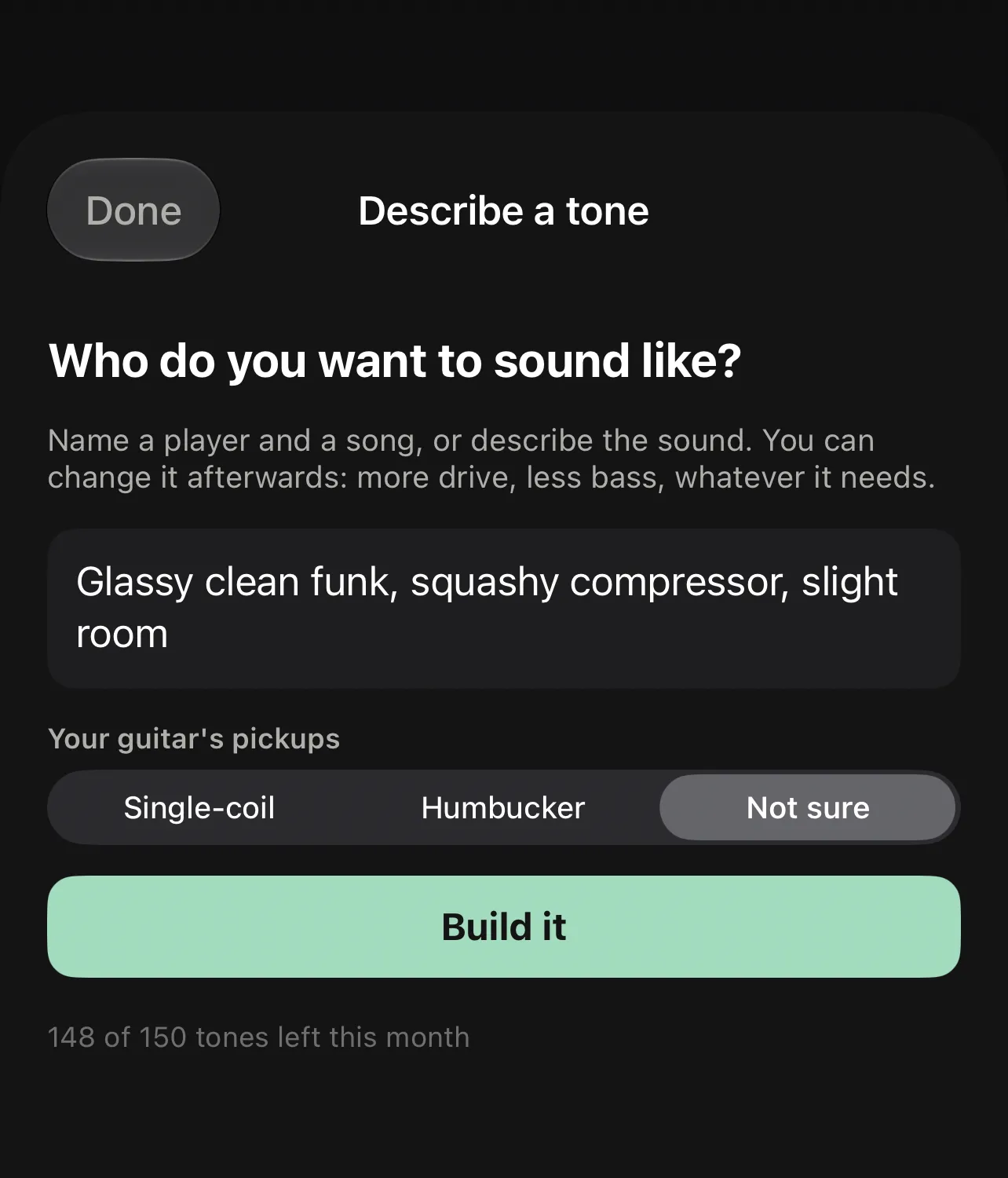
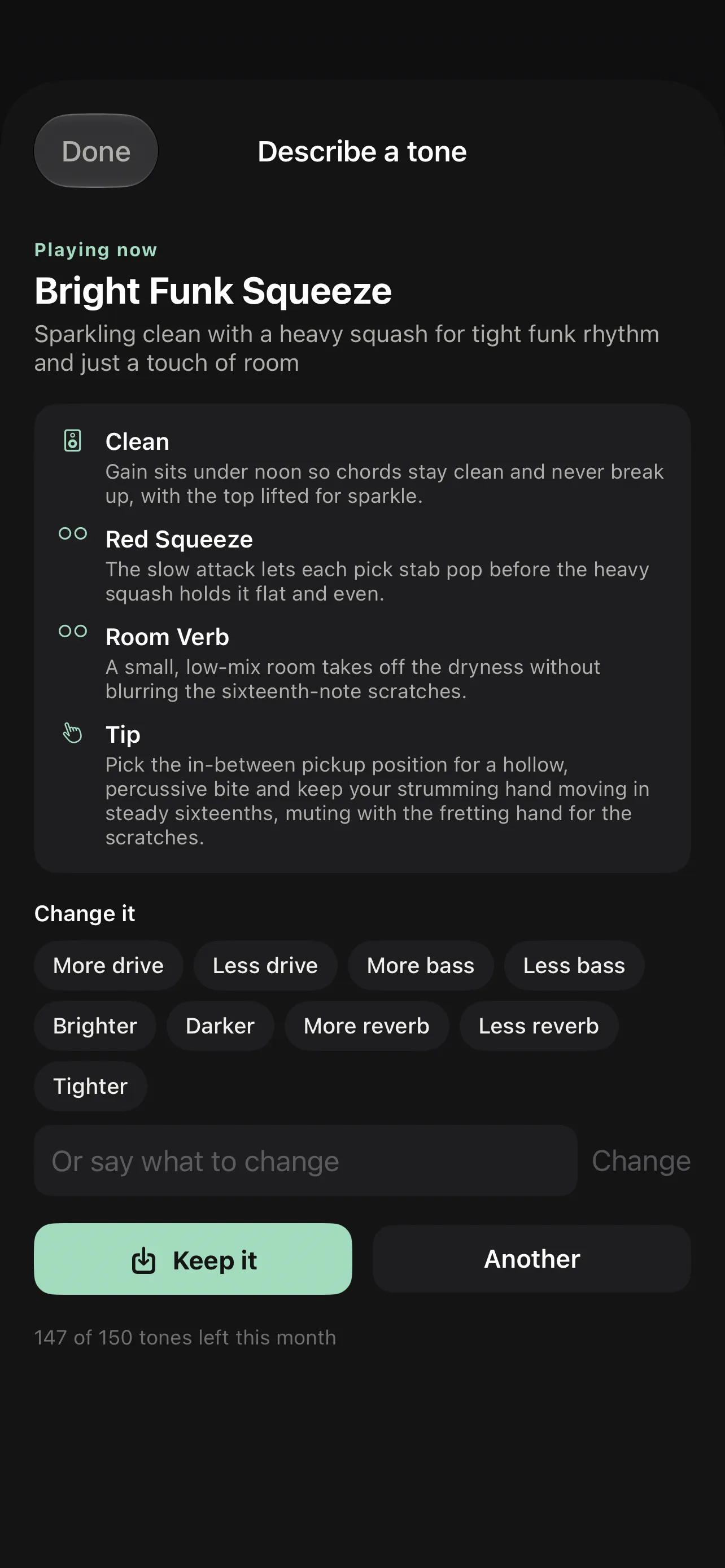
Type the sound you are after. RigShed picks the amp, fills the pedal slots and sets every knob, and the rig is playing before you have put the phone down.
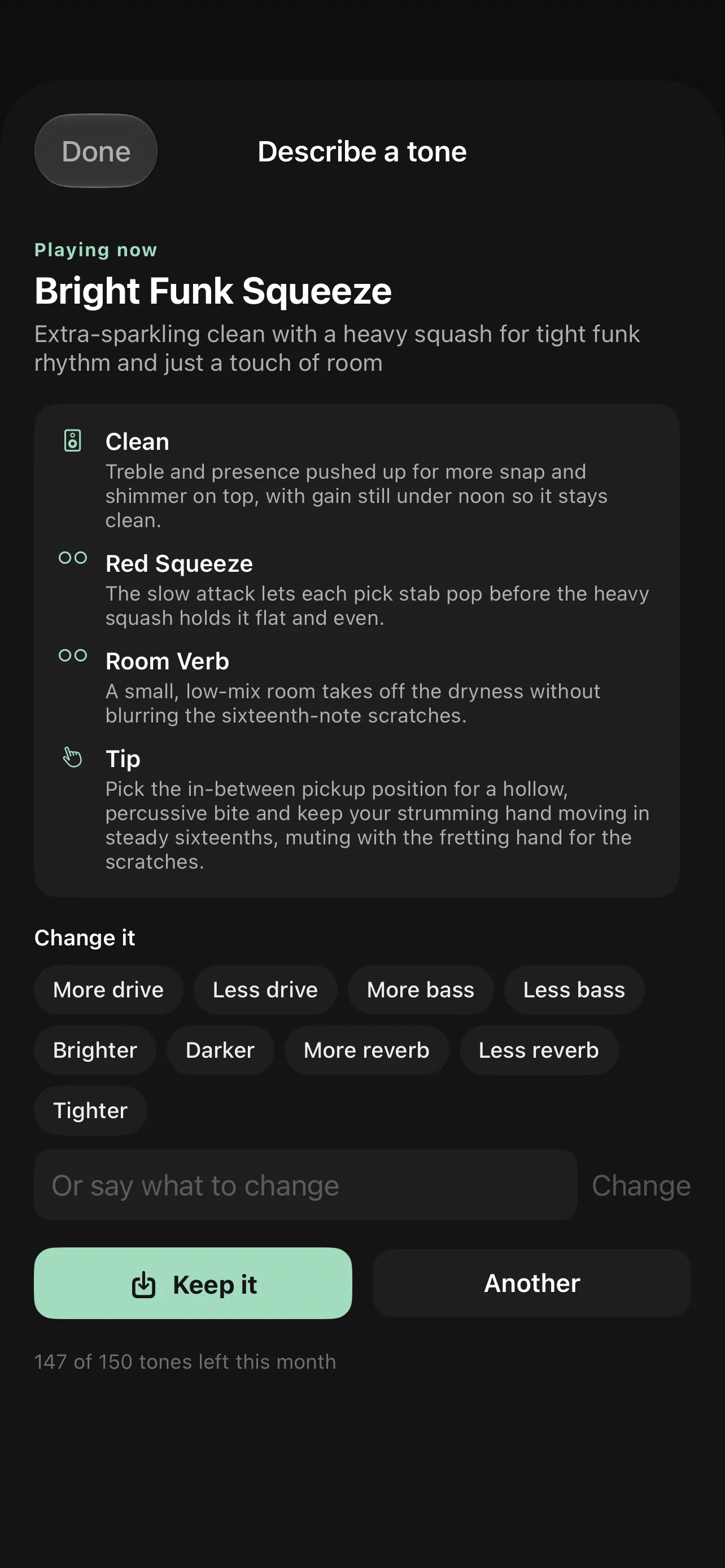
Then you tell it what is wrong — more drive, darker, less bass — and it changes the rig you are already hearing.
Say it however you think about it
You do not have to know what a tone stack is, or which of five compressors you want. Describing the sound is enough.
- glassy clean funk, squashy compressor, slight room
- a late-80s hard rock lead with a cocked wah
- thin, spiky post-punk — all treble and no sustain
- warm jazz clean, dark and round, barely any reverb
- modern djent rhythm, scooped and tight, low tuning
It also asks one question: whether your guitar has single coils or humbuckers. You can say you are not sure, and it will work it out from the sound you asked for.
It can only build what the rig can actually make
That limit is the engine's, not the model's — and it is the whole reason this works.
Every tone it builds is the eight amps and 41 pedals, set differently. There is no separate bank of AI sounds and nothing that only exists while you are online — the sentence goes away to be turned into a rig, but your guitar never does. All the audio is processed on your own device, as the rest of RigShed always has been. What comes back is a rig you could have built by hand, if you had known which of the five compressors to reach for.
Which means it inherits everything the engine already is. Each amp was fitted against a measured reference, and fitted so that noon on its gain knob is the sound it was measured against — so when the answer says Chapel at noon, that is a real place on a real curve rather than a guess.
Every value that comes back is checked against the engine's own parameter list and clamped to the range that parameter actually has. Anything it does not recognise is dropped rather than trusted. And the rig is level-matched before it plays, so a high-gain answer cannot jump twelve decibels louder than what you were playing a second ago.
Then fix it by saying what is wrong
The first answer is rarely the last one. Each change applies to the rig you are hearing, not to a fresh start.
- more drive
- less bass
- darker
- more room
- tighter low end
Every amp and pedal it chose comes with one line saying why it is there, which is the part that teaches you something. After a few evenings of this you start reaching for the right box yourself.
Keep saves it as a normal rig — the same as any you built by hand, syncing to your other devices like the rest. Until you do, it is just something you are playing.
Three things worth knowing first
What you type leaves your device
It has to: the rig is worked out by a language model, and that runs on a server rather than in your pocket. What goes is the words you type, the pickup type if you picked one, and a random number that counts your allowance — no name, no account, no audio, and not the rig you are already playing. It is not stored, and it is not used to train anything. The app explains all this and asks you to agree before it sends anything at all. The rest of RigShed is entirely local, as it always has been; this is the one feature that is not, and it only runs when you use it. The privacy policy sets it out in full.
Builds count. The first few changes do not
Building a tone costs real money at our end, so there is an allowance rather than an unlimited button. But honing is the part that makes it work, so the first five changes to a tone are free — only after that does a change count as another build. Three builds to try it; after that it comes with a subscription — see pricing.
One practical limit: a description can be up to 500 characters. That is far more than anyone needs — the short ones work better anyway.
It will not always get there
Some requests come back wide of the mark, and some come back refused. When that happens, describing the sound rather than reaching for a shorthand usually works better — and the change you make next is yours to steer, which is why the honing matters more than the first answer.
You never have to use it
Eight amps, 41 pedals and 28 factory rigs are all there whether you type a word or not, and they are free. This is for the evening you can hear the sound in your head and cannot find it.
Join the TestFlight beta — link pending