Guitar to bass
How to make your guitar sound like a bass
There's a hole at the bottom of most home recordings where a bass should be. Buying one is the obvious answer. Dropping your guitar an octave is the cheaper one — and if you're looping, the only one that works live, on your own.
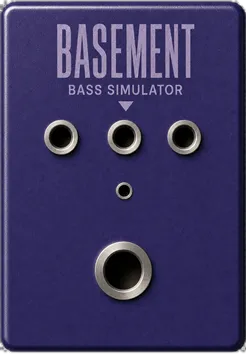
What an octave pedal actually does
It watches your signal cross zero and flips a switch on every second crossing — a note exactly one octave down, instantly, with no processing delay. That also means one note at a time: play a chord and it sees several notes at once and can't choose. Every octave divider since the sixties works this way.
Basement doesn't output that raw signal, which would sound like a synth. It uses it as a clock for an oscillator voiced from a real fingerstyle electric bass — so you get a bass's harmonics at your guitar's pitch, and your bends and vibrato still come through.
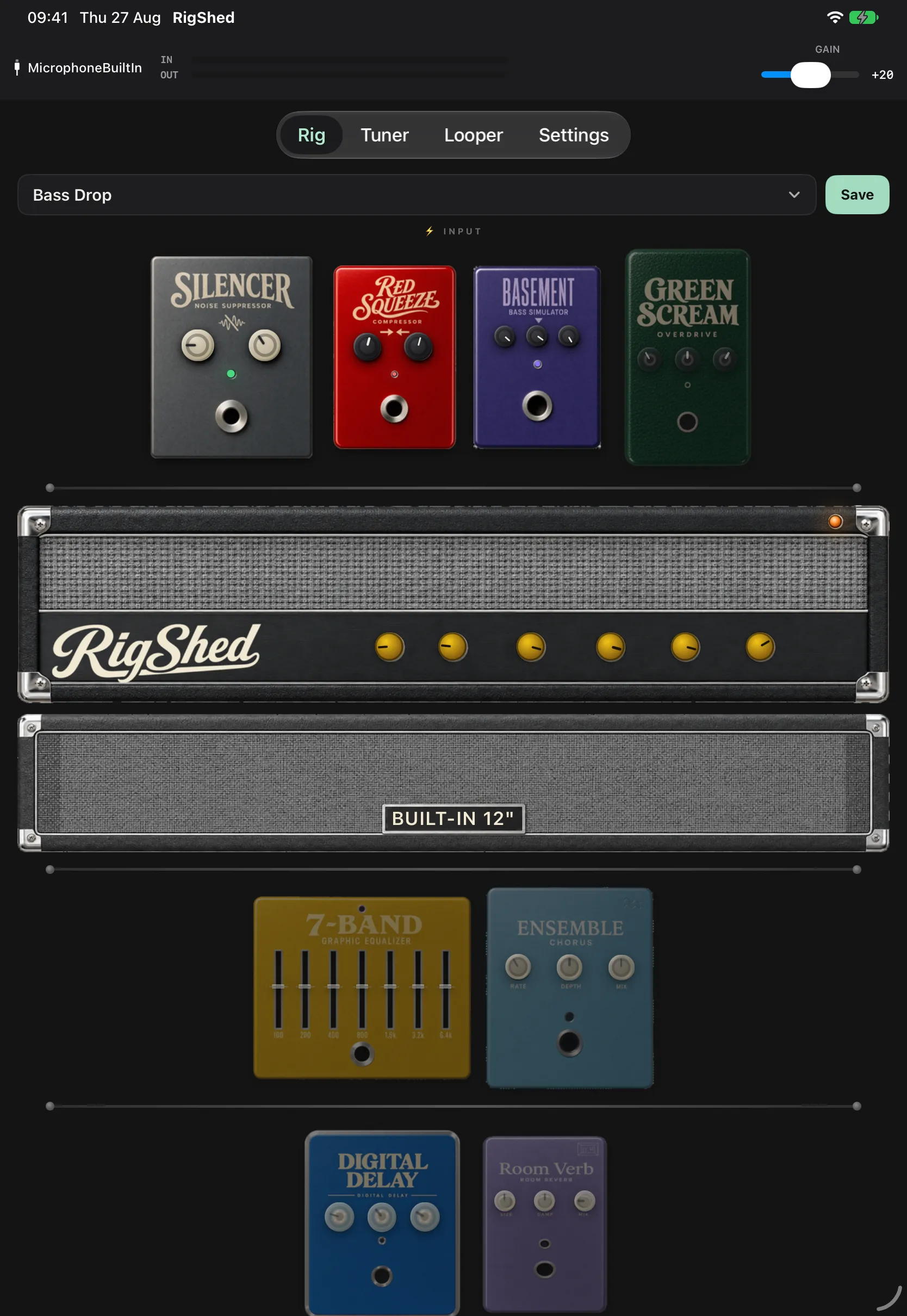
Switching it on moves the amp into its bass voicing too. A guitar voicing costs 18.3 dB at 41 Hz, which is exactly where your low E lands once it's been halved — so a bass part through it arrives with no bottom at all. You don't have to do anything; the pedal does it.
Getting a convincing bass tone, not a thin one
- Play up the neck
- The 5th fret of the A string drops to a low D — right in the meat of a bass. An open low E drops to 41 Hz, which is real bass territory but turns to mud on most speakers.
- Leave a little dry in
- Blend sits at 85% by default for a reason: that last 15% of dry guitar is the pick attack, and it's what makes the ear hear a played instrument instead of a synth pad.
- Roll the tone back
- Basement's tone control tracks the note you're playing rather than sitting at a fixed frequency, so it stays consistent up and down the neck. Start low and open it until it growls.
- Compress after, not before
- Compression ahead of the pedal squashes the attack the tracker uses to find your pitch.
- Put it before the dirt
- Distortion adds harmonics, and harmonics confuse the tracking. Clean signal in, bass out, then dirty it up afterwards if you want.
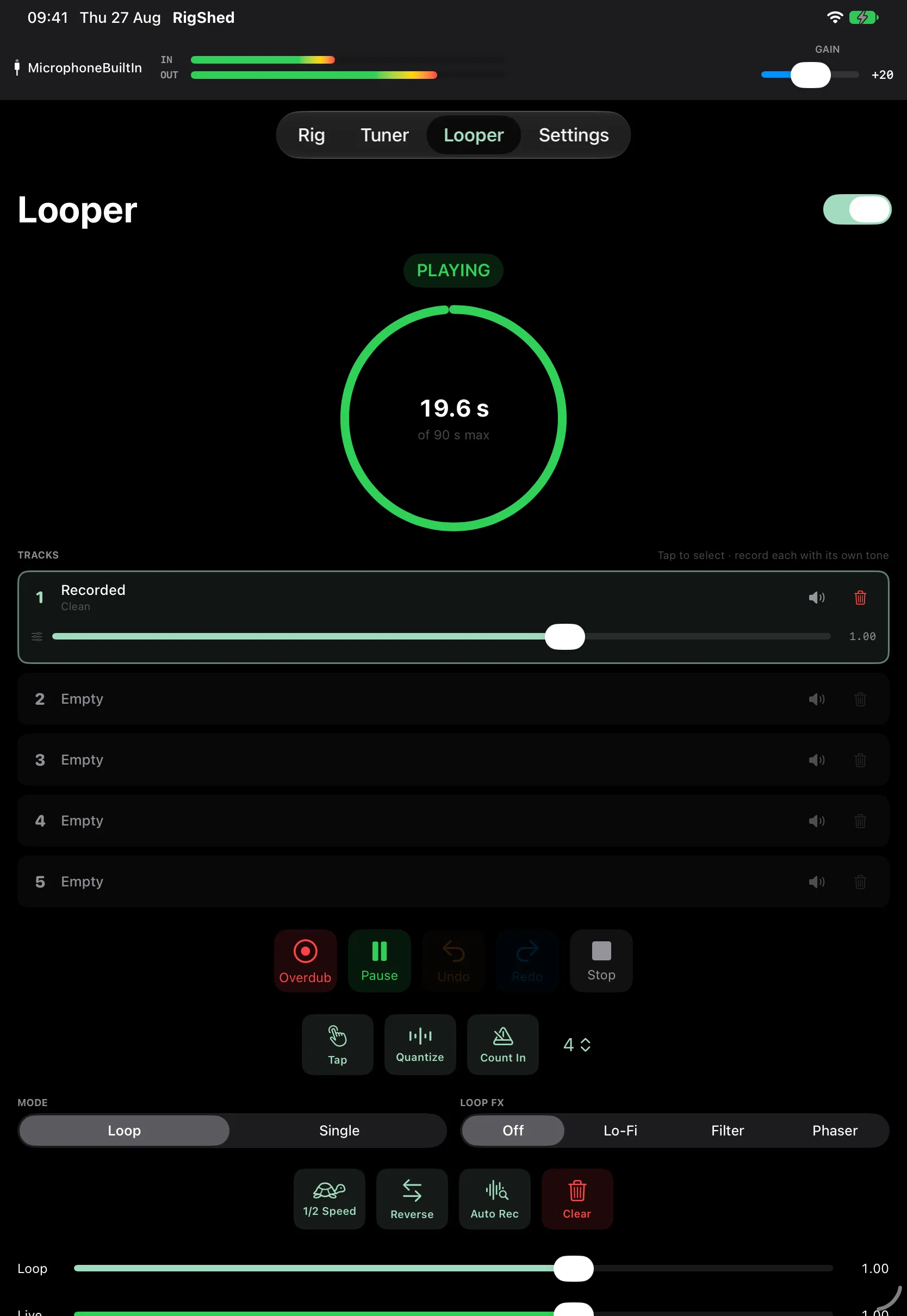
The looper trick — being your own rhythm section
Order of operations matters:
- Set your loop length with a muted, percussive stroke — it gives you the bar line without committing to notes.
- Kick Basement on and lay the bass line down first. Single notes, up the neck, root movement.
- Kick it off.
- Play the chord part over the top.
- Solo over both.
That's a full arrangement, one guitar, one take, nobody else in the room.
Questions
Can I use a guitar instead of a bass on a recording?
For a lot of material, yes. An octave-down guitar won't fool a bass player on a solo'd track, but sitting under drums and guitars in a mix it does the job — and it's how plenty of records got made before anyone had a spare bass.
Do octave pedals work on chords?
No. Octave dividers track one note at a time by design. Play single-note lines and they follow you perfectly; play a chord and they produce nonsense. Every pedal of this type behaves the same way.
What's the best setting for a bass sound?
Blend around 85%, tone low, and play above the 5th fret. Put it early in the chain, before any distortion.
Basement is one of 38 pedals in RigShed
It's in the octave section of the board, between the compressors and the drives — which is exactly where it wants to be.
Join the TestFlight beta — link pending